×

The Standard e-Paper
Fearless, Trusted News
 The Standard Group Plc is a
multi-media organization with investments in media platforms spanning newspaper
print operations, television, radio broadcasting, digital and online services. The
Standard Group is recognized as a leading multi-media house in Kenya with a key
influence in matters of national and international interest.
The Standard Group Plc is a
multi-media organization with investments in media platforms spanning newspaper
print operations, television, radio broadcasting, digital and online services. The
Standard Group is recognized as a leading multi-media house in Kenya with a key
influence in matters of national and international interest.

Audio By Vocalize
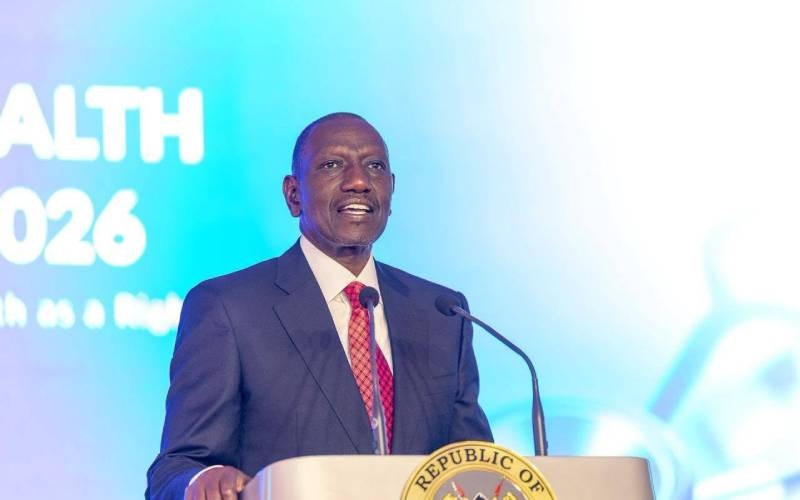
President William Ruto during the official opening of the Kenya Health Summit at the Kenyatta International Convention Centre (KICC), Nairobi, August 18,2026. [PCS]
President William Ruto has accused the defunct National Health Insurance Fund (NHIF) system of enabling theft from sick Kenyans, citing claims for procedures that never happened.
Speaking on Tuesday, August 18, at the opening of the Kenya Health Summit at the Kenyatta International Convention Centre (KICC) in Nairobi, Ruto described the old system as opaque and vulnerable to abuse.
"We heard of claims for procedures that never happened, fictitious patients and inflated bills. That was not healthcare, it was theft, and theft from sick Kenyans," said Ruto.
He called digital health systems the backbone holding the reforms together and said they would close loopholes that let people profit from the system's weaknesses.
Ruto ranked Universal Health Coverage (UHC) alongside the Affordable Housing Programme as one of the government's most consequential social transformation efforts, crediting collaboration between national and county governments for changes in how healthcare is financed, delivered and accounted for.
The two-day summit, themed "Reforms Delivered, Health as a Right," has drawn more than 5,000 delegates to audit progress under the Bottom-Up Economic Transformation Agenda (BETA) and set priorities for the remainder of Ruto's term, according to Health Cabinet Secretary Aden Duale.
Ruto said 32.3 million Kenyans are now registered with the Social Health Authority (SHA), which replaced NHIF in October 2024.
Eight million have received treatment, more than 1.2 million mothers have been supported to deliver safely and more than 500,000 surgical procedures have been supported, he added.
He put Kenyans' previous annual out-of-pocket health spending at Sh150 billion ($1.16 billion), saying families had borrowed, sold assets or organised harambees to cover medical costs before the reforms.
"Millions paid out of pocket, borrowed, sold assets, organised harambees or stayed away from hospital because they could not afford care," said Ruto.
Since October 2024, SHA has received more than Sh209 billion ($1.62 billion) and paid more than Sh178 billion ($1.38 billion) to contracted facilities across all 47 counties, Ruto added.
He credited 107,800 Community Health Promoters, deployed under a shared financing arrangement between national and county governments, with reaching more than nine million households and referring over 750,000 people for further treatment.
On supply chains, Ruto said the Kenya Medical Supplies Authority's (KEMSA) fill rate had risen from about 40 per cent to 91 per cent, helped by a Sh1.5 billion ($11.6 million) recapitalisation and a Sh10 billion ($77.4 million) credit line.
Stay informed. Subscribe to our newsletter
The reforms rest on four laws Ruto signed on 19 October 2023: the Primary Health Care Act, the Social Health Insurance Act, the Digital Health Act and the Facilities Improvement Financing Act.
Ruto acknowledged gaps remained in registration, benefit clarity, claims processing and digital systems.
"The ultimate measure of reform is not the laws we pass or the numbers we register, but the experience of the patient in terms of dependable, affordable and dignified care," said Ruto.
Deputy President Kithure Kindiki, Prime Cabinet Secretary Musalia Mudavadi, National Assembly Speaker Moses Wetang'ula, Duale and Nairobi Governor Johnson Sakaja attended the opening session, alongside county governors, principal secretaries, members of Parliament and development partners.
The summit runs through Wednesday.
Subscribe to our newsletter and stay updated on the latest developments and special offers!


 Prefer the Standard on Google






 join
join