×

The Standard e-Paper
Kenya’s Boldest Voice
 The Standard Group Plc is a
multi-media organization with investments in media platforms spanning newspaper
print operations, television, radio broadcasting, digital and online services. The
Standard Group is recognized as a leading multi-media house in Kenya with a key
influence in matters of national and international interest.
The Standard Group Plc is a
multi-media organization with investments in media platforms spanning newspaper
print operations, television, radio broadcasting, digital and online services. The
Standard Group is recognized as a leading multi-media house in Kenya with a key
influence in matters of national and international interest.

Audio By Vocalize
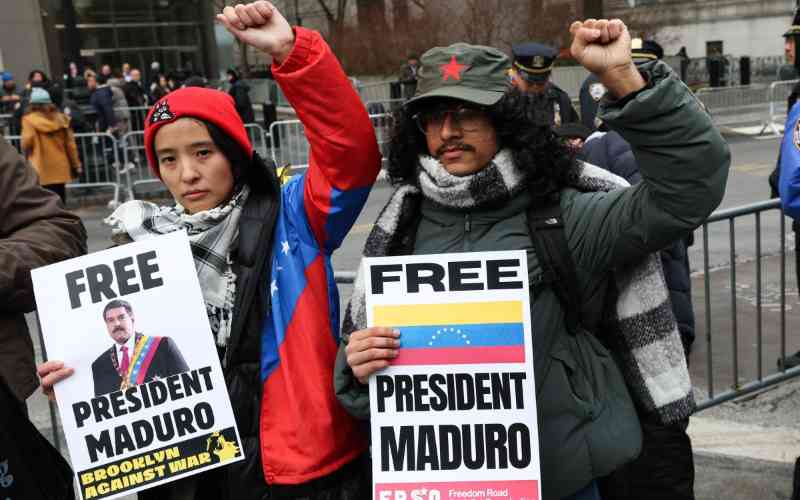
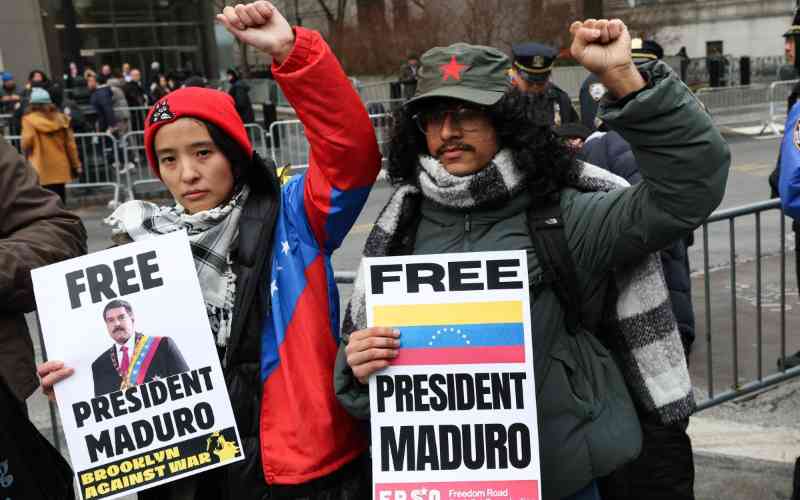
The US government’s forceful abduction of Venezuela’s President Nicolás Maduro and wife Cilia Flores in January read like the plot of a political thriller. While public resignation may have replaced initial shock and disbelief, that incident dominated international policy debate this week.
At least 150 US military aircraft were involved in multiple bombings across Caracas. Scores of people were killed and civilian and military infrastructure destroyed. The subject of the attack, the forcible capture of the President and his wife, was neither authorised by the UN Security Council nor justified as an act of self-defence.
By carrying out what US President Donald Trump described as a “law enforcement operation” on foreign soil without Venezuela’s consent, the US has violated the UN Charter’s prohibition on the use of force.
Nearly three weeks later, Nicolás Maduro and Cilia Flores are being held in the Metropolitan Detention Centre in Brooklyn, New York. The two have pleaded not guilty to several narco-terrorism and drug trafficking conspiracy charges filed six years ago. They assert they are victims of state kidnapping and prisoners of war. Their next court hearing is on 17 March.
Vice President Delcy Rodríguez has been sworn in as Venezuela’s interim president, but remains unclear what President Trump meant when he announced that his government would “run” the nation. Some 3,300km away from Washington DC, Venezuela has a population of 28.6 million people, roughly the number of Greater Los Angeles residents.
This is not the American government’s interest. At 303 billion barrels, Venezuela commands the largest of proven oil reserves in the world. The US, by contrast, at 45 billion barrels, has only about 15 per cent of Venezuela’s reserves.
When not justifying this violation of international law in terms one of the biggest oil grabs in modern history, supporters have pointed to Nicolás Maduro’s severe human rights record. Over the past decade, there has been a systematic pattern of extra‑judicial killings, enforced disappearances, arbitrary detentions, and attacks on independent media, civil society, human rights defenders, and political opponents.
The widespread nature of these violations is considered to constitute crimes against humanity contributing to the mass flight of millions. So far, there is little evidence that the US strike will improve the human rights situation. Since the raid, pro‑government armed groups and security forces have intensified crackdowns, reprisals, and arbitrary arrests and deepened the climate of fear.
This Tuesday, Canadian Prime Minister Mark Carney’s World Economic Forum address revisited the collapse of the rules‑based international order. Declaring that 80 years of multilateralism is fundamentally ruptured, he issued an implicit critique of US unilateralism, growing territorial ambitions, disregard for national sovereignty and international law. He also called for a new coalition of “middle powers” to build a new order that respects human rights, sustainable development, world solidarity, sovereignty and territorial integrity of all states.
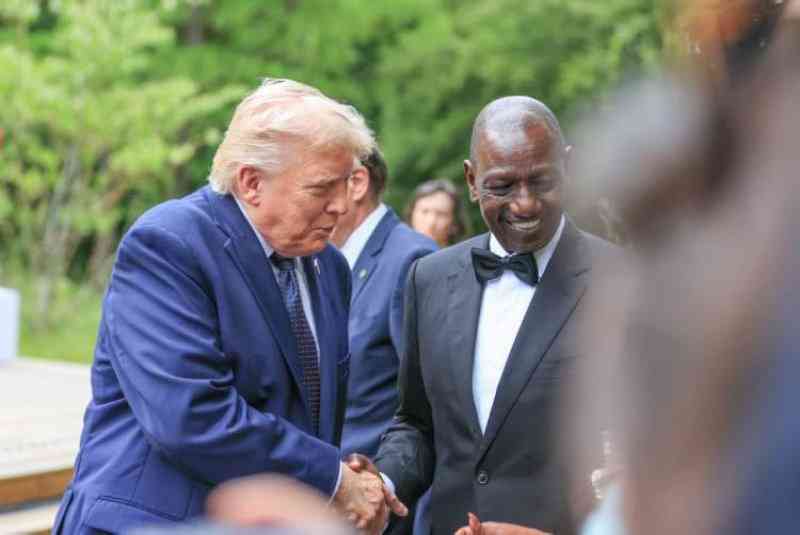
In contrast to this bold speech, Kenya and several African leaders have remained “Nil by Mouth” despite, it could be argued, their own personal interests. The African Union has expressed “grave concern” and South Africa and Ghana have publicly condemned January’s strike, but influential nations such as Nigeria, Egypt, and Kenya have said nothing.
With this silence, it maybe too early to see whether the US will impose a colonial administration on Venezuela or be emboldened to forcibly annex or buy Greenland. However, Season Two of the Trump Presidency has been the most corrosive so far. Transnational authoritarianism is a form of international anarchy. It undermines international law and fuels global conflict and mass violence. It erodes norms that keep all nations accountable.
At a local level, it normalises brutality by signaling that power, not the law, determines what is permissible. Imagine ordinary citizens regularly abducting or assaulting drivers who cut in front of them, teachers who give their children poor grades, shopkeepers who refuse to lower prices or spouses suspected of infidelity. Transnational authoritarianism dissolves justice and trust. It leaves behind only brute force and fear. It must stop.

Subscribe to our newsletter and stay updated on the latest developments and special offers!





 join
join