×

The Standard e-Paper
Home To Bold Columnists
 The Standard Group Plc is a
multi-media organization with investments in media platforms spanning newspaper
print operations, television, radio broadcasting, digital and online services. The
Standard Group is recognized as a leading multi-media house in Kenya with a key
influence in matters of national and international interest.
The Standard Group Plc is a
multi-media organization with investments in media platforms spanning newspaper
print operations, television, radio broadcasting, digital and online services. The
Standard Group is recognized as a leading multi-media house in Kenya with a key
influence in matters of national and international interest.

Audio By Vocalize
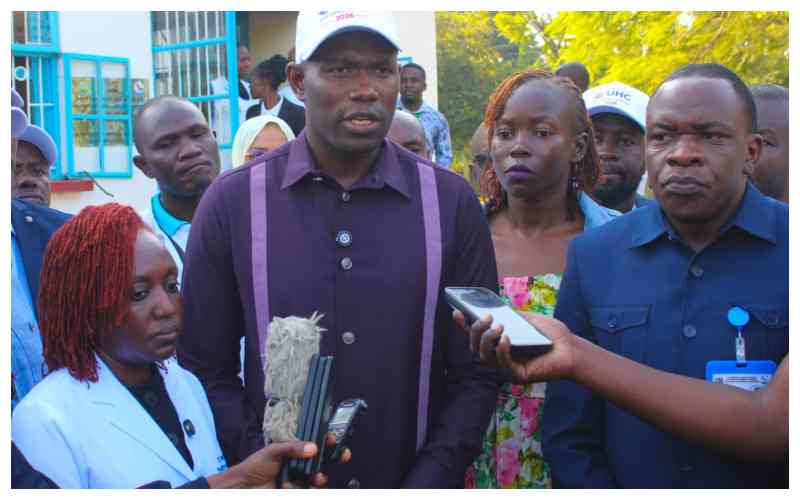
The national government has announced plans to transform Jaramogi Oginga Odinga Teaching and Referral Hospital (JOOTRH) into a Centre of Excellence for Sickle Cell Disease in Africa, as part of efforts to improve care and quality of life for thousands of patients living with the condition.
The announcement was made by Principal Secretary for Medical Services Dr Ouma Oluga during a visit to the hospital on Friday, where he led county chief officers in reviewing progress in the implementation of Universal Health Coverage (UHC) reforms and showcased specialized sickle cell treatment services available at the facility ahead of World Sickle Cell Day on June 19.
Dr Oluga said the government is keen on addressing the long-standing challenges faced by sickle cell patients, particularly in regions with a high disease burden such as Nyanza, Western Kenya and the Coast.
"We are here to show how all the health reforms are working together, but also specifically to create awareness on sickle cell disease ahead of World Sickle Cell Day," said Dr Oluga.
He noted that sickle cell disease remains a major public health concern in Kenya, with nearly two per cent of the population in Nyanza, Western and Coastal regions living with the condition.
According to the PS, one of the key interventions undertaken by the government has been investment in specialized treatment at JOOTRH, making it the first public hospital in Kenya to offer Red Cell Exchange Transfusion, also known as apheresis.
The procedure involves removing sickled red blood cells and replacing them with healthy donor blood, significantly reducing painful crises and other life-threatening complications associated with the disease.
"So far, we only have patients who live up to around 47 years, and we want to increase both the lifespan and, more importantly, improve the experiences of these patients," he said.
Dr Oluga said the treatment has already demonstrated positive outcomes, allowing patients to lead more productive and normal lives while reducing frequent hospital admissions caused by severe pain episodes.
He revealed that the Ministry of Health is working closely with King's College London to expand specialized services at the facility. A team of specialists from the institution is expected to visit the hospital next week to support training of healthcare workers, strengthen clinical services, and guide investments in medical equipment and blood availability.
"We are moving forward to make this the sickle cell centre of excellence for the entire African continent," he said.
The PS urged county governments to refer eligible patients to JOOTRH so they can benefit from the advanced treatment, adding that collaboration between national and county governments remains critical in improving outcomes for people living with blood disorders.
The facility's Victoria Annex houses the region's comprehensive sickle cell care centre and has witnessed growing demand for Red Cell Exchange services since their introduction.
Dr Brenda Misore, a Paediatric Haematologist and Oncologist at JOOTRH, said the treatment has transformed care for both children and adults living with sickle cell disease.
Stay informed. Subscribe to our newsletter
"The biggest service that we offer here is Red Cell Exchange Transfusion. Being the first public facility to offer this service, we have seen an increase in demand," she said.
Dr Misore explained that sickle cell disease is a lifelong genetic disorder that often results in severe complications, including chronic pain, anemia, recurrent infections and stroke.
Among children, she noted, stroke remains one of the most devastating complications, often leaving patients with permanent disabilities and imposing heavy financial and emotional burdens on families.
"This service allows us to schedule children for regular exchange transfusions without the complications associated with simple blood transfusions. It enables them to stay in school, live comfortably and enjoy a better quality of life," she said.
She said some patients who previously experienced daily pain crises are now able to go for months without severe symptoms following treatment.
However, she warned that the success of the program depends heavily on the availability of safe blood supplies.
"We need blood for these services. We need to create awareness and encourage more people to donate blood regularly because giving blood saves lives," she said.
Dr Misore also called for increased public awareness, early screening and genetic testing to help families make informed decisions and reduce the burden of the disease.
One of the beneficiaries of the procedure is 33-year-old nurse Michelle Omulo, who has lived with sickle cell disease for three decades.
Omulo, who suffered a mild stroke that left her with disability on her right side, became the first patient at JOOTRH to undergo Red Cell Exchange Transfusion.
She recalled being apprehensive before the procedure but eventually agreed to proceed after learning about its potential benefits.
"The procedure was amazing and successful. After it was done, I felt like I had a new level of energy. The jaundice that I had struggled with for years disappeared within weeks," she said.
Omulo described the treatment as a game changer for sickle cell warriors, saying it significantly reduced complications and improved her overall health.
"It worked for me and it can work for others. Patients who experience multiple crises, strokes, leg ulcers or chest complications should consider it because it can greatly improve their lives," she said.
Chairman of the Chief Officers Caucus, Dr Kevin Osuri, thumbs up JOOTRH and the Ministry of Health for bringing advanced treatment services into the public healthcare system.
"It is a testament that good things can happen in public facilities. This is a milestone not only for Kisumu but for the entire region where the burden of sickle cell disease is high," he said.
Dr Osuri called for wider dissemination of information about the service and stronger referral systems to ensure patients from counties such as Homa Bay, Siaya and even the Coast can access treatment.
He pledged continued support from county governments to ensure the centre grows into a regional hub for specialized sickle cell care.
Eric Mwenda, Regional Manager for East Africa at Terumo Blood and Cell Technologies, whose company provides the Red Cell Exchange technology, lauded Kenya for becoming the first country in Sub-Saharan Africa where treatment for sickle cell disease through the procedure is reimbursed under the Social Health Authority (SHA).
"That is a major milestone. It means patients can access this lifesaving treatment through public healthcare financing," he said.
Mwenda noted that the technology not only improves the quality of life for patients but also helps prevent strokes, enabling children to remain in school and adults to live productive lives.
Kenya is preparing to mark both World Blood Donor Day and World Sickle Cell Day, health officials are now calling for increased blood donation, early screening and expanded access to specialized treatment as part of broader efforts to improve outcomes for people living with sickle cell disease.
For many patients and families, the transformation taking place at JOOTRH offers renewed hope that sickle cell disease can be managed more effectively, allowing those affected to live longer, healthier and more fulfilling lives.
Subscribe to our newsletter and stay updated on the latest developments and special offers!


 Prefer the Standard on Google