×

The Standard e-Paper
Fearless, Trusted News
 The Standard Group Plc is a
multi-media organization with investments in media platforms spanning newspaper
print operations, television, radio broadcasting, digital and online services. The
Standard Group is recognized as a leading multi-media house in Kenya with a key
influence in matters of national and international interest.
The Standard Group Plc is a
multi-media organization with investments in media platforms spanning newspaper
print operations, television, radio broadcasting, digital and online services. The
Standard Group is recognized as a leading multi-media house in Kenya with a key
influence in matters of national and international interest.

Audio By Vocalize
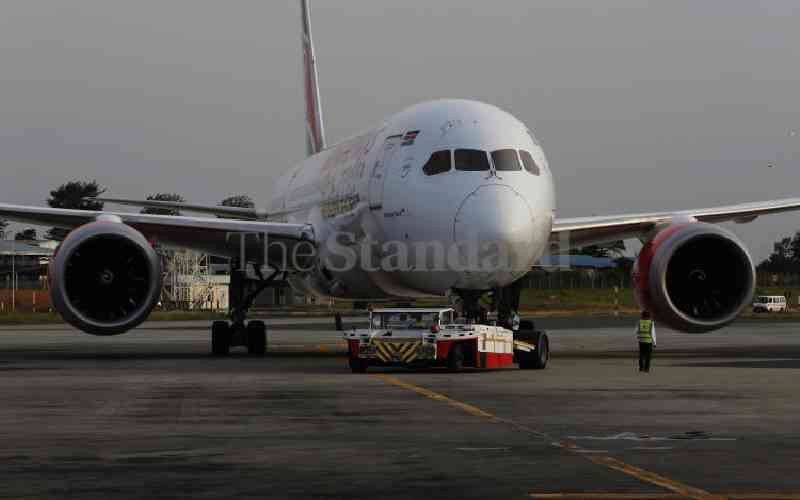
With Kenya confirming its first imported Ebola case after a passenger travelled from the Democratic Republic of Congo through Uganda, one question is likely to be on the minds of travellers: are flights safe?
The short answer is yes, but precautions are important.
Ebola is not an airborne infection like influenza or Covid-19. It spreads through direct contact with the blood or other body fluids of an infected person, particularly once symptoms develop.
The World Health Organisation has previously assessed the risk of Ebola transmission during air travel as low, noting that the likelihood of an ordinary passenger coming into contact with an infected person's body fluids during a flight is small.
That does not mean there are no precautions.
Passengers, airlines and health authorities all have roles to play in reducing the risk.
Passengers' role
The most important precaution for travellers is to avoid contact with the blood and other body fluids of people who are sick.
The US Centers for Disease Control and Prevention advises travellers in areas affected by Ebola to avoid contact with blood, urine, faeces, saliva, sweat, vomit and other body fluids, as well as clothing, bedding or other items that may have been contaminated with such fluids.
Good hand hygiene is also important. Travellers should wash their hands regularly with soap and water or use an alcohol-based hand sanitiser, particularly after using the toilet and before touching the eyes, nose or mouth.
Travellers who develop symptoms consistent with Ebola should not board a flight.
Current CDC guidance for travellers returning from Ebola-affected areas says people who become unwell should separate themselves from others, contact health authorities and avoid travelling while sick until they have been assessed and cleared.
In Kenya, several measures have been put in place because of the current outbreak.
The Kenya Civil Aviation Authority issued an Ebola travel advisory requiring temperature screening at points of entry for travellers with a fever of 38°C or higher.
Stay informed. Subscribe to our newsletter
Travellers originating from the Democratic Republic of Congo or Uganda are also required to complete an electronic traveller surveillance form, while operators of aircraft originating from or transiting through the two countries are required to provide passengers with access to the form before the journey begins.
KCAA also requires travellers to observe routine hand hygiene and requires operators to provide passenger manifests and health declaration forms to port health officers when requested.
Airlines' role
Airlines are also an important part of the chain because cabin crew may be the first people to notice that a passenger has become unwell during a flight.
The US CDC's guidance for cabin crew recommends measures to recognise and manage sick travellers and limit the spread of infectious diseases on aircraft. For viral haemorrhagic fevers such as Ebola, particular attention is required where there is visible bleeding or contact with body fluids.
Aviation safety expert and KCAA Head of Quality Safety Maurice Juma says airlines operating in Ebola-affected areas should maintain clear procedures for crew, screening and aircraft cleaning.
Speaking on Spice FM, Juma said airlines have had Ebola-related procedures in place since April, including the use of personal protective equipment, procedures designed to minimise physical contact between crew and passengers, passenger screening and regular aircraft disinfection.
“We have regular aircraft disinfection. After every flight, you must disinfect that aircraft,” he said.
Maurice Juma: If it were our flight carrying the Ebola patient, we would have disinfected the aircraft, either with or without the passenger’s knowledge. Hosts:@nduokoh & @dennisaseto #TheSituationRoom https://t.co/5LjPPVRkKH — SpiceFM (@SpiceFMKE) October 8, 2026
Juma said the airline applies these measures across its operations in the Democratic Republic of Congo, Kenya, Somalia and Juba.
He said passengers travelling from Ebola-affected regions are also briefed about the disease, while crew members receive Ebola training and additional precautions are taken for crew operating from high-risk areas.
If a passenger develops symptoms that could indicate a serious infectious disease during a flight, the crew should follow the airline's procedures for managing a sick traveller and alert the relevant authorities.
The risk to other passengers depends largely on the nature of the illness and whether the sick passenger has come into contact with other people or contaminated surfaces.
According to the US CDC's guidance for commercial aircraft carrying a traveller with a viral haemorrhagic fever, the cleaning response should depend on the symptoms the passenger displayed while on board.
If a suspected Ebola patient had no vomiting, diarrhoea or bleeding during the flight, the CDC says routine cleaning and laundering can be carried out even if laboratory testing later confirms a viral haemorrhagic fever.
However, if the passenger had vomiting, diarrhoea or bleeding while on board, the aircraft should be taken out of service while the case is assessed. If the infection is confirmed, specific cleaning and disinfection procedures should then be followed.
Where contamination has occurred, high-touch non-porous surfaces such as door handles, armrests and tray tables may require disinfection. The CDC also cautions that cleaning products must be compatible with aircraft components and approved for use on the aircraft.
Juma advocates regular disinfection as an additional precaution.
He said aircraft should be cleaned after passengers have disembarked and before another group boards.
Contact tracing
If a passenger is later confirmed to have Ebola, the airline's passenger records become an important part of the public health response.
Passenger manifests can help health authorities establish who was on the aircraft and, where available, where people were seated.
Kenya's aviation advisory specifically requires operators of aircraft originating from or transiting through the Democratic Republic of Congo or Uganda to provide passenger manifests and health declaration forms to port health officers when required.
WHO guidance similarly emphasises cooperation between public health authorities and the transport sector to identify and follow up people who may have been exposed.
Being on the same aircraft does not automatically mean you have been infected.
Health authorities assess the nature and level of exposure before determining who requires monitoring or further public health measures.
For passengers, the key precautions remain simple: avoid contact with the body fluids of sick people, maintain good hand hygiene, do not travel while unwell and follow instructions from health and aviation authorities.
Subscribe to our newsletter and stay updated on the latest developments and special offers!


 Prefer the Standard on Google








 join
join