×

The Standard e-Paper
Stay Informed, Even Offline
 The Standard Group Plc is a
multi-media organization with investments in media platforms spanning newspaper
print operations, television, radio broadcasting, digital and online services. The
Standard Group is recognized as a leading multi-media house in Kenya with a key
influence in matters of national and international interest.
The Standard Group Plc is a
multi-media organization with investments in media platforms spanning newspaper
print operations, television, radio broadcasting, digital and online services. The
Standard Group is recognized as a leading multi-media house in Kenya with a key
influence in matters of national and international interest.

Audio By Vocalize
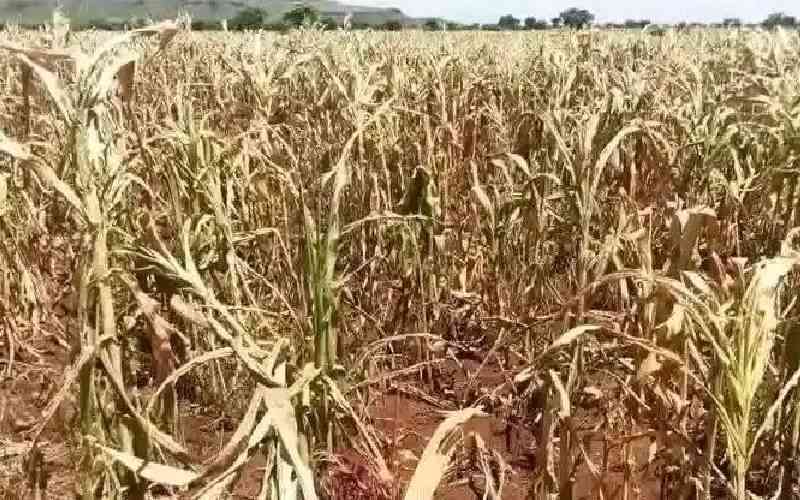
This time of the year, the undulating terrains of the country’s food basket is normally a sight to behold.
However, this is not the case this year. The maize crop, which is currently at the four months stage, should have developed mature cobs but the farms are eyesores.
A devastating drought has hit several areas across maize-producing counties such as Uasin Gishu, Trans Nzoia and Elgeyo Marakwet as well sections of Baringo, Nakuru and Bungoma in the last two months, signaling one of the most horrible food crisis in a country where ugali is the most favorite on dinner tables.
Farmers and experts say it is the worst season in the history of maize farming and Kenyans have to prepare for an acute maize shortage and scarce ugali beginning later this year.
Across the affected counties, farmers are in desperation as maize withers under the searing heat and drying soils.
Rains were expected in the region late last month, but they failed.
Agricultural officials are reporting 60 percent crop failure in two highest producing counties of Uasin Gishu and Trans Nzoia.
Thanks to the dry spell, several maize fields have flowered knee height and with no cobs.
According to farmers, the increasingly withering and yellowing maize is a waste because it can’t be turned into animal feed such as silage since it is not mature.
It is during this time of year also that maize stores are being prepared for harvest, but farmers are hopeless.
“Even if it rains today, my maize crop will not turn green again because it’s completely wiped by the drought,” said Seth Kiptum, a farmer in Kimoning, Uasin Gishu County.
A devastated Kiptum adds: “I came to my farm for the last visit. The more I set my eyes on the maize crop and think of dreams of a bumper harvest this year, I suffer heartache.”
Kipsum, who planted 20 acres of maize said he hoped to harvest an average of 30 bags of maize from each acre but after the rains failed since late last month when they expected, he however expected no yield.
“I wanted to harvest it for silage but the withered crop has not matured enough to make animal feed. I will return after a few weeks to clear the entire farm and the maize crop will only be manure,” the farmer said.
Stay informed. Subscribe to our newsletter
According to Edward Kosgei, a maize grower in Tembelio, the little hope that farmers clinched on last month had faded.
Like Kiptum, a hopeless Kosgei says he is getting ready to cut his maize crop, use it as animal feed and grow beans in the same farm to cushion himself from the huge losses.
“At times, the clouds form and I see signs of rain but the skies suddenly clear and I lose hope. It failed to rain when the maize needed water the most. I have accepted the losses,” says Kosgei.
Kibiwott Kwambai of Moiben, who, last month, still had hope of rains falling and his maize crop flourishing again, has surrendered to fate.
Farmers who planted with early rains in February are lucky since their maize neared maturity last month and have been affected by the drought when they are ripe for silage.
Eunice Kiptum of Chemanywes/Bondeni is an example of farmers who are turning the failed crop into silage.
“I expected to harvest the maize but the cobs are too small to give me good maize grain. I have cut to make it silage for my cows to cushion myself against losses,” she says.
A farmer like James Mutinda, who grows maize in Kitale says he expects about 40 percent of yields from his ten acre farm.
“Apart from maize, I have lost vegetables and fruit crops to the drought,” said Mutinda.
Trans Nzoia Governor George Natembeya says the county plans to train farmers on alternative crop production and climate-smart agriculture to reduce reliance on maize each season.
“We are exploring ways of having two crops every year so that our farms don’t only wait for the next maize planting after harvests,” Natembeya said.
Uasin Gishu County agriculture executive Kipkemboi Kotut projects 60 percent maize crop failure by the end of July.
According to Dr Kotut’s projections, Uasin Gishu which had produced 4.5 million bags of maize last season is set to harvest less than 2 million bags this year, meaning a shortfall of at least 2.5 million bags.
“Moiben, Turbo, Soy and Kapseret sub-counties are the worst hit. The dry spell has not affected the cooler areas of Kesses and Ainabkoi and we expect better harvest in those areas,” says Dr Kotut.
He adds: “Officials from the Ministry of Agriculture are in the county to assess the crop failure and give an analysis.”
Sub-sector players yesterday said maize importation cartels are positioning themselves for a booming business by the end of the season.
Kenya Farmers Association director Kipkorir Menjo said importation of maize will be the main option of filling the expected shortfall.
“Importation will fill the gap but it is often an opportunity for businessmen to reap from the crisis,” Menjo said.
He said farmers who have recorded total failure are getting ready to grow short season crops especially beans and varieties of maize that mature in three months.
“We are urging the government to deliver subsidized fertilizer so that farmers take advantage of the El Nino rains in October to grow short season crops,” said Menjo.
Eldoret-based agronomist Stephen Ayungo said maize cartels are likely to be positioning themselves for an opportunity to import duty free maize, which will mitigate the acute food shortage and benefit businessmen and not the farmer.
Ayungo said ugali is likely to be the most expensive meal from later this year.
“In an ideal situation, ugali will be the most expensive meal. Insuring crops and adoption of irrigation will be the lasting solution. This will require government interventions. Farmers should also use the el Nino rains to grow food,” the agronomist said.
Subscribe to our newsletter and stay updated on the latest developments and special offers!


 Prefer the Standard on Google