×

The Standard e-Paper
Join Thousands Daily
 The Standard Group Plc is a
multi-media organization with investments in media platforms spanning newspaper
print operations, television, radio broadcasting, digital and online services. The
Standard Group is recognized as a leading multi-media house in Kenya with a key
influence in matters of national and international interest.
The Standard Group Plc is a
multi-media organization with investments in media platforms spanning newspaper
print operations, television, radio broadcasting, digital and online services. The
Standard Group is recognized as a leading multi-media house in Kenya with a key
influence in matters of national and international interest.

Audio By Vocalize
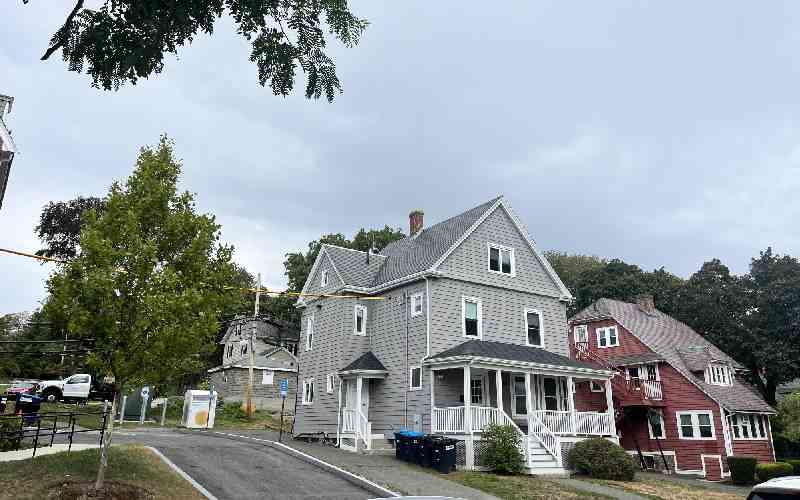
Deep South refers mostly to Louisiana, Mississippi, Alabama, Georgia and South Carolina in the United States (US). Florida, despite being so south, is not in the Deep South.
The term is more cultural than geographical. It is often synonymous with the Bible Belt. But in terms of the number of churches, Kenya beats Deep South hands down!
The Deep South was a fascinating place to be, but only after leaving it. It was my home for six years. Even as a Kenyan, I found the place conservative. But it was understandable; the legacy of slavery and unjust laws was still evident in residences, schools and cultures.
One classmate came to school in the Deep South rather than attend the Massachusetts Institute of Technology; it was too white, I heard. Her argument was she would be nurtured in a Historically Black University (HBCU).
The African-Americans claimed I did not understand their lives. I told them we too went through colonialism. But that was not enough to reach a point of convergence, that we both had suffered injustice.
Many felt we were introducing unfair competition, taking over their jobs, and I heard one time their women. Remember recent xenophobia in South Africa?
I found a curious resentment to academic excellence. I was once accused of “acting" white for getting good grades or writing a longer term paper! That thinking is slowly creeping into Kenya’s higher education.
A few memories of the Deep South still linger: the cotton plantations, the delta which is the home of the blues, the monuments around Vicksburg, the mighty Mississippi River and its casinos, the beaches of Pensacola, and the city of New Orleans and its Cajun cuisine.
Add the poor living in the inner city and the rich far away, served by good road networks and big lot sizes. Living in the Deep South was a blessing; I fully understood American society.
Away from landmarks, something else caught my attention: the dreams and aspirations of the African Americans to be either musicians, actors or basketball players.
You could add other sports like boxing. That is what is highlighted by the media, with well-known stars. You can name them?
I noted African-Americans have unique names; Gianna, Jayden, Lakeisha, among others. I met a Kymani (Kimani) who told me the name is from Jamaica. Surprisingly, one of Bob Marley’s sons was Kimani, a popular name in Kiambu! How did he get it?
I taught a mixed class of African-Americans and mzungus in “shallow south,” Kentucky. I had a voluntary social lab for two years.
The two groups are very different, from timekeeping to interpersonal relations and sensitivity to history. I once got a backlash on a subtopic on the black economy. I was reminded it should be the shadow economy!
Outside popular career dreams and culture nuances, I noted a strong emphasis on firsts among African Americans; he was the first African American to be this or that. We are replicating that in Kenya today with emphasis on gender.
Stay informed. Subscribe to our newsletter
Kenya is imitating the Deep South in other ways. One is dreaming of being famous. It is not just through music and acting but through influencing with TikTok as an avenue.
The dream of being musicians, actors or basketball players hypnotises the Deep South. The dream of making it big, being an influencer on consumption patterns, is keeping our youngsters hypnotised.
Few influencers focus on hard stuff like science, technology, investment, or even mining. The market has taken note, including academic institutions offering courses likely to make you a “star.”
Competency-Based Education (CBE) has even incorporated arts and sports as part of mainstream. We hope to spawn the next generation of footballers, basketballers, runners and other sportsmen.
In a country with a high rate of unemployment, something must keep the young busy and what’s better than dreams of making it big?
The number of youngsters creating content on the streets makes me think Kenya is now the new Deep South. Curiously, this is happening as we define our road to Singapore. This road will be paved in science, technology, engineering, and mathematics (STEM), and influencing and the arts will be flowers on the roadside, no pun intended.
Finally, Kenya is imitating the Deep South in another subtle way: women's empowerment. The population of females in higher education is disproportionately higher; online sources indicate that in one HBCU in the Deep South, males are 36.8 per cent and females are 63.2 per cent.
In another predominantly white university, the proportion is male 42.8 per cent and female 57.2 per cent; don’t ask me where men are. Check more universities.
The “sociological instability” created by such ratios is worth thinking about. From my experience in the Deep South, it is not something to celebrate. Add the proportion of children born to unmarried mothers.
Two states in the Deep South have 53.9 per cent and 54.9 per cent of children born to unmarried mothers in 2024, according to the US Center for Health Statistics.
As we dream of Singapore, such “soft issues” may seem irrelevant. But they matter more than superhighways and skyscrapers. Do you agree?
Subscribe to our newsletter and stay updated on the latest developments and special offers!

 Prefer the Standard on Google