 The Standard Group Plc is a multi-media organization with investments in media
platforms spanning newspaper print
operations, television, radio broadcasting, digital and online services. The
Standard Group is recognized as a
leading multi-media house in Kenya with a key influence in matters of national and
international interest.
The Standard Group Plc is a multi-media organization with investments in media
platforms spanning newspaper print
operations, television, radio broadcasting, digital and online services. The
Standard Group is recognized as a
leading multi-media house in Kenya with a key influence in matters of national and
international interest.

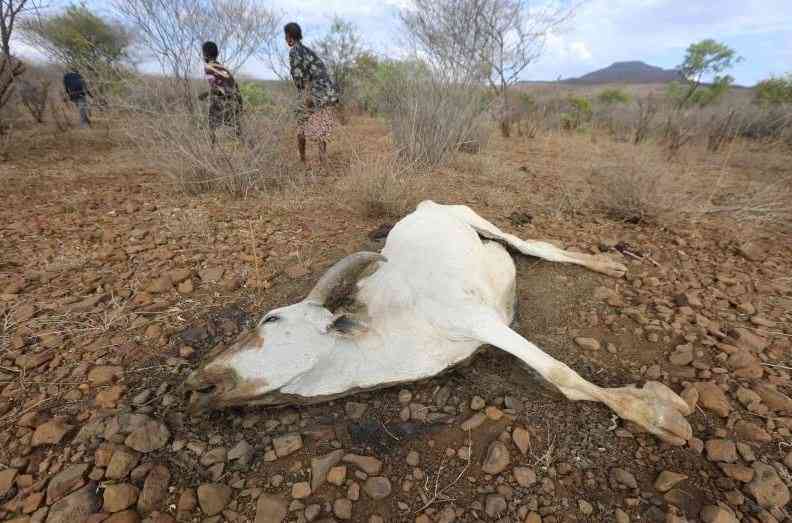
A prolonged and devastating drought is forcing thousands of pastoralist families in northern Kenya to take desperate measures, migrating across the border into Uganda in search of water and pasture. The movement highlights a deepening humanitarian crisis in arid regions, particularly Turkana County.
Conditions have become increasingly dire as traditional lifelines collapse. Seasonal rivers that normally sustain livestock during dry spells have dried up, while boreholes, the main sources of water, are either broken or overwhelmed by demand. Grazing fields have turned to dust, leaving herds with nothing to feed on.
The drought is crippling the local economy. Cattle, goats and camels are severely emaciated, producing little or no milk, a vital source of nutrition for children. Many animals are too weak to be sold or trekked to distant markets. For pastoralist families, the loss of livestock amounts to the loss of their entire livelihood.
In several villages, households survive on one small meal a day, if any. Women spend hours queuing under the scorching sun at the few functioning water points, while children miss school to walk long distances in search of water.
“This is no longer about drought; it is about survival. There is no water, no pasture and no food,” said Ekiru Ekamais, a resident of Lokipoto.
As local resources vanish, cross-border migration has intensified. Families trek for days, sometimes weeks, with their remaining livestock towards Uganda in the hope of better conditions.
“People do not leave their homes for nothing. When families cross borders, it means there is nothing left to sustain them,” said Lomoti Lochuro, a herder from Lokiriama.
Schools are already feeling the impact, with sharp declines in attendance reported across affected areas. When families migrate, children move with them, often required to assist during the journey and in new settlements.
“When families migrate, education becomes secondary to survival,” said a headteacher in Urum, Loima Sub-County, who requested anonymity.
Health facilities are also under strain, recording rising cases of severe malnutrition, particularly among infants, young children and pregnant or breastfeeding women.
“We are seeing more malnutrition cases every week. Some children arrive extremely weak because families cannot access regular food,” said a nurse in Loreng, Turkana West, who asked not to be named.
The National Drought Management Authority (NDMA) has confirmed a worsening situation. According to its latest assessment, food security and access to water continue to deteriorate across the county.
“Turkana has sunk deeper into crisis and is classified under IPC Phase 3 (Crisis), with several areas edging towards IPC Phase 4 (Emergency),” an NDMA official said in a statement read by Turkana West MP Daniel Epuyo.
Under the Integrated Food Security Phase Classification, Phase 3 signals high malnutrition and depletion of household assets, while Phase 4 indicates severe food shortages and very high malnutrition levels, one step short of famine.
Turkana’s Members of Parliament have jointly called for urgent national intervention. Mr Epuyo said all seven sub-counties are affected.
“All sub-counties are experiencing severe drought, with pasture depleted and key water sources drying up,” he said.
The MPs warned that without immediate action, the county could begin recording deaths within weeks. They urged the National Treasury to release emergency funds, scale up relief food distribution and strengthen security along migration routes.
“Families cannot wait any longer. Every day without intervention increases the risk of losing lives and livestock,” said Turkana North MP Sharif Ekuwam Nabuin.
Governor Jeremiah Lomorukai said the county government had rolled out an emergency food programme targeting about 77,000 households with maize and cooking oil, prioritising the hardest-hit wards.
“This intervention is meant to cushion the most vulnerable households as we mobilise additional support,” Lomorukai said, adding that long-term solutions remain critical.
County Commissioner Julius Kavita said no drought-related deaths had been officially reported so far, adding that national government food supplies had increased and were under close monitoring.




