×
App Icon
The Standard e-Paper
Truth Without Fear
★★★★ - on Play Store
Download Now

Identify and elect legacy leaders instead of powerful candidates

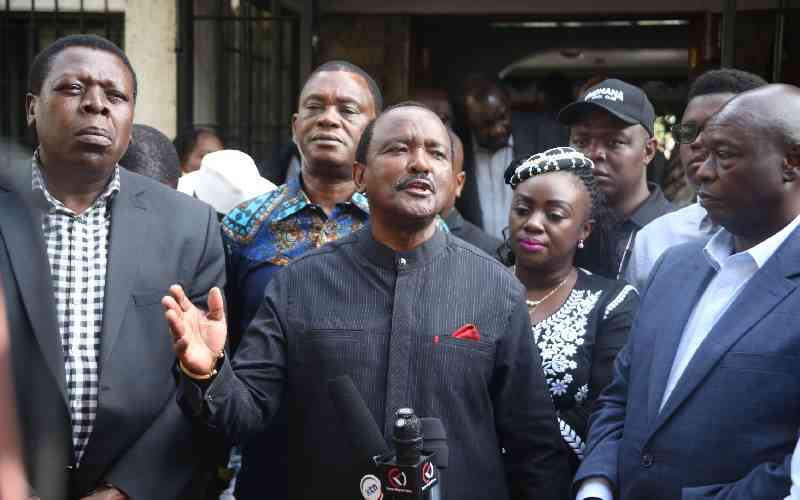
United Opposition leaders address the Press after visiting the residence of the late former Lugari MP Cyrus Jirongo in Nairobi on December 16, 2025. [Kanyiri Wahito, Standard]

There is a clear difference between leaders by virtue of office and leaders by virtue of knowledge, skills, and especially wisdom. For example, holding the most powerful office in a country does not in itself amount to leadership capacity. Authority may be acquired through election or appointment, but legacy leadership is exercised through moral discernment. The Scripture captures this distinction in the account of Solomon, who, when invited to ask for anything, did not seek wealth, military strength, or long life, but asked for wisdom to govern the people entrusted to him (1 Kings 3:9–12).

This biblical narrative presents a leader who is conscious that his individual limitations, if left unaddressed, could become a burden to the people under his care. Solomon’s request for wisdom reflects an awareness that his personal capacity to judge rightly would directly shape the lives of those he governed. Leadership here is a responsibility whose consequences extend beyond the individual leader to the community, institutions, and future generations.

When I look at the Kenyan context, the contrast between power and wisdom is like day and night. The persistence of corruption, unfolding day after day, month after month, and year after year, reveals a political environment in which leaders wield enormous formal power but exercise little legacy leadership. Public resources continue to be misappropriated with minimal consequence, pointing not only to individual moral failure but to a deeper leadership deficit where authority operates without foresight or concern for collective impact.


Legal power is constructed, regulated, and defended through constitutional order. Legacy leadership, however, is shaped primarily by moral ethics and responsibility toward others. While political authority often becomes focused on capturing and retaining power as an end in itself, legacy leadership remains oriented toward forming people and strengthening institutions.

The contrast becomes sharper when the biblical account of Solomon is read alongside contractarian political theory. For Solomon, leading well is a moral obligation grounded in accountability before God and responsibility toward the people. Wisdom is not optional but necessary for doing good. In the work of John Locke and Jean Jacques Rousseau, leadership legitimacy rests on the consent of citizens and the expectation that leaders will deliver security, services, and justice as defined by law. Leaders hold office because society expects performance within constitutional limits, not necessarily moral excellence.

In our Kenya, corruption continues to push thousands of young people out of the job market and erodes confidence in public institutions. How many elected leaders really care?

Leadership grounded only in legal entitlement prioritises holding power over serving people. Authority is exercised forcefully, taxation increases, and policy decisions impose heavy burdens on citizens without corresponding public benefit. The social contract remains formally intact, yet the human realities it is meant to protect remain a mirage.

As the 2027 General Election approaches, I believe the task before us is to deliberately identify and support legacy leaders rather than merely powerful candidates. This requires paying attention to how aspiring leaders understand power, how they treat institutions, and how they invest in people beyond their immediate political interests. We have to look past slogans and machinery to the deeper development crises exposed by responsible Kenyans.

The season for “sweet nothings” as Americans would call it is here; lofty promises that remain just that.

Without discerning legacy leadership in 2027, Kenya’s ambition to become a Singapore success story will be purely accidental, if ever realised.

History shows that sustained national progress is shaped by leaders who think beyond themselves. In Africa, Mwalimu Julius Nyerere governed with a moral vision that prioritised national cohesion, education, and dignity, leaving behind values and institutions that endured beyond his presidency. Nelson Mandela, in a different historical and geographic context, chose reconciliation over revenge, shaping a legacy that stabilised a deeply divided nation. Both understood leadership as a moral responsibility rather than privilege.

Yes, let us dream and dream big like any other country but we should never forget that a thousand steps begin with one. Aspiring young people in particular should aim at legacy leadership.

Dr Mokua is executive director of Loyola Centre for Media and Communication