×

The Standard e-Paper
Kenya’s Boldest Voice
 The Standard Group Plc is a
multi-media organization with investments in media platforms spanning newspaper
print operations, television, radio broadcasting, digital and online services. The
Standard Group is recognized as a leading multi-media house in Kenya with a key
influence in matters of national and international interest.
The Standard Group Plc is a
multi-media organization with investments in media platforms spanning newspaper
print operations, television, radio broadcasting, digital and online services. The
Standard Group is recognized as a leading multi-media house in Kenya with a key
influence in matters of national and international interest.
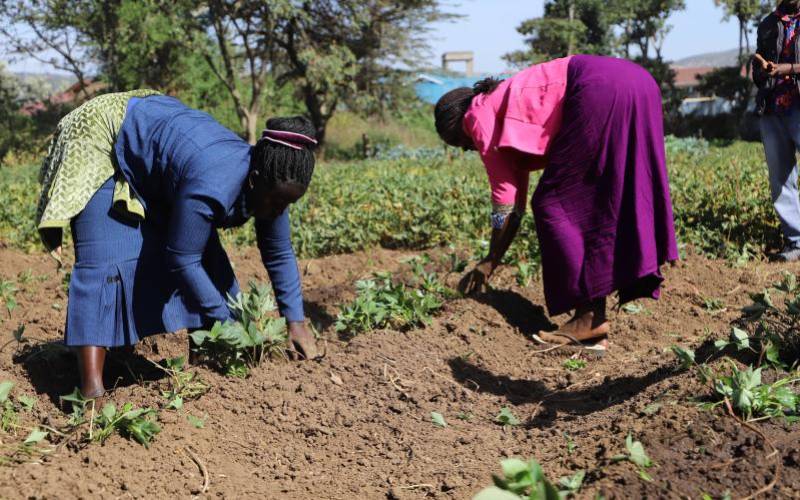
Farmers plant orange-fleshed potato variety at a farm, in Maralal, Samburu County. [Mercy Kahenda, Standard]
In the past few years, James Mugambi’s farm in Central became a battlefield, with the farmer constantly fighting to save his crops from erratic rains, drought, pests and disease. That was until he joined a local farmers’ group with more than 100 others who have taught each other how to work around climate change instead of struggling against it. To deal with delayed seasonal rains, for example, the farmers in the Mwimenyereri self-help group prepare their fields earlier than usual to take advantage of “booster showers” that come before the main rains, explained Mugambi. Lasting only one or two days, the showers kickstart the germination process and help keep seedlings alive through dry spells as farmers wait for heavier, more sustained rainfall. “It is not much, but it helps in reducing the risk of losses,” said Mugambi, who grows coffee, corn, beans and other fruit and vegetables on his two-acre (0.8-hectare) farm in Muiru village. As rising temperatures and extreme weather drive a surge in hunger, farmers around the world are looking for sustainable ways to grow enough food without degrading the soil and adding to the carbon emissions driving climate change. Farming and climate experts say those efforts could also help buffer nations against other shocks to food supplies caused by events like natural disasters, global pandemics and wars - even those fought thousands of miles away.
Subscribe to our newsletter and stay updated on the latest developments and special offers!







 join
join