×

The Standard e-Paper
Home To Bold Columnists
 The Standard Group Plc is a
multi-media organization with investments in media platforms spanning newspaper
print operations, television, radio broadcasting, digital and online services. The
Standard Group is recognized as a leading multi-media house in Kenya with a key
influence in matters of national and international interest.
The Standard Group Plc is a
multi-media organization with investments in media platforms spanning newspaper
print operations, television, radio broadcasting, digital and online services. The
Standard Group is recognized as a leading multi-media house in Kenya with a key
influence in matters of national and international interest.
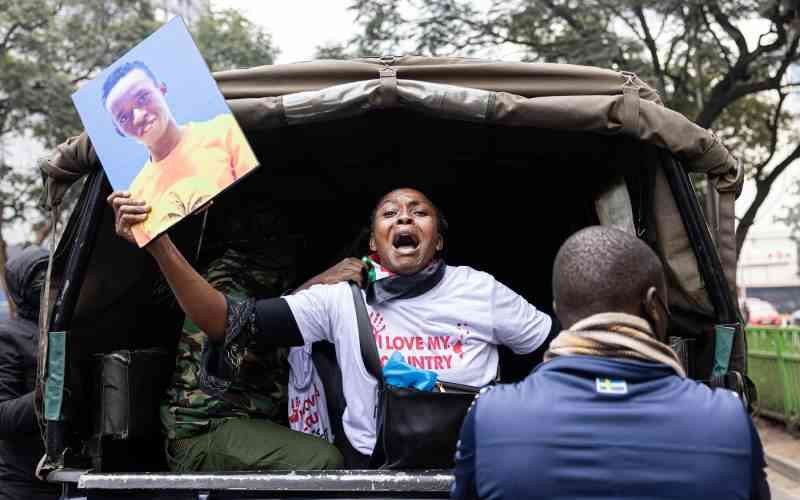
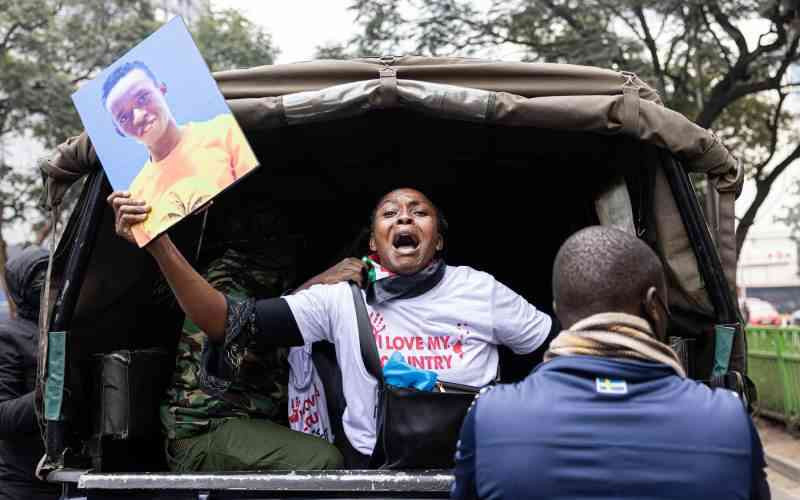
A Nairobi court has ruled that Gen Z protester Evans Kiratu Karobi died from unlawful blunt-force trauma sustained during the June 2024 Finance Bill demonstrations, but failed to establish who caused his fatal injuries.
In closing the inquest into Kiratu’s death, Milimani Senior Principal Magistrate Eric Wambo Otieno found that the evidence established that the 21-year-old suffered catastrophic internal injuries during the demonstrations on June 20, 2024, along Kenyatta Avenue and Kimathi Street in Nairobi’s Central Business District.
However, the court found that investigations did not produce sufficient evidence to identify the person responsible for inflicting the fatal injuries, leaving the circumstances surrounding the assault unresolved.
“The death of Evans Kiratu Karobi was occasioned by unlawful blunt force trauma inflicted by unknown person(s) during the public demonstrations of 20th June 2024 along Kenyatta Avenue and Kimathi Street within Nairobi CBD,” Magistrate Wambo ruled.
Kiratu was among hundreds of young protesters who took to the streets to oppose the Finance Bill 2024 as police moved to disperse crowds in the city centre.
Postmortem findings presented before the court revealed extensive injuries, including internal bruising to his fourth to seventh ribs, a ruptured diaphragm, ruptured pericardial membrane, herniation of the intestines and stomach into the thoracic cavity, a collapsed left lung, pelvic fractures and a ruptured urinary bladder.
Medical experts unanimously concluded that Kiratu died from multiple system organ injuries involving the thorax, abdomen and pelvis due to blunt force trauma.
The court found that the injuries were sustained during police crowd-control operations as officers dispersed protesters around Kenyatta Avenue and Kimathi Street.
A witness identified in the inquest as Christopher Munene testified that a heavy police presence and tear gas triggered chaos near Naivas Supermarket, Kenyatta Avenue and Kimathi Street as officers moved to disperse demonstrators.
Munene said he heard a loud bang amid the chaos and clouds of tear gas before members of the public began shouting that someone had been hit.
He found Kiratu lying on the road and writhing in pain.
According to his testimony, Kiratu complained of severe pain around his pelvic and private areas before members of the public removed him from the road and attempted to administer first aid.
Munene said an Uber driver was flagged down and the vehicle forcefully commandeered to transport Kiratu to Kenyatta National Hospital.
According to the ruling, Munene testified that Kiratu repeatedly complained in his mother tongue about pain in his private parts during the journey and later vomited blood while waiting for treatment.
The witness also observed a hole around Kiratu’s pelvic region and said doctors informed him that the young protester was going into shock.
Kiratu later died from the injuries.
Despite the evidence establishing that Kiratu sustained the fatal injuries during the chaotic protest and police dispersal operation, the court said it could not determine who inflicted the blunt-force trauma.
“The manner of death is therefore best classified as, one resulting from blunt force trauma sustained during public order enforcement operations,” Wambo said.
The court examined CCTV footage retrieved from H.H. Towers, which showed protesters fleeing from visible tear gas smoke but did not capture the moment Kiratu was struck or identify the person responsible.
The court further heard that public street surveillance cameras in the area were not operational at the material time.
Investigating officer Ibrahim Shumu told the court that investigations established that Kiratu was among protesters dispersed by police using tear gas. However, no direct evidence identified the specific object or person that caused his injuries.
“The evidence therefore falls short of identifying a known perpetrator other than police action or activity,” the court said.
Although the Independent Policing Oversight Authority investigated the circumstances surrounding Kiratu’s death, the court found no direct evidence linking a specific police officer or another identifiable individual to the fatal injuries.
The magistrate nevertheless found that an unlawful act had caused Kiratu’s death.
“Nevertheless, the evidence discloses that an unlawful act likely caused the death of the deceased,” Wambo said.
The court clarified that the finding of an unlawful death did not establish that the injuries were directly caused by the police use of tear gas.
“The court therefore find that an offence was committed by unknown person(s) not specifically due to the police use of teargas,” the magistrate ruled.
Wambo also criticised the failure of critical public surveillance infrastructure in Nairobi’s CBD, saying the absence of functioning cameras had hampered efforts to establish what happened to Kiratu and identify those responsible.
With no identifiable perpetrator established by the evidence, the magistrate ordered the inquest file closed.
Wambo directed that copies of the ruling be forwarded to the Director of Public Prosecutions, IPOA, the Inspector General of Police and Kiratu’s family.
Subscribe to our newsletter and stay updated on the latest developments and special offers!


 Prefer the Standard on Google






 join
join