×

The Standard e-Paper
Join Thousands Daily
 The Standard Group Plc is a
multi-media organization with investments in media platforms spanning newspaper
print operations, television, radio broadcasting, digital and online services. The
Standard Group is recognized as a leading multi-media house in Kenya with a key
influence in matters of national and international interest.

Audio By Vocalize
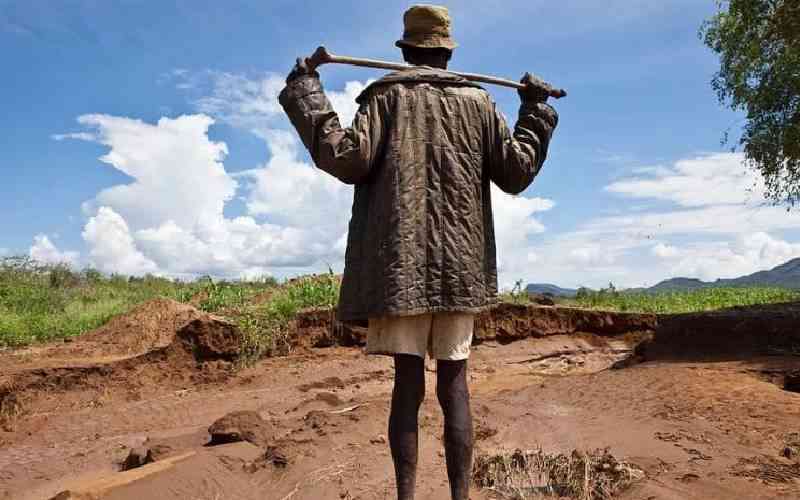
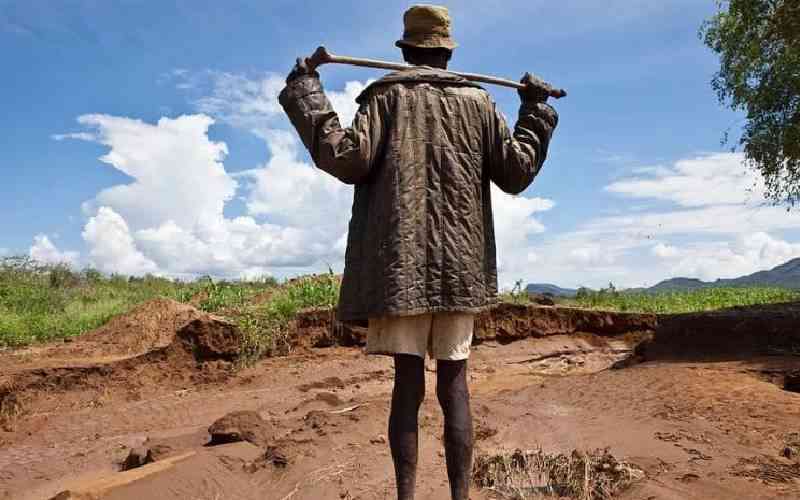
More than 600 Maasai workers are racing to dig 50,000 miniature earth dams in the Amboseli ecosystem ahead of expected El Niño rains, in an effort to restore degraded grazing land and protect pastures needed by livestock and wildlife.
The work targets hundreds of acres of bare ground where heavy rainfall risks running off hardened soil rather than soaking into it, worsening erosion and leaving little moisture to support grass growth.
Ernest Lenkoina, Rangelands Restoration Manager at Big Life Foundation, said pasture scarcity caused by land degradation was among the biggest challenges facing pastoralist communities.
“One of the biggest crises facing pastoralist communities today is pasture scarcity caused by degraded land,” he said.
The workers, recruited from villages around Mbirikani Ranch in Kajiado County, are digging semi-circular earth structures known as bunds and spreading indigenous grass seeds around them. The structures collect rainwater and slow its movement, allowing moisture to seep into the soil and support vegetation growth.
The initiative is being implemented by Big Life Foundation, with support from restoration organisation Justdiggit Foundation and the TWENDE project. Teams working at four sites are digging more than 1,000 bunds daily.
Lenkoina said preparing the ground before the rains was essential because water falling on compacted, bare soil could quickly disappear as runoff.
“When heavy rain falls on bare, hardened ground, much of that water can simply run off. These bunds give it somewhere to collect and soak into the soil. We’re preparing the land now so that when the rains come, we can make the most of every drop and give grass the best possible chance to grow. If rain falls on compacted, bare earth, that life-giving moisture is lost in minutes,” he said.
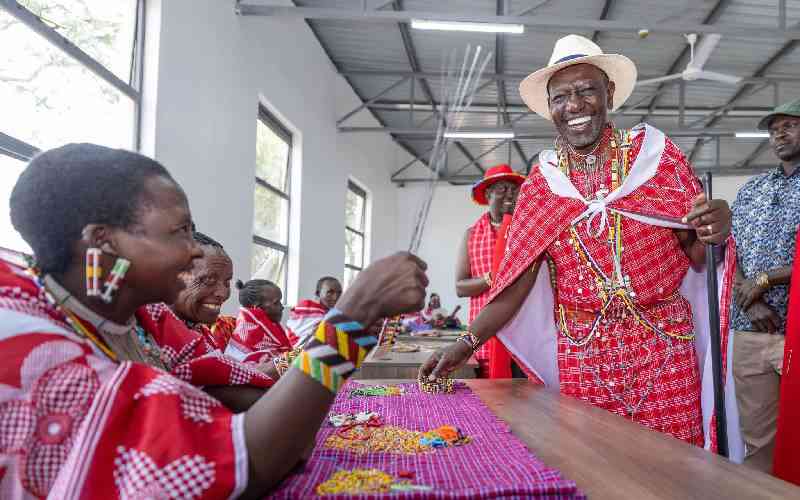
The work also provides an income stream for households affected by drought and livestock losses. Big Life says it is paying more than Sh9 million to 657 casual workers, many of them local women, including widows.
Eight community grass seed banks, coordinated by Big Life and managed by women’s groups across group ranches in Kajiado, supply indigenous seeds for the restoration work.
The seed banks also support other income-generating activities, including seed sales, hay baling and beekeeping.
The latest effort builds on a five-year restoration programme which has constructed more than 278,000 bunds across 2,300 acres. Through bunding, natural regeneration and controlled grazing, the organisations say they have helped restore more than 17,500 acres of rangeland.
Caroline Kerichu, Southern Landscape Manager at Justdiggit Foundation, said restoring degraded landscapes required moving beyond discussions and taking practical action with communities.
“We cannot afford to spend more time talking about restoring our landscapes than actually restoring them,” she said.
Stay informed. Subscribe to our newsletter
“Nature has an incredible capacity to regenerate when given the opportunity. Our role is to create the right conditions, support communities, and combine indigenous knowledge with science and innovation to accelerate that regeneration. The time to act is now. We must move faster, scale up our efforts, and let nature do what it does best: regenerate.” Said Kerichu.
The need for restoration is particularly pressing in the Greater Amboseli ecosystem, where pastoralist communities depend on semi-arid grasslands for livestock while elephants and other wildlife rely on the same landscape for food and habitat.
Recurring droughts, changing land use and land degradation have put increasing pressure on these shared grazing areas. When pasture becomes scarce, livestock and wildlife face greater competition for the remaining vegetation, while communities become more vulnerable to livestock losses.
Previous restoration sites at Ilchalai, Loosikitok and Olngosua are reportedly retaining greener pastures for longer and providing forage during dry months when untreated areas have lost their grass.
However, protecting newly restored areas requires keeping livestock away while vegetation establishes itself and produces seeds for future growth.
Community Land Management Committees and rangeland scouts are therefore enforcing temporary grazing restrictions in restoration zones to give the reseeded grass time to mature.
The initiative seeks to address two connected challenges, restoring the natural resource on which pastoralist livelihoods depend while creating an economic incentive for communities to protect it.
Subscribe to our newsletter and stay updated on the latest developments and special offers!


 Prefer the Standard on Google