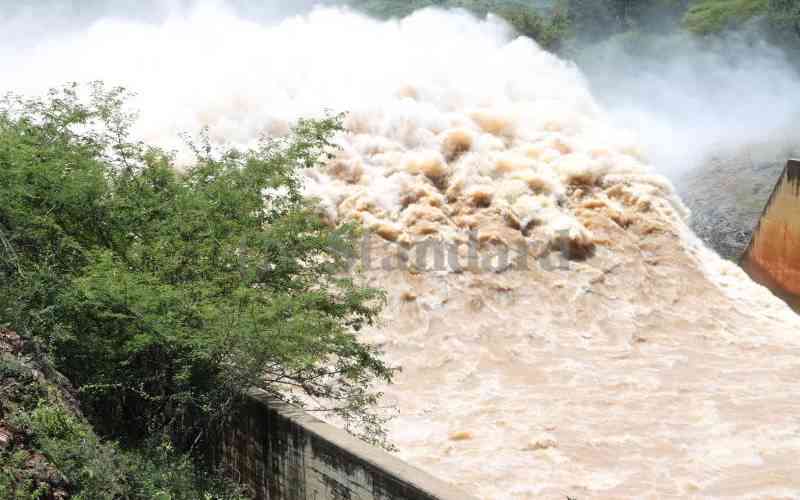
The government is planning to build six dams across five arid and semi-arid counties to expand irrigation and boost food security.
The proposed projects are Basingila in Isiolo, Lowaat in Turkana, High Grand Falls in Kitui and Tharaka Nithi, Thuci in Embu, Radat in Baringo, and the Galana Kulalu project spanning Tana River and Kilifi counties.

Radat and High Grand Falls are estimated to cost Sh30 billion and Sh320 billion, respectively. Thuci is projected to cost Sh705 million, while Galana Kulalu will require about Sh40 billion. Basingila and Lowaat will be developed under public-private partnerships, with costs yet to be disclosed.
The dams are expected to support irrigation on up to two million acres, cushioning farmers against climate shocks and unlocking the economic potential of arid and semi-arid lands.
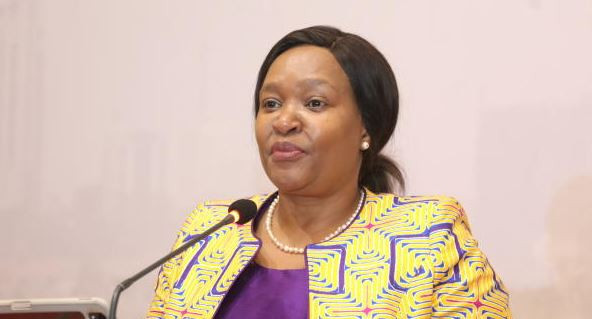
Irrigation Principal Secretary Ephantus Kimotho said the plan, which is part of the national sector investment programme, targets drought-prone regions with a focus on climate resilience.
According to the PS, farmers in all parts of the country are greatly affected when rains fail and this can be attributed to climate change.
“Irrigation comes in as a mitigating factor of fighting climate change effects, whereby whenever there is rain, we store water and when there is drought, we use that water to do irrigation,” Kimotho said.
He added that the government aims to expand access to the programme this year, with benefits expected to be evident during the harvest season.
Vincent Kabuti, head of irrigation infrastructure at the ministry, said construction would begin soon and enable a shift to large-scale commercial agriculture.
“We will go into large-scale commercial agriculture, which will help in meeting our food security needs as a country, create jobs, employment and change livelihoods.”
Irrigation programmes Secretary, Michael Thuita, said the projects are located in arid and semi-arid regions that have significant but underutilised potential. “We are geared towards increasing the area under irrigation by promoting large dams in ASAL areas i.e Mandera or North Eastern, Baringo, Turkana and the famous Galana.”
According to Irrigation Secretary for Land Reclamation, Climate Resilience and Irrigation Water Management Joel Tanui, climate resilience and irrigation water management, said the focus on ASAL regions is deliberate.
“Under the land reclamation programme, we are aware that 80 to 89 per cent of the country falls under the arid and semi-arid areas, and so this is an area we will give a lot of focus because it holds the potential for irrigation development in this country.”
The ministry said the irrigation drive is expected to stabilise food production, create jobs and improve livelihoods in vulnerable regions.
Stay informed. Subscribe to our newsletter