×

The Standard e-Paper
Join Thousands Daily
 The Standard Group Plc is a
multi-media organization with investments in media platforms spanning newspaper
print operations, television, radio broadcasting, digital and online services. The
Standard Group is recognized as a leading multi-media house in Kenya with a key
influence in matters of national and international interest.
The Standard Group Plc is a
multi-media organization with investments in media platforms spanning newspaper
print operations, television, radio broadcasting, digital and online services. The
Standard Group is recognized as a leading multi-media house in Kenya with a key
influence in matters of national and international interest.

Audio By Vocalize

There is little doubt that the world has entered an unusually fraught moment. Long-simmering tensions between the United States and Israel on one side and Iran on the other have now spilled into open confrontation that risks becoming a drawn-out conflict rather than a brief flare-up. It remains too early to judge the full consequences. Financial markets, ever sensitive to geopolitical shock, have yet to deliver a settled verdict. The true scale of the disruption may not be apparent for days, perhaps weeks, as investors digest both the military realities and the political calculations that will shape what comes next.
Still, consequences are already discernible. Most striking is the failure of protracted diplomacy and de-escalation overtures. The long-assumed stabilising power of dialogue has given way to open confrontation. In its wake, states such as the United Arab Emirates (UAE) and Qatar, until recently regarded as islands of predictability in a turbulent region, find themselves drawn into an ever-expanding theatre of insecurity. Dubai and Doha have been shaken by the reverberations of Iranian retaliatory strikes on Gulf states, undertaken in response to continuing attacks by the US and Israel on Iran. The geography of the conflict is widening, and with it, the illusion that distance confers safety.
The second effect has been swift and measurable; oil markets have responded with alarm. The price of Brent crude, the global benchmark, has climbed by roughly 10 percent, reaching USD 80 per barrel. Analysts now speculate that it may test USD 100 in the days ahead. Should that threshold be breached, the consequences will extend far beyond the region. Elevated petroleum prices feed directly into transport and production costs, threatening a renewed bout of headline inflation across both advanced and emerging economies. In an interconnected world, energy shocks rarely remain local for long.
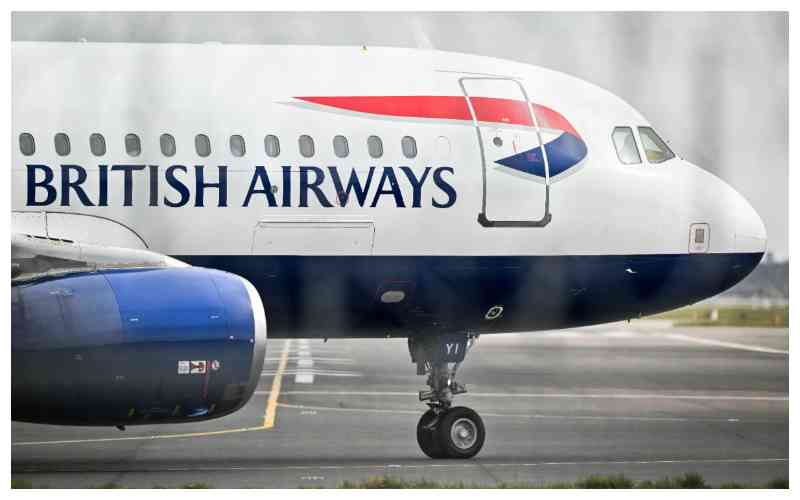
Third, this turmoil has also laid bare the structural fragility of global aviation. Even in placid times, the world’s leading carriers subsist on margins of barely 5 per cent. The International Air Transport Association expects profits of just 3.9 per cent in 2026, a slender cushion against shocks. After the weekend’s events, Gulf airspace was abruptly sealed. The consequences were immediate. Dubai International Airport, among the world’s busiest hubs, handled 92 million passengers in 2024. Yet within 48 hours, nearly 6,000 flights were cancelled according to FlightAware, stranding tens of thousands and snarling global routes.
More striking, however, was the official response. The government of the UAE instructed hotels not to evict stranded guests and pledged to cover the bills. Oman adopted a similar stance. These instances of bureaucratic dexterity prioritise strategic preservation over immediate profits, maintaining market dominance amid looming competitive pressures.
Two lessons present themselves for Lessons to be learnt from the current Gulf War. The first is that globalisation is not an abstraction but a hard constraint. Should the conflict continue to divert traffic from the Gulf, Kenya’s geography offers an opening. But to capture displaced flows, the country must fortify its principal gateway, Jomo Kenyatta International Airport, and steady its flag carrier, Kenya Airways.
The second is sobering. Few large airlines, run strictly on commercial lines, can survive violent demand shocks without State backing. Such backing is less a subsidy than a strategic investment in an industry whose dividends spill well beyond the ledger.
Mr. Khafafa is a public policy analyst






Subscribe to our newsletter and stay updated on the latest developments and special offers!








 join
join