×
App Icon
The Standard e-Paper
Read Offline Anywhere
★★★★ - on Play Store
Download Now

Opportunities abound for young people in the coffee sector

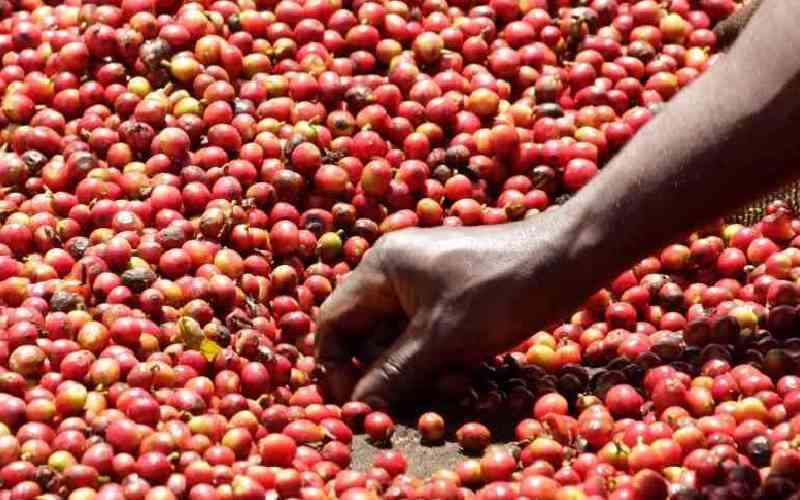
A former sorts out coffee berries. [File, Standard]

The government has initiated the Nyota project. Nyota stands for National Youth Opportunities Towards Advancement. This is funded by the World Bank and aims at transforming the lives of the vulnerable youth.

The project aims at creating employment opportunities, enhancing income generation and promoting savings among the youth population. The youths are currently undergoing training on business and entrepreneurship and will also be mentored and given some capital to establish businesses of their choice.


The coffee sub-sector is one of the areas that these youths need to consider. Coffee has a history of low prices that are unpredictable. This has demotivated farmers over the years. But now the prices have become very favourable. The current prices are historic and the Nairobi Coffee Exchange has never experienced such since coffee trading was established.
Consequently, it is expected that demand for coffee planting materials and farm inputs will be high in the foreseeable future.

Youths need to be advised to engage in coffee trading. Our youths are hesitant to engage in agriculture but need to be told that agriculture doesn’t necessarily have to be farm activities. The coffee value chain has many nodes where the youths can get engaged in.


With the Sh50,000 Nyota grant, one can establish a coffee nursery. A packet of about 3,000 coffee seeds costs Sh3,500. To do the nursery, one requires some animal manure and a few kilogrammes of fertiliser.

After six months, the nursery will have ready-to-plant seedlings which can be sold at around Sh50 each. Assuming a survival rate of 80 per cent, one can get decent returns. Buying more packets will give the investor even higher profits.

Young people may also decide to offer crop advisory services to the farmers. The government’s extension services have become elusive with time with the number of farmers served by a single extension officer increasing beyond the recommended levels.

The youths can equip themselves with coffee agronomy knowledge which they can share with the farmers at a fee. Such knowledge is available at the coffee research institute at subsidised fees. They can also acquire the knowledge through the Internet.

They may also lease coffee farms and utilise the knowledge that they will have already acquired to do farming. Leasing a farm may be done in two ways.

One, they can lease the farm for a number of years or, two, identify an underperforming farm where the coffee production is low (for example a kilogramme per tree) and agree with the land owner to take care of the farm and share any extra kilogramme from the trees will be between them and the farm owner.

The youth may also prefer to offer services that require minimal capital investment like pruning, grafting, spraying foliars and crop protection materials etc. Unknown to many, very few farmers know how to prune coffee, yet the production per tree is highly dependent on the quality of pruning.

Finally, they may invest in coffee roasting and brewing equipment. It is unfortunate that Kenya produces finest coffees, yet what I see being hawked are coarse coffee brews that come from the off-grades. These have incapable of motivating the human tongue to crave for more. Fine coffee is addictive and makes the customer to want more.

Dr Irungu is coffee specialist