×

The Standard e-Paper
Home To Bold Columnists
 The Standard Group Plc is a
multi-media organization with investments in media platforms spanning newspaper
print operations, television, radio broadcasting, digital and online services. The
Standard Group is recognized as a leading multi-media house in Kenya with a key
influence in matters of national and international interest.
The Standard Group Plc is a
multi-media organization with investments in media platforms spanning newspaper
print operations, television, radio broadcasting, digital and online services. The
Standard Group is recognized as a leading multi-media house in Kenya with a key
influence in matters of national and international interest.

Audio By Vocalize
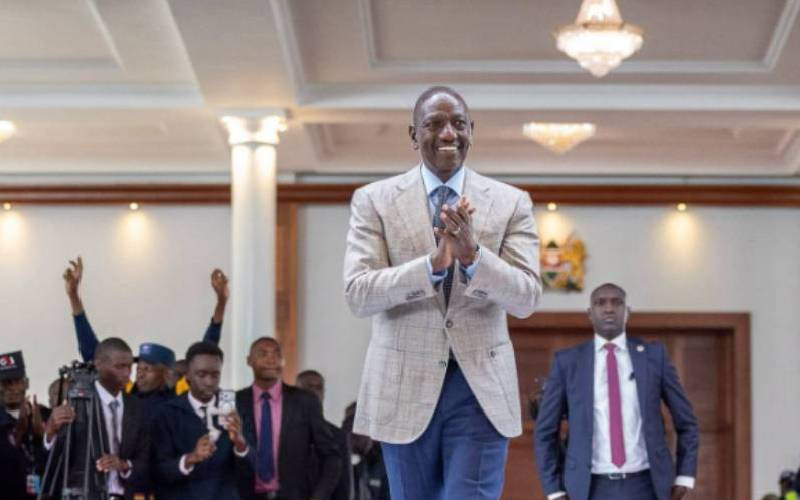
President William Ruto during a meeting with private security officers at State House, Nairobi, on August 6, 2026. [File, Standard]
A section of security guards have raised concerns over alleged exclusion from consultative meetings on issues affecting the sector.
They claim the door has been slammed in their face as the crucial deliberations continue following a presidential directive on the urgent need to reform the industry when they visited State House, Nairobi, on August 6, 2026.
President William Ruto while hosting thousands of security guards, directed the Interior Ministry to hold consultative meetings over their grievances and come up with a report within 60 days.
Among areas of focus include harmonisation of the legal and regulatory framework governing the private security sector; measures to ensure compliance with the gazette statutory minimum wage; enforcement of training and professionalisation of security personnel; review the private security training curriculum, and propose strategies for ensuring compliance with labour standards.
The first consultative meeting was held on August 12, 2026, chaired by Labour Cabinet Secretary Alfred Mutua at the NSSF Building in Nairobi. Subsequent meetings have since been held at Harambee House, where the Ministry of Interior is domiciled, as stakeholders race against time to beat the 60 days deadline.
However, members of the Protective Guards Association of Kenya (PROGAK) now claim they have been sidelined despite being key stakeholders. They are concerned that the final report will not capture their views, essentially defeating the very purpose of the deliberations that are almost coming to an end.
PROGAK chairperson Moses Otieno, claims that his attempt to participate in discussions on September 16 at Harambee House ended up in disappointment after he was kicked out of the meeting for allegedly questioning the membership composition of the newly established Private Security Wage Council.
“Any process purporting to reform an entire industry, including matters concerning wages, terms and conditions of employment and workers’ social welfare, ought to be conducted through a transparent, inclusive and genuinely participatory framework that recognizes the legitimate representatives of the affected workers,” said Otieno on Monday.
According to the official, their exclusion from such a process undermines the very principles of workers’ representation and participation, and that an exercise intended to address perennial challenges is not transparent.
“PROGAK is concerned that a process intended to produce recommendations for consideration and implementation with the private security wages framework may itself become vulnerable to legal challenge if legitimate sectoral stakeholders are excluded or their participation is made conditional upon surrendering of certain rights,” stated Otieno.
Amid the concerns raised by a section of guards, The Standard learnt the deliberations are almost coming to a close with a draft copy ready for the final fine-tuning during a retreat on a yet to be decided date.
“Proposals presented by various stakeholders have been consolidated in the draft copy, which will be reviewed at a retreat before the final report is presented to the Head of State,” said a source.
Despite the establishment of the Private Security Regulatory Authority (PSRA), which was supposed to professionalise the sector, guards continue to face various challenges key among them being poor pay and working conditions, lack of proper training, and non-remittance of statutory deductions from their salaries.
Stay informed. Subscribe to our newsletter
The Authority has been accused of failing to address these issues, which were laid bare to the President when the guards visited him at State House.
"The laws for the Private Security Regulatory Authority, General Wages Order, Private Security Wages Order, and the Private Security Regulation Act will all be changed and you all have names that preserve your dignity as private security officers," President Ruto told the guards.
Relevant state agencies and stakeholders were instructed to begin work on the directive immediately and present a progress report to within 60 days.
“It is therefore unfortunate that a process intended to address longstanding challenges in the industry may now be proceeding in circumstances that create questions regarding its inclusivity and legitimacy,” said Otieno.






Subscribe to our newsletter and stay updated on the latest developments and special offers!







 join
join