×

The Standard e-Paper
Fearless, Trusted News
 The Standard Group Plc is a
multi-media organization with investments in media platforms spanning newspaper
print operations, television, radio broadcasting, digital and online services. The
Standard Group is recognized as a leading multi-media house in Kenya with a key
influence in matters of national and international interest.
The Standard Group Plc is a
multi-media organization with investments in media platforms spanning newspaper
print operations, television, radio broadcasting, digital and online services. The
Standard Group is recognized as a leading multi-media house in Kenya with a key
influence in matters of national and international interest.

Audio By Vocalize
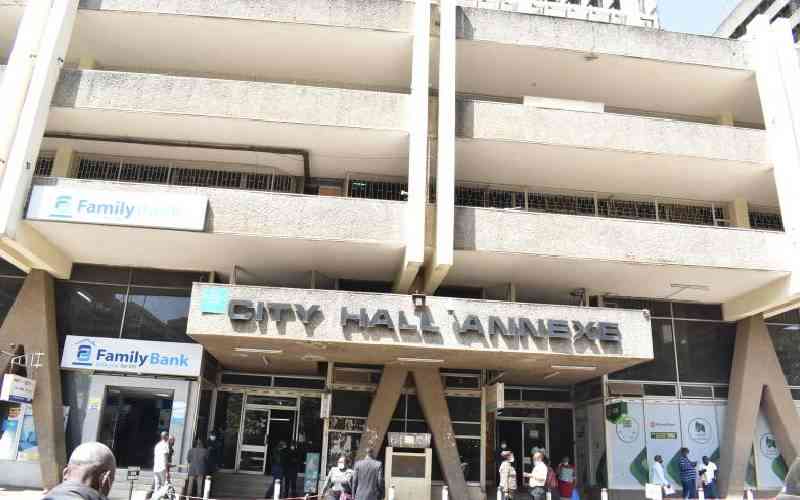
Nairobi Governor Johnson Sakaja has revealed that the city is owed Sh2.7 billion in outstanding land rates, with police stations, prisons, and military barracks being among the biggest defaulting tenants.
Appearing before the Senate County Public Investments and Special Funds Committee chaired by Taita Taveta Senator Johnes Mwaura, Sakaja laid bare a systemic failure that pits the national government's security apparatus against the county's financial survival.
The Governor told the Senate Committee that if Nairobi County collected land rates fully, it could raise up to Sh80 billion annually with land rates are the bedrock of own-source revenue, meant to fund garbage collection, build roads, and light up informal settlements.
“Nairobi city is forced to survive on a fraction of what it is owed; we are trapped in a bureaucratic gridlock where the defenders of the law are the ones breaking fiscal policies, with my administration struggling to collect what it is owed to it,” said Sakaja.
The Governor told Senators that they have written several letters to these institutions but expressed concerns that letters carry little weight against barracks and police stations and that his administration is mulling over how it will get the money owed to it.
Sakaja said that with a ballooning deficit being experienced his administration has turned to aggressive structural reforms, with the Nairobi Revenue Authority (NRA) outsourcing services and appointing six specialised debt recovery firms.
“Each of the firms has been assigned to oversee recoveries within one of Nairobi’s six newly created boroughs, targeting long-standing land rates arrears, accumulated penalties, and interest,” said Sakaja,
The Governor told Senators that the introduction of a unified, online single business permit means traders no longer have to endure the agonizing queues at City Hall and that this will help solve a crisis that has been there for many years.
He admitted that despite the national government's default, City Hall’s internal reforms are bearing fruit, with the county having digitised 125 revenue streams, eliminating cash payments to curb corruption, leading to an increase of funds collected.
Sakaja pointed out that digital triumphs experienced by his administration only highlight how much more could be achieved if public institutions cleared their multi-billion shilling debts, calling for the Senate to help them recover these debts by engaging the national government.
“While we are aware that a legal battle against the state is a zero-sum game, we are steering away from aggressive litigation, proposing instead a negotiated approach to resolve the outstanding debt,” said Sakaja.
Experts suggest a debt-swap mechanism where the billions owed in land rates are offset against services the national government provides to the county, or deducted directly by the National Treasury from the ministries' budgetary allocations before the funds leave the exchequer.
Until these policy gaps are plugged, Nairobi will remain a paradox: a wealthy capital city on paper, but one structurally starved of the funds it needs to serve its people.
“I would like to inform the Senate that the Nairobi Revenue Authority has been able to raise revenue from Sh8billion to Sh15.4 billion in four years, and we are expecting to get more revenue as we maximize our collection measures,” said Sakaja.
The standoff exposes a glaring legislative contradiction in Kenya's devolution framework under Article 175 of the Constitution: county governments are distinct and autonomous but when counties enforce tax compliance against a national security organ, autonomy hits a brick wall.
Stay informed. Subscribe to our newsletter
Under standard operating procedures, if a private developer defaults on rates, the county can clamp the property, deny business permits, or take legal possession with this revealing a massive policy and enforcement gap.
The law provides no realistic mechanism for counties to enforce debt recovery against essential national government installations; furthermore, the transition to modern rating systems has been painfully slow for decades, and valuation rolls were outdated, based on property values from the 1980s.
While the National Rating Act, 2024, assented to by President William Ruto, promises to fix these historical imbalances and strengthen Nairobi’s revenue base, its full implementation remains hamstrung by incomplete regulations and institutional resistance.







Subscribe to our newsletter and stay updated on the latest developments and special offers!