×

The Standard e-Paper
Fearless, Trusted News
 The Standard Group Plc is a
multi-media organization with investments in media platforms spanning newspaper
print operations, television, radio broadcasting, digital and online services. The
Standard Group is recognized as a leading multi-media house in Kenya with a key
influence in matters of national and international interest.
The Standard Group Plc is a
multi-media organization with investments in media platforms spanning newspaper
print operations, television, radio broadcasting, digital and online services. The
Standard Group is recognized as a leading multi-media house in Kenya with a key
influence in matters of national and international interest.

Audio By Vocalize
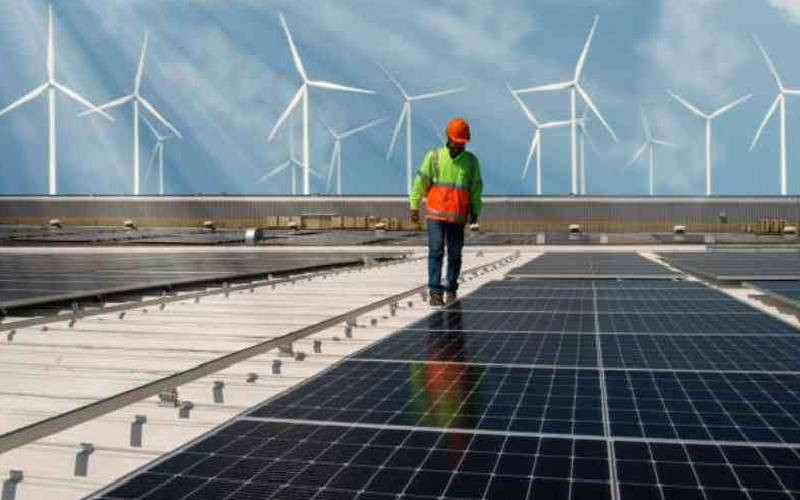
When Kenya launched the Kenya Energy Transition and Investment Plan in 2024, it made a bold statement about the country we intend to become: competitive and inclusive in a climate-resilient economy powered increasingly by clean energy.
The ambition to achieve Net Zero by 2050, and to keep our power grid largely renewable as demand grows, remains not only an environmental goal but a catalyst to grow our economy.
However, ambition alone will not finance the transition.
The defining question is how Kenya designs a practical financing architecture that attracts private investment and reaches communities.
Across the sustainability landscape, the shift from voluntary action to mandatory corporate sustainability and climate-related accountability is also changing this conversation.
By July 2028, the cost of inaction will move from reputational risk to financial consequence, a shift that is not beyond compliance pressure, but an opportunity to unlock new pools of funding for green growth.
Rather than rely primarily on taxpayer resources or refinancing old debts, Kenya’s fiscal strategy must crowd in private capital, with instruments such as the National Infrastructure Fund, public asset monetisation and public-private partnerships to mobilise the scale of financing required for clean energy, green transport, sustainable industry dynamics and emerging opportunities such as green hydrogen.
The success of this transition will not be measured only in megawatts, large infrastructure projects or headline investment figures.
It will be measured by whether a smallholder farmer in Kajiado or Busia can access a solar-powered water pump; how a dairy farmer through a rural cooperative can afford clean energy equipment; and how young people can build livelihoods around climate-smart agriculture and enterprise.
This is where small-scale finance, SACCOs and corporate social investment become the critical last-mile bridge between macro policy and household-level resilience.
The Safaricom Foundation’s Wezesha Agri programme’s demonstration hubs, such as Kuku Ward in Kajiado County and Alupe in Busia County, have been training and equipping youth and farmers with green technologies, including solar-powered water pumps, solar incubators and biogas systems in circular small-holder farms.
A practical, community-level intervention that now needs to translate the national energy transition into tools the rest of the country can use today.
When a farmer shifts from expensive and diesel-powered systems towards solar technology, it sure does have a bearing on production costs, enabling year-round farming, while improving resilience against climate shocks.
When complemented by digital platforms, these interventions help address information, data and market-access gaps that often keep small-scale producers from becoming commercially viable.
A gap that we all must admit is a major hindrance to financing opportunities, thanks to outdated and clean datasets.
Stay informed. Subscribe to our newsletter
The next frontier is to connect these decentralised models to larger pools of concessional and blended climate finance, with Saccos, community-based lenders and cooperatives as the distribution channels for green credit lines, supported by development and finance institutions and climate funds. Over time, grouped portfolios of small borrowers could even be aggregated into institutional green finance instruments, making last-mile climate action visible and investable.
However, we must be honest about the barriers. Climate risks and socio-economic pressures remain the greatest threat to scaling decentralised clean energy initiatives.
A drought, flood, failed harvest or sudden economic shock can wipe out a household’s ability to adopt, maintain or repay investment in green technology.
That is why financing models must be designed around the realities of communities, blending affordability, technical support, market access and risk protection. Clean technology cannot succeed if it is offered as a product alone; it must be embedded in ecosystems that help users generate income, manage risk and build resilience.
As wealthy nations are pressed to honour climate finance commitments to developing economies, countries like Kenya must be ready to show how those resources will flow into national budgets, private-sector pipelines and community-level implementation. The credibility of climate finance depends on whether it reaches the people most exposed to climate risk.
Kenya’s transition will require large infrastructure, progressive regulation and credible public finance. But it will also require trust, partnership and local delivery.
If we get the financing architecture right, the energy transition can do more than reduce emissions, lower the cost of doing business, strengthen food systems, create youth opportunities and build climate resilience from the ground up.
For business, this is the moment to move beyond sustainability and recognise it as a core driver of competitiveness and shared prosperity.
For policymakers, it is the moment to ensure climate finance is accessible not only to major institutions, but also to the institutions in closest proximity to our people, such as cooperatives, enterprises and communities doing the hard work of transition on the ground.
As the global climate finance debate rages on, Kenya’s imperative is to huddle on a green future built nationally, delivered locally.
- The writer is the Director, Sustainability and Shared Value, Safaricom





Subscribe to our newsletter and stay updated on the latest developments and special offers!








 join
join