×

The Standard e-Paper
Home To Bold Columnists
 The Standard Group Plc is a
multi-media organization with investments in media platforms spanning newspaper
print operations, television, radio broadcasting, digital and online services. The
Standard Group is recognized as a leading multi-media house in Kenya with a key
influence in matters of national and international interest.
The Standard Group Plc is a
multi-media organization with investments in media platforms spanning newspaper
print operations, television, radio broadcasting, digital and online services. The
Standard Group is recognized as a leading multi-media house in Kenya with a key
influence in matters of national and international interest.

Audio By Vocalize
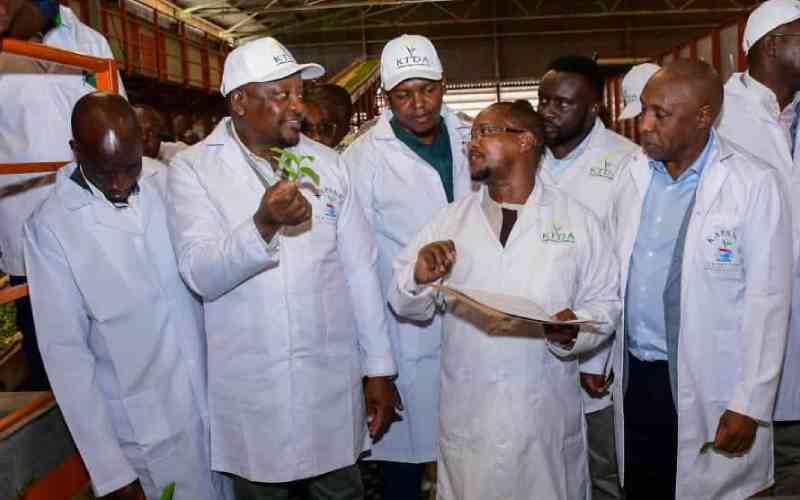
Agriculture Cabinet Secretary Mutahi Kagwe on a visit at Kapsara Tea Factory on August 13, 2026. [Courtesy]
Agriculture Cabinet Secretary Mutahi Kagwe has assured Kenyans that the country will remain food secure despite drought and increasingly unpredictable weather patterns expected to affect agricultural production.
Speaking during a visit to Trans Nzoia County on Thursday, Kagwe said maize production was likely to decline because of the dry conditions, particularly in Arid and Semi-Arid Lands (ASALs).
However, he said the government had put measures in place to prevent the reduction in local production from developing into a national food shortage.
“We expect maize production to decline because of the drought, but we have put in place measures to ensure this does not translate into a food shortage,” Kagwe said.
The CS said Kenya would supplement local maize supplies through imports, with the government looking to the Common Market for Eastern and Southern Africa (COMESA) region for additional supplies. The move is intended to bridge any gap between domestic production and demand.
Kagwe made the remarks while assessing the impact of the dry conditions on maize production and maize seed multiplication in Trans Nzoia, one of Kenya’s key agricultural counties.
Kagwe said the country had adequate maize seed stocks for the next planting season, estimated that between 25 and 30 per cent of the seed crop could be lost because of the drought.
He maintained that the remaining stocks would be sufficient to support farmers.
The government, he said, was working with seed producers to safeguard supplies and ensure farmers receive adequate and quality seed when planting begins.
Kagwe also linked the challenges facing farmers to changing weather patterns, saying climate change was forcing Kenya to rethink how it plans for agriculture and livestock production.
“We have to recognise that climate change is already here. Our plans must therefore remain dynamic because the weather is no longer as predictable as it was in the past,” he said.
He said the government would continue using forecasts and advice from the Kenya Meteorological Department to prepare for drought, El Niño and other extreme weather events.
Contingency plans for both agriculture and livestock are also being developed to help farmers respond to changing conditions.
Kagwe further said Kenya would continue importing commodities such as wheat and rice to meet demand.
Stay informed. Subscribe to our newsletter
He noted that local wheat production accounts for only a small proportion of the country's requirements, while rising rice consumption is being driven by population growth, urbanisation and changing dietary preferences among the youthful population.
The CS also reported positive developments in the sugar sector, saying production had doubled for the first time.
If sustained, he said, the increase could help Kenya reduce and potentially eliminate its reliance on sugar imports.
Kagwe maintained that, despite the difficult agricultural season ahead, continued monitoring, strategic imports, adequate seed supplies and flexible planning would help protect the country's food supply.
He said the government would keep adjusting its response as weather conditions evolve to ensure Kenya remains food secure.







Subscribe to our newsletter and stay updated on the latest developments and special offers!








 join
join