×

The Standard e-Paper
Kenya’s Boldest Voice
 The Standard Group Plc is a
multi-media organization with investments in media platforms spanning newspaper
print operations, television, radio broadcasting, digital and online services. The
Standard Group is recognized as a leading multi-media house in Kenya with a key
influence in matters of national and international interest.
The Standard Group Plc is a
multi-media organization with investments in media platforms spanning newspaper
print operations, television, radio broadcasting, digital and online services. The
Standard Group is recognized as a leading multi-media house in Kenya with a key
influence in matters of national and international interest.

Audio By Vocalize

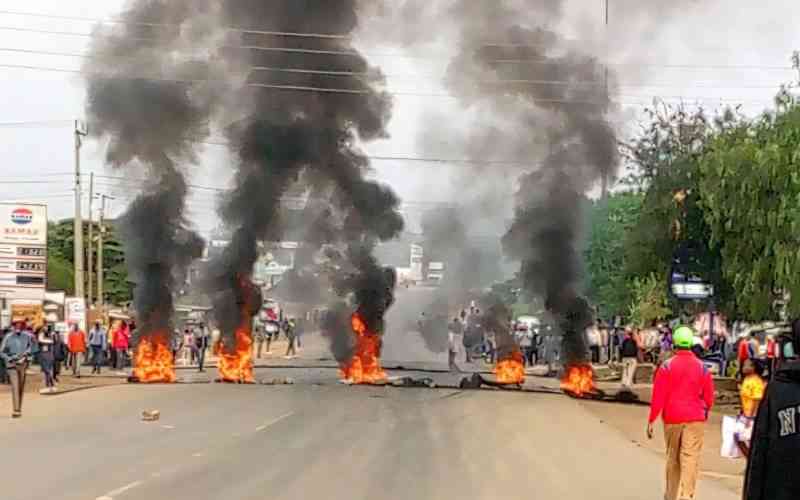
Kenya’s major highways and urban roads descended into chaos on Monday as a nationwide matatu strike over rising fuel prices paralysed public transport, leaving thousands of commuters stranded and triggering protests across several counties.
From Nairobi to Kakamega, Nakuru, Narok, Nandi, Kajiado and Machakos, roads that normally serve as key economic lifelines were barricaded, deserted or occupied by demonstrators demanding government intervention to address soaring fuel costs.
In Kakamega, youths and matatu operators lit bonfires and blocked the Kakamega–Kisumu Highway with stones and debris, disrupting movement along the busy transport corridor.

Similar scenes were witnessed at Mairo Inya trading centre, where protesters barricaded sections of the Nyeri–Nyahururu road, leaving motorists stranded for hours.
Along Naivasha Road, protesters burned tyres and blocked traffic, forcing motorists to turn back or park indefinitely as thick smoke engulfed parts of the highway.
In Kitengela, angry youths took to the streets and blocked major roads, bringing transport operations in the town to a standstill.
The situation mirrored developments at Madaraka along the Nyahururu–Nairobi highway, where demonstrators erected barriers and halted movement in protest against high fuel prices.
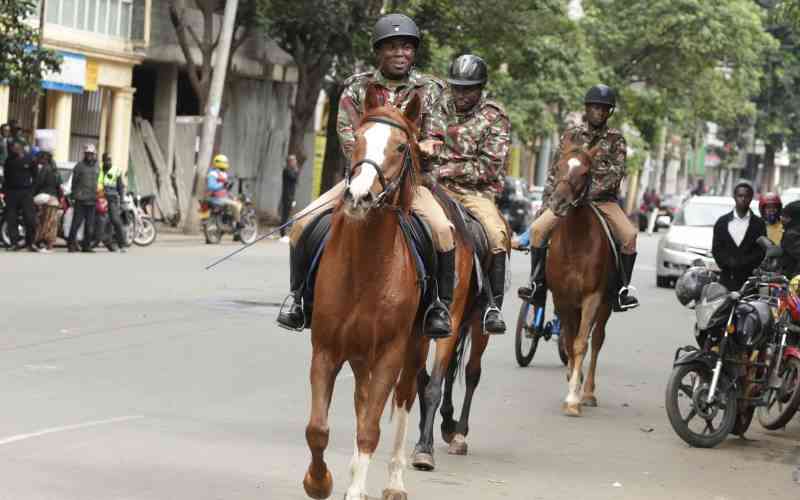
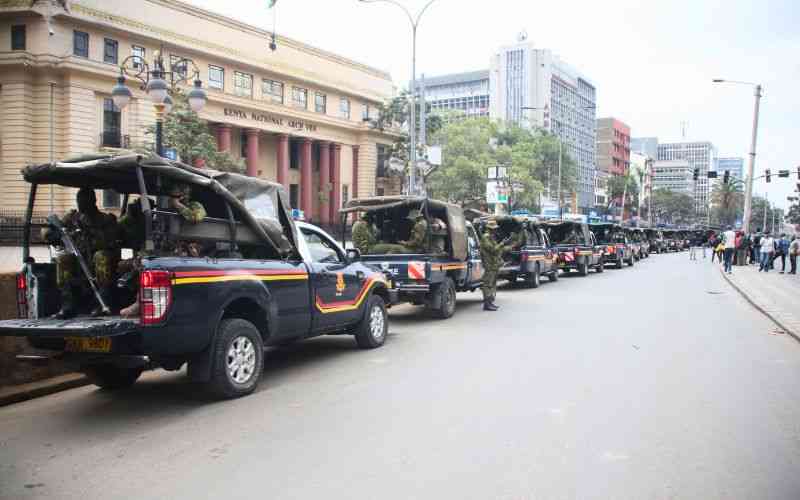
The ripple effects of the strike were also felt in Machakos, where businesses remained closed and transport activities ground to a halt. Police intensified patrols in major towns to prevent looting and restore order.

In Nairobi’s Central Business District and along Waiyaki Way, police lobbed teargas to disperse groups of youths attempting to stage demonstrations.
Security was heightened across the city as authorities moved to contain rising tensions linked to the nationwide strike.
Despite the heavy police presence, commuters endured a difficult morning as matatu fares skyrocketed to as high as Sh300 on some routes, forcing many workers to abandon vehicles and walk long distances to their workplaces.
Major bus stops in Nairobi and other towns were packed with stranded passengers, including schoolchildren who waited in vain for transport that never arrived.


Many commuters resorted to trekking along highways or seeking alternative transport through boda bodas, which emerged as the most active mode of transport during the shutdown.
Boda boda operators, however, took advantage of the crisis by charging inflated fares amid surging demand. Some commuters were forced to share rides or negotiate prices just to reach their destinations.

Along the Eastern Bypass in Nairobi, unusual scenes unfolded as livestock wandered freely on nearly empty roads, underscoring the absence of normal traffic flow.
Stay informed. Subscribe to our newsletter
In other areas, youths turned deserted highways into temporary football pitches as transport activities remained paralysed.








Subscribe to our newsletter and stay updated on the latest developments and special offers!







 join
join