×

The Standard e-Paper
Fearless, Trusted News
 The Standard Group Plc is a
multi-media organization with investments in media platforms spanning newspaper
print operations, television, radio broadcasting, digital and online services. The
Standard Group is recognized as a leading multi-media house in Kenya with a key
influence in matters of national and international interest.
The Standard Group Plc is a
multi-media organization with investments in media platforms spanning newspaper
print operations, television, radio broadcasting, digital and online services. The
Standard Group is recognized as a leading multi-media house in Kenya with a key
influence in matters of national and international interest.

Audio By Vocalize
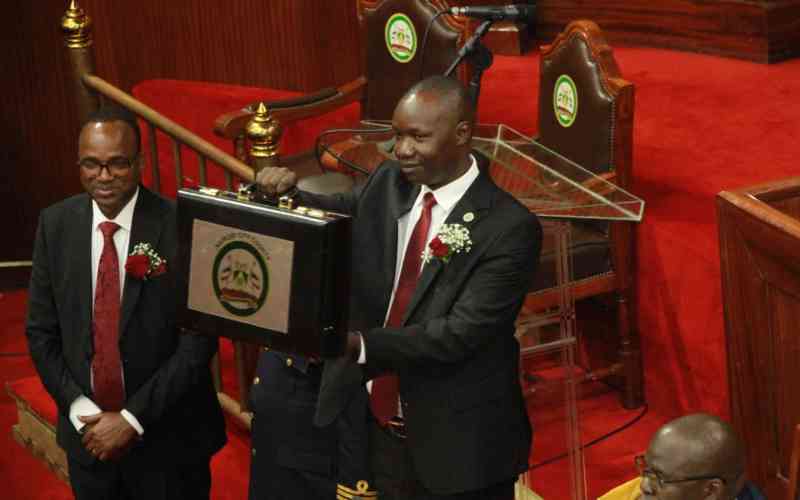
The Nairobi County Assembly has approved Governor Johnson Sakaja's Sh49.27 billion budget for the 2026/27 financial year, with health, education, infrastructure and environmental management receiving the largest share of funding.
The budget, passed about a month after the start of the new financial year, represents an increase of nearly Sh4 billion from the Sh44.6 billion approved for the 2025/26 financial year.
Presenting the estimates, Finance and Economic Planning CECM Ibrahim Auma said the budget was informed by public participation and is aimed at improving service delivery across the county.
The county expects to finance the spending plan through Sh23.47 billion from the equitable share and grants, Sh20.86 billion from own-source revenue, Sh3.2 billion from the Health Facilities Improvement Fund (HFIF) and liquor licensing, and about Sh1.7 billion from other revenue streams.
Auma said Sh421 million has been allocated for the completion of sub-county offices to decentralise county services and bring them closer to residents.
"This will reduce the time and cost incurred by residents in accessing services while strengthening responsive and decentralised service delivery," he said.
Infrastructure remains one of the biggest beneficiaries, with Sh2.4 billion allocated to the mobility sector for the construction and rehabilitation of roads, bridges, storm-water drainage systems and street lighting.
An additional Sh2.255 billion has been earmarked for the Ward Development Programme, up from Sh2.155 billion in the previous financial year.
"The impact of this programme continues to be felt across the county. However, implementation of ward projects has faced several challenges that have resulted in delays and consequently delayed delivery of much-needed services to residents," Auma said.
Housing has also been prioritised, with the county targeting the delivery of 10,000 affordable housing units through housing and slum upgrading projects across nine informal settlements.
The health sector received Sh1.06 billion for the construction, rehabilitation and equipping of facilities, including Pumwani Maternity Hospital, Mama Lucy Kibaki Hospital and Mutuini Hospital.
Another Sh600 million has been allocated for the procurement of pharmaceutical and non-pharmaceutical supplies.
Education funding also increased, with Sh900 million allocated to the Dishi Na County school feeding programme, up from Sh700 million last year.
The county also set aside Sh793 million for education support programmes, translating to at least Sh7 million per ward, to assist thousands of vulnerable learners across Nairobi.
To stimulate business growth, the budget allocates Sh491 million for the construction and rehabilitation of markets and Sh190 million for the Biashara Stimulus Programme, which supports small and medium-sized enterprises.
Stay informed. Subscribe to our newsletter
Sports, youth and social infrastructure will receive Sh1.4 billion, covering the development of sports facilities, stadiums and Early Childhood Development Education (ECDE) infrastructure.
Environmental management remains one of the county's largest investment areas, with Sh5.3 billion allocated to improve waste management, sanitation, water services and implementation of the Green Nairobi Strategy.
Like the previous financial year, the county will not introduce new taxes, fees or charges, opting instead to expand its revenue base through improved tax compliance, digital payment systems, enhanced land rates collection and the operationalisation of a customer care centre.
The Nairobi County Assembly has been allocated Sh4.5 billion to support its legislative and oversight functions, up from Sh2.6 billion in the previous financial year.
Auma said the county had made difficult but necessary decisions to ensure limited resources are directed towards projects with the greatest impact on residents.
The budget estimates received broad support from Members of the County Assembly, who said the spending plan places greater emphasis on completing ongoing projects while complying with the Public Finance Management Act.




Subscribe to our newsletter and stay updated on the latest developments and special offers!





 join
join