×

The Standard e-Paper
Smart Minds Choose Us
 The Standard Group Plc is a
multi-media organization with investments in media platforms spanning newspaper
print operations, television, radio broadcasting, digital and online services. The
Standard Group is recognized as a leading multi-media house in Kenya with a key
influence in matters of national and international interest.
The Standard Group Plc is a
multi-media organization with investments in media platforms spanning newspaper
print operations, television, radio broadcasting, digital and online services. The
Standard Group is recognized as a leading multi-media house in Kenya with a key
influence in matters of national and international interest.

Audio By Vocalize
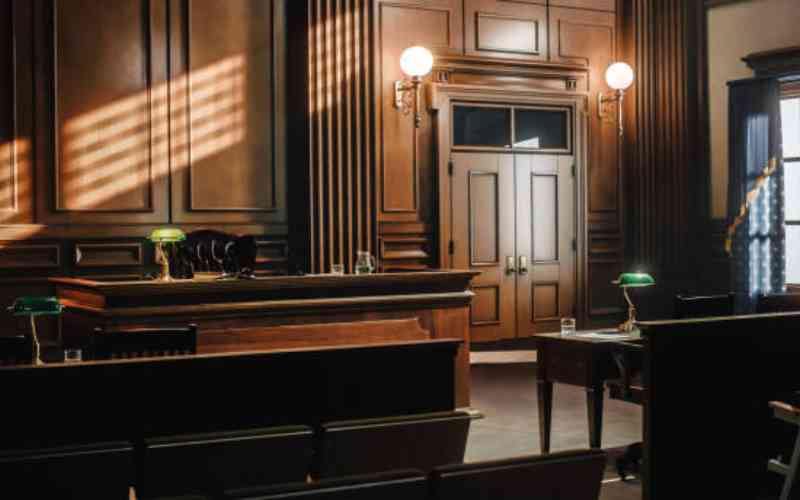
A growing number of cases before courts show State institutions created to protect our environment and wildlife are enabling their destruction as amendments to critical safeguard laws are introduced. Unless this changes, the Judiciary may be the last line of defence against State-led environmental destruction.
We have a constitutional right to a clean and healthy environment (Article 42). State agencies bear a constitutional duty to conserve and protect Kenya’s biological diversity, wildlife, forests, rivers, national parks and natural ecosystems (Art.69). Under Art.70, any one of us can go to court to stop environmental harm and compel the State to safeguard natural resources for present and future generations.
The Kenya Wildlife Service, Kenya Forest Service and National Environment Management Authority were not created to enable degradation of protected ecosystems for urban development. They were created to conserve and sustainably manage our wildlife, forests and biodiversity in line with Articles 42 and 69. Recent trends suggest that they may have lost their backbone in the face of multiple government plans to build state lodges, golf courses, zoos and parking lots in our forests and national parks.
In 2016, the National Assembly found that NEMA, KWS and Kenya Railways deliberately concealed the full impact of the Standard Gauge Railway (SGR) on Nairobi National Park. It concluded the agencies had fragmented the mega project into smaller independent developments that included the Inland Container Depot (ICD) and the railway corridor, rather than assessing the cumulative environmental impact.
A decade later, the same piecemeal encroachment tactic is being used in the Talanta Stadium and Bomas International Convention Centre projects. The proposed car park inside the park and new road connecting to the Southern Bypass excising approximately 15 acres of Ngong Road Forest was presented separately from the main development. Yet this associative infrastructure is now described as integral to the project. Transparency required this to be revealed from the outset.
Wayleaves have been used to justify infrastructure cutting through the park (SGR, Southern Bypass and ICD road) while a Special User Licence was issued to seize 50 acres of protected Karura Forest for Kiambu Road expansion before the court blocked it.
Public participation has become public relations. In Imenti Forest, public consultations on the State lodge, golf course and airstrip took place after key decisions were made. In Nairobi’s Ngong Forest, commercial tourist project construction preceded public participation. The Presidency exempted a controversial safari camp blocking the wildebeest Masai Mara migration corridor from statutory approvals last year.
If this is not enough, Parliament has amended the Forest Act and is considering amending the Wildlife Bill and Mining Bill to legalise mining, infrastructure development and other commercial-scale development in our forests and protected areas. Faced with this multi-pronged attack, thousands of citizens have launched a remarkable set of legal campaigns.
While 150 people attended the KWS consultation on the development of Nairobi National Park, 4,600 citizens have gone to court to stop it. Over 7,000 people have signed a petition to stop developments in Imenti Forest. There are also at least 15 active legal cases against public projects or land grabbing sanctioned by agencies mandated to protect our environment. They include Nairobi National Park (3), Karura Forest (3), Oloolua Forest (5), Maasai Mara (1) and Imenti Forest (2) as well as one active case challenging amendments to the Forest Act.
Judicial officers must boldly execute their constitutional mandate and be guided by the precautionary principle that courts and regulators act early to prevent irreversible harm. Both the Executive and regulatory agencies must be held accountable to the letter and spirit of the law.
Courts will act in the environmental interest when they fast-track cases, take a firm stance on contempt proceedings and ensure their orders are respected and enforced.
Strong environmental laws must be protected from safeguard weakening amendments. Our courts are our last line of environmental defence, and they must not fail us.






Subscribe to our newsletter and stay updated on the latest developments and special offers!





 join
join