×

The Standard e-Paper
Stay Informed, Even Offline
 The Standard Group Plc is a
multi-media organization with investments in media platforms spanning newspaper
print operations, television, radio broadcasting, digital and online services. The
Standard Group is recognized as a leading multi-media house in Kenya with a key
influence in matters of national and international interest.
The Standard Group Plc is a
multi-media organization with investments in media platforms spanning newspaper
print operations, television, radio broadcasting, digital and online services. The
Standard Group is recognized as a leading multi-media house in Kenya with a key
influence in matters of national and international interest.

Audio By Vocalize
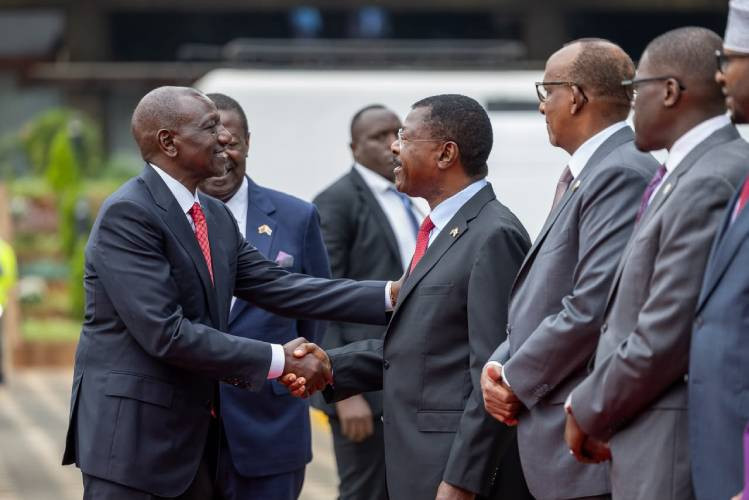
National Assembly Speaker Moses Wetang’ula has pledged Parliament’s full support for Government reforms aimed at transforming Kenya’s health sector and advancing Universal Health Coverage.
Speaking at the Kenya Health Summit 2026, presided over by President William Ruto, Wetang’ula said effective healthcare delivery required more than hospitals, medicines and equipment, stressing the need for a strong legal and policy framework.
He said Parliament had a critical role to play through legislation, resource allocation and oversight, noting that lawmakers were uniquely placed to understand challenges facing Kenyans because of their regular interaction with citizens.
“We will discuss hospitals, funds, medicines, equipment, systems, and outcomes. Kenya’s Constitution places Parliament at the centre of legislation, resource allocation, and oversight,” Wetang’ula said.
The Speaker traced Kenya’s health financing reforms from the establishment of the National Hospital Insurance Fund in 1966 to the country’s current transition towards Universal Health Coverage.
He said the reforms had been driven by persistent concerns from families struggling with medical bills, emergency admissions, treatment fundraisers and difficulties securing the release of patients and bodies from hospitals and mortuaries.
Wetang’ula highlighted four major health laws enacted in 2023 — the Primary Health Care Act, Facility Improvement Financing Act, Digital Health Act and Social Health Insurance Act.
He said the laws had strengthened the foundation for primary healthcare networks, enabled public health facilities to retain and manage revenues they generate, established a framework for digital health and provided safeguards for personal health information.
The Speaker welcomed the expansion of health insurance coverage, saying more than 30 million Kenyans were now registered under the new health insurance framework, compared with about eight million under the former NHIF system.
“Numbers do not lie. In law, we say that things speak for themselves,” he said.
He assured the summit that Parliament would continue exercising its constitutional mandate to appropriate public resources and oversee their use to ensure Kenyans receive value for money.
Wetang’ula called for tougher action against fraud and waste in the health sector, including ghost facilities and fraudulent claims. He also backed the use of technology and artificial intelligence to detect and combat fraud.
He urged the Government to address the unequal distribution of health professionals to ensure people in both urban centres and remote rural areas have equitable access to quality healthcare.
The Speaker further called for greater emphasis on preventive and promotive healthcare, including regular medical check-ups, nutrition, physical fitness, immunisation and health education.
He said prevention was critical in reducing the need for costly medical interventions.
Stay informed. Subscribe to our newsletter
Wetang’ula also urged regulators to protect patients from unlawful or excessive charges when they are required to make financial contributions towards healthcare.
“As I conclude, I want to assure this summit that Parliament will fulfil its responsibility to keep the health sector moving in the right direction,” he said.
President Ruto, meanwhile, described Universal Health Coverage as one of the most consequential social transformations undertaken by the country.
He said more than nine million families had been reached by Health Promoters visiting households to identify diseases and other health risks early and connect families to health facilities.
“We are reversing the old logic of waiting for people to get sick and identify diseases before disaster,” Ruto said.
The President said the Social Health Authority was designed to provide healthcare coverage for all Kenyans, adding that the Government had identified more than 2.2 million Kenyans to contribute progressively according to their circumstances.
He said eight million Kenyans had already received services through SHA.
Health Cabinet Secretary Aden Duale outlined additional reforms, saying the Government was investing in health financing, digital health, specialised care, medical supplies, maternal healthcare and workforce development.
Duale said the Sh9.6 billion National Equipment Service Programme had deployed 862 units of specialised medical equipment to 251 facilities across 44 counties.
The Digital Health Agency had also distributed more than 42,000 devices, while SHA had onboarded 32.3 million Kenyans and more than 10,000 facilities had been accredited.
Duale said a Sh10 billion investment in the Kenya Medical Supplies Authority had increased its order fill rate from 35 per cent to 95 per cent.
He added that the Government would recruit 5,000 nurses and midwives, while 7,414 UHC staff had transitioned to permanent and pensionable terms.
The Kenya Health Summit 2026, themed “Reforms Delivered, Health as a Right”, brings together national and county governments, healthcare professionals, regulators, referral hospitals and development partners to assess progress and chart the next phase of UHC.
The summit is focusing on healthcare financing, primary and specialised care, digital health, medical commodities, the health workforce, maternal and newborn health and accountability in service delivery.






Subscribe to our newsletter and stay updated on the latest developments and special offers!






 join
join