×

The Standard e-Paper
Kenya’s Boldest Voice
 The Standard Group Plc is a
multi-media organization with investments in media platforms spanning newspaper
print operations, television, radio broadcasting, digital and online services. The
Standard Group is recognized as a leading multi-media house in Kenya with a key
influence in matters of national and international interest.
The Standard Group Plc is a
multi-media organization with investments in media platforms spanning newspaper
print operations, television, radio broadcasting, digital and online services. The
Standard Group is recognized as a leading multi-media house in Kenya with a key
influence in matters of national and international interest.

Audio By Vocalize
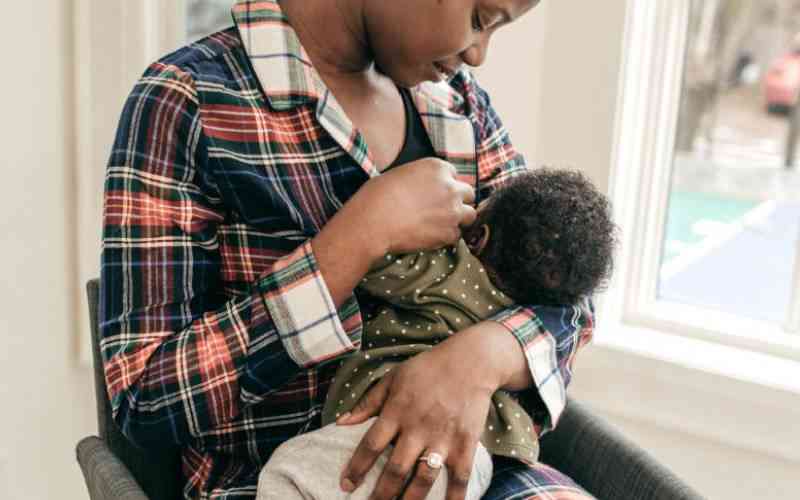
For close to one year, the staff’s lactation room at Nakuru Level Five Hospital has become almost like a kitchen to Mercy Wanjiru.
To her, it is a constant room that she visits to express her breast milk and even store it in a special fridge for later pickup when she is leaving for home.
“Life has become a lot easier now. Since I resumed work from maternity leave, I have been constantly expressing the milk here to keep the baby going even when I am working,” Wairimu says.
Unlike many other working women whose return to work after three months of maternity leave marks a painful, silent surrender as they are forced to pump milk in unsanitary places like toilets or even parked cars, Wanjiru had the privilege of exclusively breastfeeding her child for six months.
“When a workplace has a lactation room like this with all the equipment that helps women like me express breast milk, a mother can fully adhere to the six months of exclusive breastfeeding. This is because the workplace understands that a child’s health is way more important,” she said.
Wanjiru works at the hospital as a nutritionist and is among the few career women at reproductive age who get to access the facilities without straining.
At the lactation room, she has access to electric pumps, clean storage bags, specialised refrigeration, and even educational screens that provide continuous health instruction.
As the world marked World Breastfeeding Week, health experts warned that thousands of mothers abandon exclusive breastfeeding months ahead of medical recommendations.
They say this is because many corporate employers and public institutions are yet to integrate dedicated lactation stations into workplace policy.
According to the Kenya Demographic and Health Survey (KDHS 2022), the country’s exclusive breastfeeding rate has hovered around 60 per cent for years. Health experts pointed to the lack of workplace support as the primary bottleneck.
Speaking during World Breastfeeding Week, they emphasised that sustained exclusive breastfeeding is directly tied to lower infant mortality, reduced paediatric hospitalisations, and intellectual development.
Arthur Gichuru, Head of the Department of Clinical Nutrition and Dietetics at Nakuru Level Five Hospital, noted that while community awareness has risen, corporate infrastructure has lagged dangerously behind.
"While we are commemorating and educating the public on the importance of exclusive breastfeeding, the KDHS data reveals that the exclusive breastfeeding rate has remained stuck at 60 percent for a long time. We have realised that workplace support is the missing link." Dr Gichuru said.
He noted that breast milk carries crucial biological defences that shield children from life-threatening respiratory and gastrointestinal illnesses.
Stay informed. Subscribe to our newsletter
"Exclusive breastfeeding contributes directly to the child's immunity. Breast milk has vital antibodies that alleviate pneumonia, diarrhoea, and sudden infant death syndrome. When workplaces fail to support pumping, they compromise this critical biological shield," he added.
Mercy Chepkorir, an administrator overseeing activities at the hospital’s specialised lactation station, noted that the absence of lactation rooms in many corporate settings leaves many breastfeeding mothers to battle trauma.
"Lactation stations have given breastfeeding and working mothers the dignity to continue expressing and providing nutrition for their babies. Before establishing our station, we had mothers expressing breast milk in wards, in public toilets, and in parked cars. It was completely stripping them of dignity," Chepkorir said.








Subscribe to our newsletter and stay updated on the latest developments and special offers!