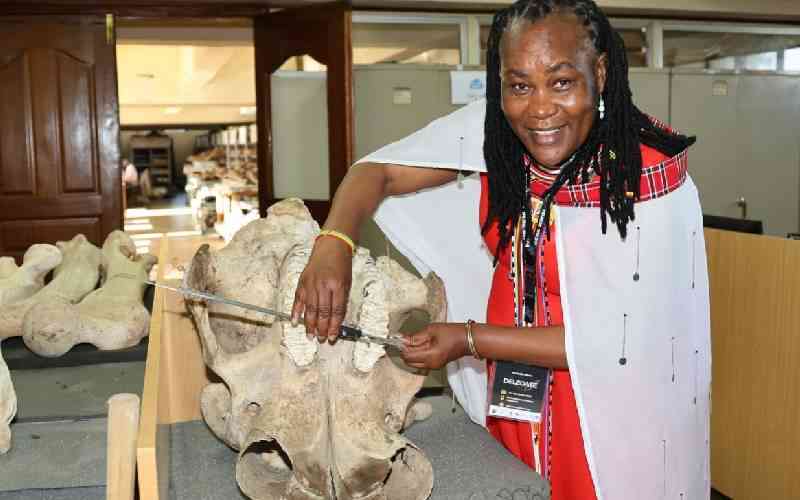
Pauline Mbatha, a doctoral researcher at the University of Helsinki and a paleontologist in the National Museums of Kenya, displays fossilized elephant teeth at the Osteology Section. [Nanjinia Wamuswa, Standard]
Elephants play a critical role in maintaining healthy ecosystems and are among the most important species in the context of climate change.
As ecosystem engineers, they shape landscapes by dispersing seeds, opening forest canopies, creating water access points, and influencing vegetation structure.
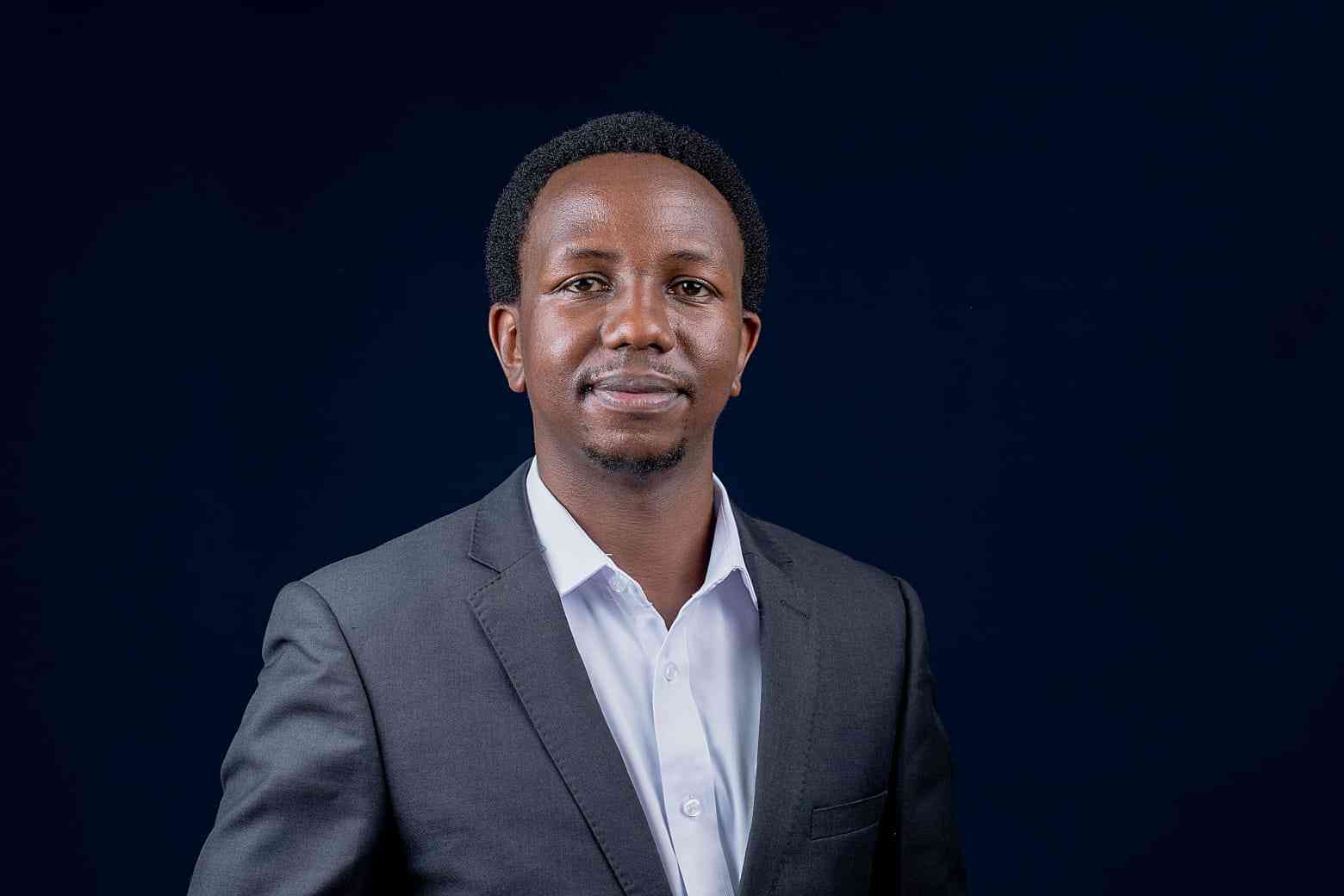
Emmanuel Ndiema, Head of Earth Sciences at the National Museums of Kenya (NMK), says the actions of elephants support biodiversity, regulate ecosystems, and enhance resilience to climate stress.
Yet, elephants in Kenya currently face serious threats, mainly from habitat loss driven by human population growth, infrastructure development, and land use changes.
He explains that climate change further compounds these pressures by altering ecosystems and reducing available resources.
Habitat fragmentation limits movement between populations, leading to reduced genetic diversity and a weakened ability to adapt to environmental change.
Against this backdrop, Kenya is hosting the 9th International Conference on Mammoths and their Relatives, the first time the event is being held in Africa, under the theme, “Africa the Evolutionary Cradle of Proboscideans.”
Proboscideans are a group of mammals characterised by a trunk, or proboscis, and include modern elephants and their extinct relatives.
The conference brings together researchers, policymakers, and conservation practitioners from around the world to deepen understanding of these mammals through long-term research — particularly how elephants and their relatives respond to change, learning from the deep past to protect the present, and using science to build resilient ecosystems for the future.
“Understanding how elephants and their extinct relatives responded to past environmental changes offers vital lessons for addressing today’s climate and conservation challenges,” Dr Ndiema explains.
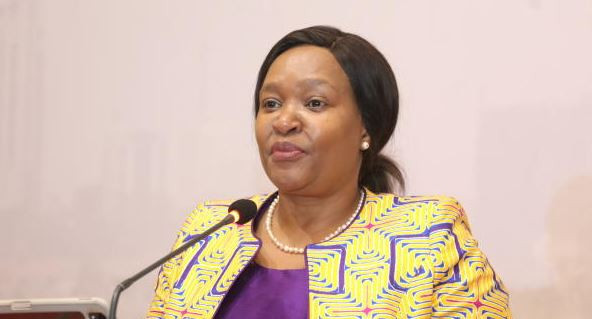
Mary Gikungu, Director General of NMK, says Kenya is not just a host but central to the story under discussion.
“Bringing this conference to Africa, and Kenya in particular, is both symbolic and necessary.
It connects global science to the landscapes and histories where much of this story began,” Prof Gikungu says.
Stay informed. Subscribe to our newsletter