×

The Standard e-Paper
Smart Minds Choose Us
 The Standard Group Plc is a
multi-media organization with investments in media platforms spanning newspaper
print operations, television, radio broadcasting, digital and online services. The
Standard Group is recognized as a leading multi-media house in Kenya with a key
influence in matters of national and international interest.
The Standard Group Plc is a
multi-media organization with investments in media platforms spanning newspaper
print operations, television, radio broadcasting, digital and online services. The
Standard Group is recognized as a leading multi-media house in Kenya with a key
influence in matters of national and international interest.

Audio By Vocalize
Kenyan students face renewed uncertainty over how they will finance their education as the government moves toward a new higher education funding system that could leave graduates with significantly larger debts.
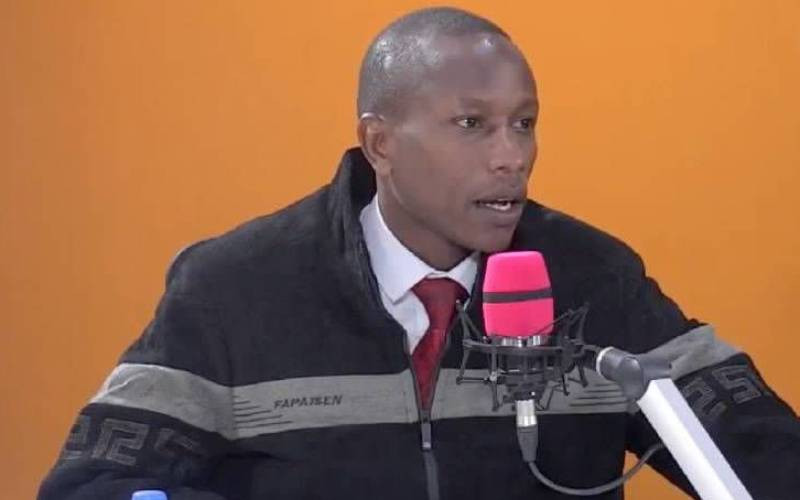
Speaking during an interview on Spice FM, University of Nairobi Students Association Chief of Staff Michael Soi said the previous funding model failed to meet the actual cost of university life.
He explained that a student pursuing a five-year engineering course at the University of Nairobi received about Sh40,000 annually from the Higher Education Loans Board in 2017. After deductions, including a Sh500 annual ledger fee, the amount fell to roughly Sh38,000.
Of that sum, Sh6,000 went toward accommodation for the academic year, leaving about Sh32,000 to cover food, transport, printing, research and fieldwork. Tuition, meanwhile, stood at Sh28,500 a year, a cost the HELB allocation could not absorb.
"The student needs accommodation, he needs meals, he needs transport, he needs to move around, he needs to print papers, he needs to do research, to go for fieldwork," noted Soi.
He said the shortfall forced many students from low-income households to divert HELB money toward tuition, leaving them without enough for food or rent.
The pressure intensified when university accommodation charges rose from Sh6,000 to about Sh42,000, though student pushback later helped bring the cost down.
"When that increment came about, we saw massive dropout of some of our students from the university who couldn't afford completely," he observed.
Soi added that some students turned to loan applications to cover basic needs, and the resulting financial strain eventually affected their ability to sit examinations, pushing some to defer their studies.
The concerns come as President William Ruto's administration pushes a fresh overhaul of university financing.
Ruto announced in July that every student who qualifies for placement in a public university or college would receive full government funding once Parliament amends the HELB Act, a move that would replace the Variable Scholarship and Loan Funding Model rolled out in 2023.
The reforms, contained in the Tertiary Education Placement and Funding Bill 2026, would also collapse HELB, the Universities Fund and the Technical and Vocational Education and Training Funding Board into a single Tertiary Education Funding Authority.
Soi said the announcement briefly raised his hopes before officials clarified that support would still come in the form of loans rather than grants.
"When I listened to the President making that proclamation of education, university education would be free, I was almost happy," he recalled.
Stay informed. Subscribe to our newsletter
"But minutes or hours later or days later... they said that that education won't be free, it would be loans. And that is what basically broke my heart."
Soi warned that the proposed model could also raise borrowing costs sharply.
He said previous HELB loans attracted interest of about 4 per cent, while the new financing arrangement could carry rates roughly three times higher, a burden he argued graduates would struggle to repay given limited job opportunities for young people.
National Parents Association Secretary General Dr Maina Wa-Gaithoro said the reforms risk undermining education's role in levelling the playing field for young Kenyans.
"Education is an equaliser and it's only education that can empower our youth and everybody for that matter," he stressed.
Both Soi and Wa-Gaithoro pointed to broader problems in the university system, including inadequate infrastructure, underfunding and limited consultation with students, parents and lecturers when policies are drafted.
Soi said stakeholder recommendations submitted during the presidential working party on education reforms were largely left out of subsequent policy.
With hundreds of thousands of returning and incoming students expected to report to universities this month, Wa-Gaithoro called on Parliament to urgently approve a supplementary budget for education to demonstrate the government's commitment to resolving the crisis.
"The debate is no longer simply about who pays university fees," he noted, adding, "It is about whether they can afford to stay in university, complete their degrees and enter the job market without being overwhelmed by debt."





Subscribe to our newsletter and stay updated on the latest developments and special offers!