×

The Standard e-Paper
Smart Minds Choose Us
 The Standard Group Plc is a
multi-media organization with investments in media platforms spanning newspaper
print operations, television, radio broadcasting, digital and online services. The
Standard Group is recognized as a leading multi-media house in Kenya with a key
influence in matters of national and international interest.
The Standard Group Plc is a
multi-media organization with investments in media platforms spanning newspaper
print operations, television, radio broadcasting, digital and online services. The
Standard Group is recognized as a leading multi-media house in Kenya with a key
influence in matters of national and international interest.

Audio By Vocalize

When Griffin Khendi arrived in Nairobi after completing high school in 2017, he came looking for an opportunity to build a better life.
Instead, he found himself struggling to make ends meet as he searched for what he describes as “greener pastures”.
His fortunes began to change in 2019 when he met Priya Budhabhatti, the founder of Craft Silicon Foundation, who introduced him to a free computer training programme targeting young people from disadvantaged communities.
Khendi joined the programme and learned basic computer packages, skills that would eventually open a new path for him.
“I joined the foundation and I was taught all the computer packages,” he recalls.
His performance caught the attention of Craft Silicon Group CEO Kamal Budhabhatti, who supported him to pursue an advanced course in full-stack software development at a local training institution.
That opportunity would take Khendi from being a student struggling to find his footing to becoming a trainer at the same foundation that had trained him.
After completing his advanced studies, he applied for a teaching position at Craft Silicon Foundation and was given an opportunity to train other young people.
Today, he teaches computer applications including Excel, PowerPoint, Access and Word, as well as introductory Windows, cyber security and internet networking skills.
His story is one of the examples emerging from Craft Silicon Foundation’s digital-skills programme, which has sought to take ICT training directly to young people who face financial and geographical barriers to conventional education.
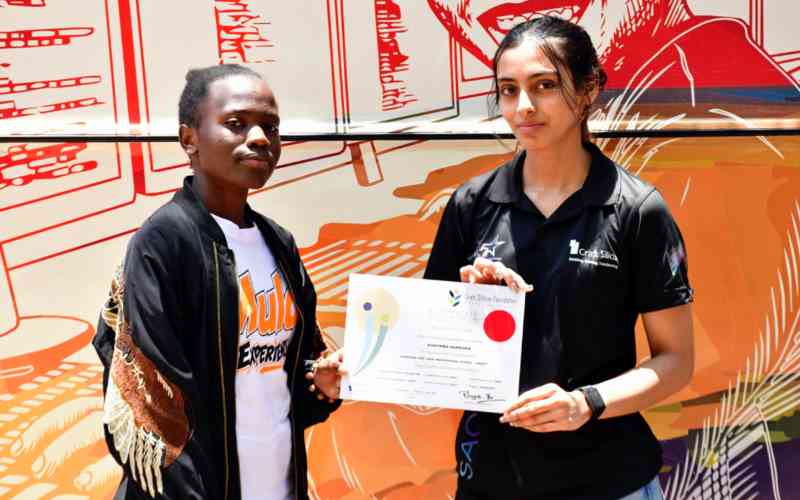
On Saturday, the Foundation graduated 130 students who completed its three-month programme, marking another milestone for an initiative that uses a mobile ICT laboratory to take training into Nairobi’s informal settlements.
The mobile classroom is fitted with computers, internet connectivity and solar power, allowing learners to train within their communities instead of travelling to distant colleges or training centres.
For many of the beneficiaries, that proximity can make the difference between acquiring a skill and remaining locked out of digital opportunities.
Craft Silicon CEO Priya Budhabhatti says the idea behind the mobile laboratory was shaped partly by her own experience of struggling to access education.
The Foundation, established in 2010, targets young people, particularly women and those from low-income communities, with free digital training.
Stay informed. Subscribe to our newsletter
The three-month course covers Microsoft Office applications, internet and networking skills, cyber security fundamentals and artificial intelligence fundamentals.
But the programme does not necessarily end with graduation.
Students who demonstrate potential can be selected for more advanced training, including software development and website development, while the Foundation also seeks to link graduates with employment and entrepreneurship opportunities.
Khendi's journey illustrates that progression.
He moved from being a beneficiary to becoming part of the team delivering the training, giving current students a tangible example of where the skills they are acquiring can lead.
The Foundation says it has also seen other former students move into employment and training roles.
The programme is now expanding its curriculum as the nature of work changes, with artificial intelligence and software development being introduced alongside basic digital literacy.
The organisation currently relies on one mobile ICT bus to serve communities across Nairobi during the week, leaving a waiting list of young people seeking to join the programme.
Simran Budhabhatti, Gen Z AI Consultant, Craft Silicon Group, says additional partners and resources, including more mobile laboratories, would allow the Foundation to reach more beneficiaries.
“Moving into the future, we are expanding our partnership to enable us add programmes like the AI, robotics, skills that are necessary to enable our trainees easily fit into the fast evolving work environment.
For Khendi, however, the impact of the programme can be measured personally.
He entered the Foundation looking for an opportunity after struggling to find his footing in Nairobi.
Years later, he is returning that opportunity to another generation of young people, this time from the other side of the classroom.
His message to young people facing similar challenges is simple: those looking for an opportunity to acquire digital skills should take advantage of programmes that can give them a starting point.
“People who are struggling and want to have these skills are welcome,” he says.





Subscribe to our newsletter and stay updated on the latest developments and special offers!







 join
join