×

The Standard e-Paper
Kenya’s Boldest Voice
 The Standard Group Plc is a
multi-media organization with investments in media platforms spanning newspaper
print operations, television, radio broadcasting, digital and online services. The
Standard Group is recognized as a leading multi-media house in Kenya with a key
influence in matters of national and international interest.
The Standard Group Plc is a
multi-media organization with investments in media platforms spanning newspaper
print operations, television, radio broadcasting, digital and online services. The
Standard Group is recognized as a leading multi-media house in Kenya with a key
influence in matters of national and international interest.

Audio By Vocalize
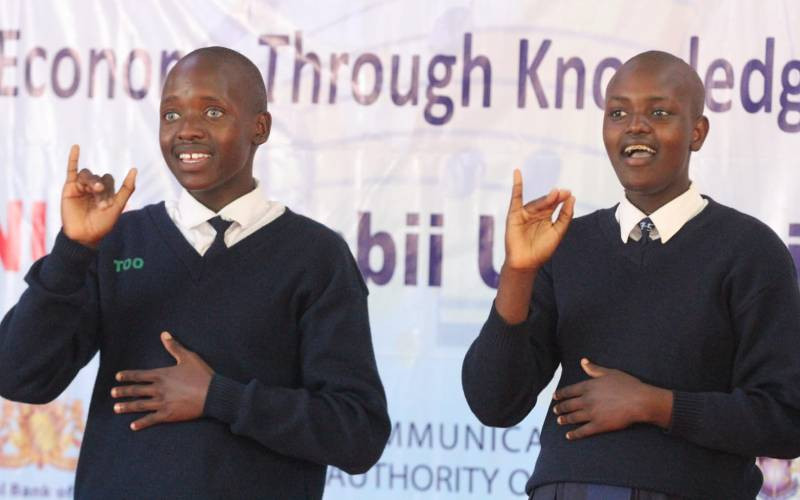
Learners with disabilities have used the 98th Kenya Music Festival national edition to champion inclusive education.
Through music, elocution and dance the performers are calling for greater investment in assistive technologies, accessible learning environments and equal opportunities that will enable them to fully participate in education and society.
The festival, which has placed Special Needs Education (SNE) at the heart of this year's celebrations, has become more than a platform for artistic competition.
It has evolved into a national conversation on disability inclusion, creativity and the need to unlock the potential of learners living with disabilities through Competency-Based Education (CBE).
Throughout the competitions, learners with hearing impairment, visual impairment, Cerebral Palsy, Intellectually Disabled and other disabilities showcased remarkable talent through Kenya Sign Language performances, choral verses, dances and musical compositions while appealing for schools to become more inclusive.
The classes included Visual Impaired for primary schools in original composition, attracting schools like Kambui H.I, and Murang'a H.I from Central region, Kuja Special school, Nyanza, Nyangweso, Nyanza region, and Mwikhom Special School from Western region.
In the Choral verse category, Thika V.I, Likoni V.I, Kibos, Koyonzo Special School, Emining Special School among others.
Their performances pointed out that disability should never be a barrier to learning, creativity or participation if schools are equipped with the right support systems.
One of the most outstanding demonstrations of inclusive learning was witnessed during Class 3046J, the Kiswahili Choral Verse category for junior learners with hearing impairment.
Using Kenya Sign Language, synchronized movement and dramatic expression, learners demonstrated how creative arts can bridge communication barriers while addressing environmental conservation and sustainable development.
The performances reinforced this year's environmental message by encouraging communities to protect forests, preserve natural resources and embrace wealth creation through sustainable practices.
The adjudicators observed that thematic interpretation, script organization, poetic expression and the learners' understanding of the message carried the highest marks.
They also encouraged trainers to improve technical presentation by ensuring sign language remains clear, expressive and easy for audiences to understand.
Learners also emphasized the importance of assistive devices, including hearing aids, braille machines, screen-reading software, adapted computers, mobility equipment and communication technologies that enable them to participate equally in learning.
"Kindly avoid jerking your hands, pay attention to the signing space and ensure your signs are clear and well-defined," the adjudicators advised.
Stay informed. Subscribe to our newsletter
Equity Bank sponsored the category for the first time, extending its support to learners with disabilities as part of its broader commitment to social and financial inclusion.
Tumutumu School for the Hearing Impaired emerged the overall winner, followed by Givavei Friends School for the Deaf and Murang'a Special School.
Pre-primary learners promoted environmental conservation, tree planting, disaster preparedness, hygiene, responsible citizenship and peaceful coexistence through singing games and folk dances.

Schools also addressed internet safety, tuberculosis awareness through the Ministry of Health's Angamiza TB campaign, ethical leadership, financial inclusion, donkey conservation and values-based education.
This year's festival theme, "Enhancing the Creative Economy through Knowledge, Skills and Artistic Production for Sustainable Development," demonstrates how performing arts can become pathways to employment, entrepreneurship and social inclusion for learners with special needs.
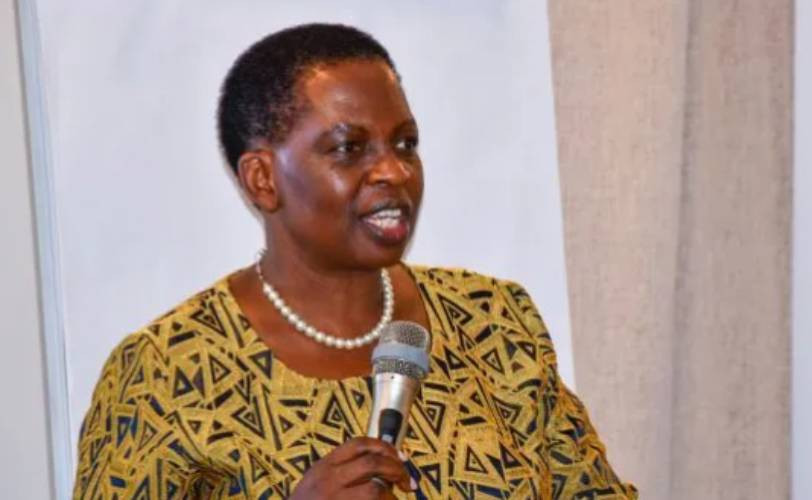
Basic Education Principal Secretary Prof. John Ololtuaa said the Competency-Based Education curriculum has fundamentally transformed Special Needs Education by shifting attention from disability to ability.
Instead of concentrating on what learners cannot do, CBE identifies and nurtures each learner's unique talents and competencies.
"The question is no longer what a learner cannot do, but rather, 'What are this student's gifts, and how can we build on them?' By focusing on a child's strengths and potential, we foster growth in skills, participation and belief in themselves," said Prof. Ololtuaa.

Prof. Ololtuaa said inclusive education benefits every learner in school adding that inclusive classrooms help reduce discrimination while nurturing compassion, resilience and acceptance of diversity.
"Inclusion fosters a culture of belonging where every student feels valued and accepted. By promoting academic success, self-confidence and respect for differences in ability, inclusion helps students grow not just intellectually but socially and emotionally as well," he said.
He further said this strength-based approach has replaced the traditional medical model, which largely focused on correcting deficits, with a social model that removes barriers preventing learners from succeeding.
The new framework encourages differentiated instruction, where teachers adapt communication methods, learning materials and classroom activities to suit every learner's individual needs.
Kenya Institute of Curriculum Development Director Prof. Charles Ong’ondo said that assistive technologies are no longer optional but essential tools for implementing inclusive education under CBE.
“The curriculum equally promotes multisensory teaching using sight, sound, touch and practical experiences while encouraging collaboration among teachers, parents and support staff to create barrier-free schools,” Prof. Ong'ondo said.
He noted that peer learning has also become an important pillar of inclusion by encouraging learners without disabilities to work together with their peers living with disabilities, helping build confidence, empathy and teamwork.
Equity Bank Head of Education Peter Ndoro said the institution deliberately chose to support Special Needs Education after recognizing the enormous talents displayed by learners with disabilities.
"As Equity Bank, we were challenged by the leadership of the SNE to consider this class. We are happy that this year, because of the deep interest we have in our special needs learners, we decided to sponsor this class. We value you, we support you and we want you to earn a sustainable livelihood out of your talents," Ndoro said.
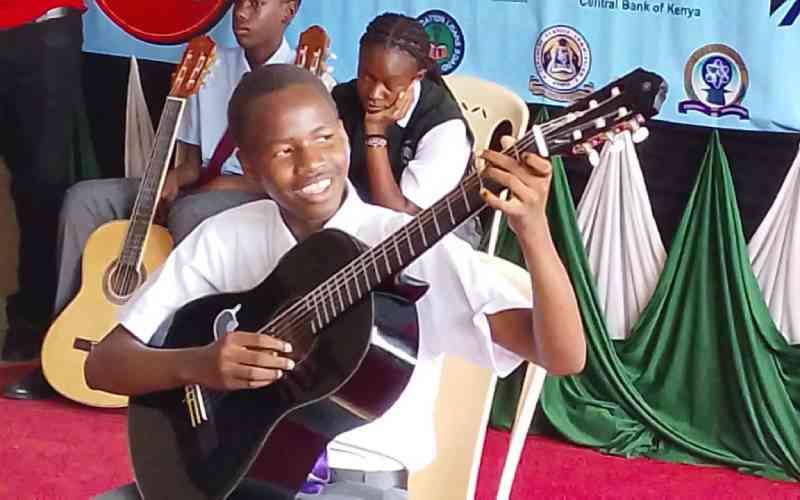
Kenya National Drama and Film Festival Chairman Prof. Fredrick Ngala described the festival as an important learning platform beyond competition.
"The festival is more than a competition. It is a learning platform where children develop confidence, creativity, teamwork and patriotism while addressing issues affecting society through artistic expression," he said.
He noted that Competency-Based Education has strengthened performing arts by enabling learners to apply classroom knowledge in practical settings.



Subscribe to our newsletter and stay updated on the latest developments and special offers!








 join
join