×

The Standard e-Paper
Smart Minds Choose Us
 The Standard Group Plc is a
multi-media organization with investments in media platforms spanning newspaper
print operations, television, radio broadcasting, digital and online services. The
Standard Group is recognized as a leading multi-media house in Kenya with a key
influence in matters of national and international interest.

Audio By Vocalize
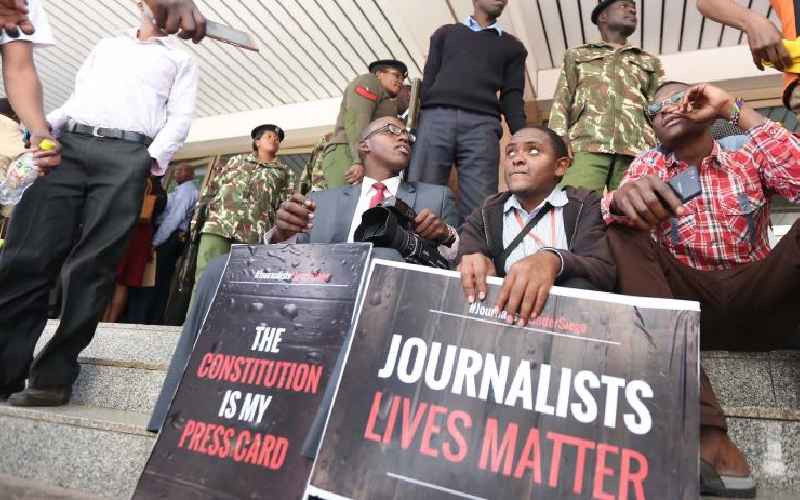
Journalists are expected to hold governments accountable, expose corruption, defend public interest and give a voice to the voiceless. They are the people's watchdogs, often risking their safety, livelihoods and sometimes their lives to uncover uncomfortable truths.
Yet, behind the public service, according to a latest report, most journalists in African countries, are themselves abandoned, underpaid and increasingly exposed. It is an indictment of the media industry that journalists, who spend their working lives demanding accountability from public institutions, must endure exploitation and insecurity in their own newsrooms.
Poor salaries, delayed payments, excessive workloads, uncertain contracts and limited retirement benefits have become part of the profession's troubling reality.
A survey by the Kenya Union of Journalists (KUJ) and the Media Council of Kenya (MCK) paints a disturbing picture.
About 65 per cent of journalists surveyed reported moderate to severe depressive symptoms, including thoughts of self-harm, while 25 per cent acknowledged suicidal thoughts.
How can journalists consistently deliver quality reporting when they are struggling to meet basic household expenses? The reported average monthly salary of Sh63,000, against a national average of Sh86,000, exposes the economic vulnerability of the profession. More troubling is that over half of those surveyed earned less than Sh50,000.
Journalists cannot be expected to work professionally while constantly worrying about rent, school fees, food and mounting debts. Some work for years without meaningful salary reviews, while others endure the uncertainty of short-term contracts that offer little protection against arbitrary dismissal.
The contradiction is glaring. Media houses demand accuracy, independence, sacrifice and commitment from their journalists but often fail to provide decent remuneration, medical support, job security and retirement protection. Journalism cannot thrive where fear of losing employment becomes stronger than the courage to question powerful interests.
Financially desperate and psychologically distressed journalists are more vulnerable to manipulation, corruption and editorial interference. When journalists cannot afford to protect their independence, the public ultimately pays the price through compromised journalism and weakened accountability.
The proposed pension arrangement by the Retirement Benefits Authority for non-permanent journalists is welcome, but it cannot substitute for decent employment conditions.
Employers must stop treating journalists as disposable labour. Salaries must be paid on time, contracts respected, workloads made reasonable and mental health support provided. The government and media regulators must also strengthen enforcement of labour protections.
Media ownership must come with responsibility, not merely commercial ambition. A society that depends on journalists to expose wrongdoing cannot afford to abandon them. The watchdogs cannot effectively guard the public while being left vulnerable to exploitation, poverty and despair. It is time the media industry cleaned up its own house. Who will hold the media employers accountable if those expected to ask the difficult questions are themselves silenced by economic desperation?




Subscribe to our newsletter and stay updated on the latest developments and special offers!