×

The Standard e-Paper
Smart Minds Choose Us
 The Standard Group Plc is a
multi-media organization with investments in media platforms spanning newspaper
print operations, television, radio broadcasting, digital and online services. The
Standard Group is recognized as a leading multi-media house in Kenya with a key
influence in matters of national and international interest.
The Standard Group Plc is a
multi-media organization with investments in media platforms spanning newspaper
print operations, television, radio broadcasting, digital and online services. The
Standard Group is recognized as a leading multi-media house in Kenya with a key
influence in matters of national and international interest.

Audio By Vocalize
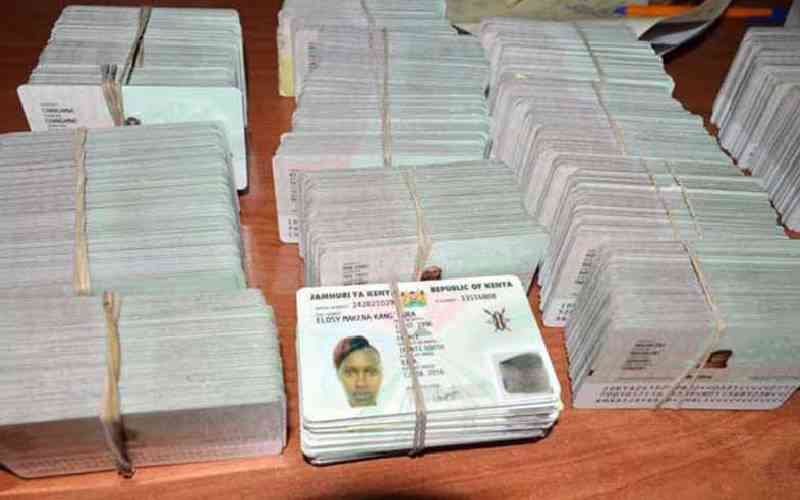
The issuance of national identity cards has quietly morphed into a contentious and deeply political issue. This is unfortunate since it risks locking out an entire generation from opportunity, dignity, and full citizenship.
What should be a straightforward administrative process has instead become entangled in accusations, delays, and selective access, raising serious concerns about fairness and intent. At the heart of the matter is a simple truth: an ID card for a Kenyan citizen is not just a document for voting. It is the gateway to nearly every aspect of adult life. Without it, a young Kenyan cannot secure formal employment, open a bank account, access government services, register for higher education, or even obtain a SIM card.
To interfere with its issuance, whether through bureaucratic inefficiencies or deliberate political maneuvering, is to effectively shut young people out of the economy and society. The timing makes the situation even more troubling.
As the country inches closer to another election cycle, reports of uneven issuance and unexplained delays risk fueling perceptions that access to IDs is being weaponised for political gain. Whether real or perceived, such concerns erode public trust and deepen divisions.
But beyond elections, the long-term damage lies in how this affects the youth the backbone of Kenya’s future. A young person denied an ID today is not just a voter suppressed tomorrow; they are a worker denied employment, an entrepreneur blocked from opportunity, and a citizen stripped of agency. This is unacceptable and cannot be allowed to continue.
In a country already grappling with high youth unemployment, adding administrative barriers only worsens an already fragile situation. It creates a class of invisible citizens present in the population but absent from participation.
The government must confront this issue with urgency and transparency. The process of acquiring an ID must be efficient, consistent, and free from political interference. Any bottlenecks, whether in vetting, printing, or distribution, must be addressed decisively. More importantly, there must be accountability where evidence suggests deliberate exclusion or bias.
Equally, leaders across the political divide must resist the temptation to turn identity registration into a campaign tool. The cost is simply too high. Playing politics with such a fundamental right undermines not just electoral integrity but the very fabric of national cohesion. Kenya’s young people deserve better. They deserve a system that empowers rather than excludes, that opens doors rather than shuts them. An ID card should be a symbol of belonging, not a privilege granted selectively.
For Kenya to build an inclusive economy and a stable democracy, it must start by ensuring that every eligible citizen can prove who they are without delay, without discrimination, and without political strings attached. An ID card is not a mere political tool.








Subscribe to our newsletter and stay updated on the latest developments and special offers!







 join
join