×

The Standard e-Paper
Stay Informed, Even Offline
 The Standard Group Plc is a
multi-media organization with investments in media platforms spanning newspaper
print operations, television, radio broadcasting, digital and online services. The
Standard Group is recognized as a leading multi-media house in Kenya with a key
influence in matters of national and international interest.
The Standard Group Plc is a
multi-media organization with investments in media platforms spanning newspaper
print operations, television, radio broadcasting, digital and online services. The
Standard Group is recognized as a leading multi-media house in Kenya with a key
influence in matters of national and international interest.

Audio By Vocalize
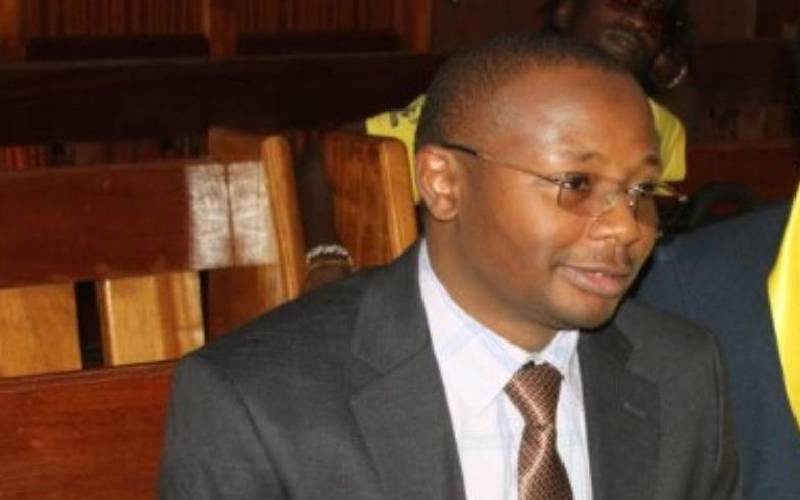
A city lawyer has moved to the High Court seeking conservatory orders to suspend the Law Society of Kenya's (LSK) ongoing targeted boycott of judges and judicial officers.
In a petition filed under a certificate of urgency, Advocate Adrian Kamotho has sued LSK led by President Charles Kanjama, over its nationwide and targeted court boycott of Chief Justice Martha Koome, Deputy Chief Justice Philomena Mwilu and other judges, arguing that the action is unconstitutional, undermines judicial independence and denies litigants access to justice.
"The LSK's actions create the impression that lawful court orders can be overturned through a boycott, setting a dangerous precedent to the rule of law and thereby undermining the proper administration of justice," Kamotho states in the petition.
The lawyer has named the Judicial Service Commission (JSC), Chief Justice Martha Koome, Deputy Chief Justice Mwilu, several Supreme Court, High Court and Environment and Land Court judges, Court of Appeal Judge Sankale Ole Kantai, Kibera Chief Magistrate Stella Atambo and the Kenya Magistrates and Judges Association as interested parties in the case.
He is seeking orders to immediately suspend the implementation of the LSK's targeted boycott announced through statements and operational guidelines issued on July 17, July 20 and July 22, 2026, pending the hearing and determination of the petition.
"Pending the hearing and determination of this Petition, the court be pleased to issue a conservatory order restraining the LSK, whether by itself, its Council, officers, agents or any person acting under its authority, from implementing, enforcing or giving effect to the targeted boycott," Kamotho seeks.
According to the petition, the targeted boycott, which commenced on July 23, directs advocates not to participate in fresh hearings, part-heard matters or new applications before judges listed by the LSK.
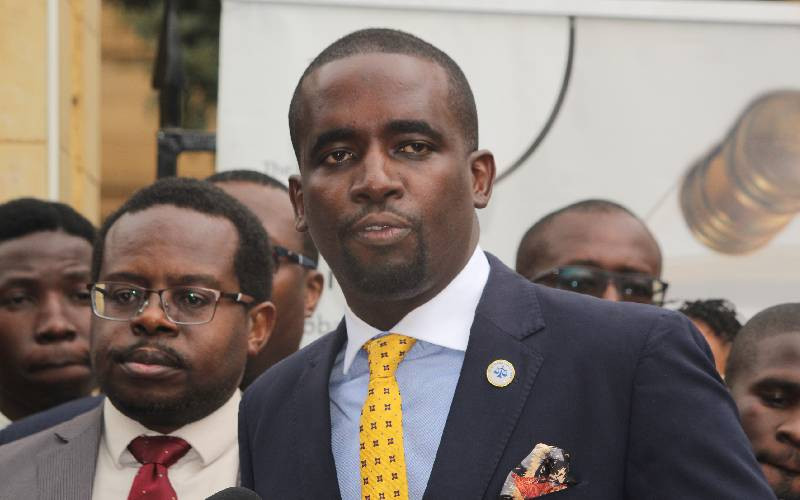
East Africa Law Society president Ramadhan Abubakar Mukira addresses the media on the court boycott outside the Supreme Court of Kenya in Nairobi on July 22, 2026. [Benard Orwongo, Standard]
Lawyers are also required to seek adjournments, transfers or recusals of matters regardless of their clients' instructions.
"The Respondent has directed advocates not to participate in fresh hearings, part-heard matters or new applications before the listed judges and judicial officers," Kamotho states.
He adds: "Advocates appearing before the targeted judges and judicial officers have been directed to seek the transfer, recusal or adjournment of pending proceedings, irrespective of their clients' instructions, the circumstances of the individual case or the applicable legal principles."
Kamotho further claims the society has threatened disciplinary action against judges, judicial officers and advocates who decline to implement the boycott.
"The LSK has further directed that any judge, judicial officer or advocate who declines to facilitate the boycott be reported to it for 'appropriate action,' including possible complaints before the Judicial Service Commission and such further action as its Council may deem necessary," he says.
According to the petition, every day the boycott remains in force exposes court users to delayed justice and unnecessary hardship.
Stay informed. Subscribe to our newsletter
"Every day that the targeted boycott remains operative exposes litigants and court users to adjournments, disruption of part-heard proceedings, expiry of interim protection measures, prolonged detention, additional expense and denial or delay of access to justice," Kamotho argues.
He also faults the LSK for allegedly including the late Supreme Court Judge Mohammed Ibrahim in its list of judges affected by the boycott.
"The targeted list of judges includes Hon. Justice Mohammed Ibrahim (deceased), demonstrating unconscionable casualness on the part of the LSK and apparent failure to verify elementary material facts before imposing measures of such gravity," the petition states.
Kamotho contends that the boycott creates an unlawful mechanism for exerting pressure on judges outside the constitutional framework.
He argues that the dispute raises fundamental constitutional questions, including whether the LSK has the legal authority to organise an indefinite boycott, compel advocates to withhold legal services from clients and determine which judicial functions judges may perform.
He maintains that the boycott threatens litigants' constitutional rights to equality before the law, access to justice, legal representation and a fair hearing, particularly in urgent and criminal matters.
In his supporting affidavit, Kamotho says advocates have been placed in an impossible position by the LSK's directives.
"The directions therefore place advocates in an immediate and irreconcilable conflict between their lawful professional duties and the Respondent's threatened enforcement measures," he says.
He further says litigants are innocent parties caught in an institutional dispute.
"The practical burden of the boycott consequently falls upon litigants and court users who are strangers to the institutional dispute forming the alleged basis of the boycott," he states.
Kamotho insists the conservatory orders sought are intended only to preserve uninterrupted court operations and judicial independence pending determination of the constitutional petition, arguing that the public interest favours continued access to courts and legal representation rather than disruption of judicial proceedings.
The petition is pending directions and hearing.








Subscribe to our newsletter and stay updated on the latest developments and special offers!







 join
join