×

The Standard e-Paper
Stay Informed, Even Offline
 The Standard Group Plc is a
multi-media organization with investments in media platforms spanning newspaper
print operations, television, radio broadcasting, digital and online services. The
Standard Group is recognized as a leading multi-media house in Kenya with a key
influence in matters of national and international interest.
The Standard Group Plc is a
multi-media organization with investments in media platforms spanning newspaper
print operations, television, radio broadcasting, digital and online services. The
Standard Group is recognized as a leading multi-media house in Kenya with a key
influence in matters of national and international interest.

Audio By Vocalize
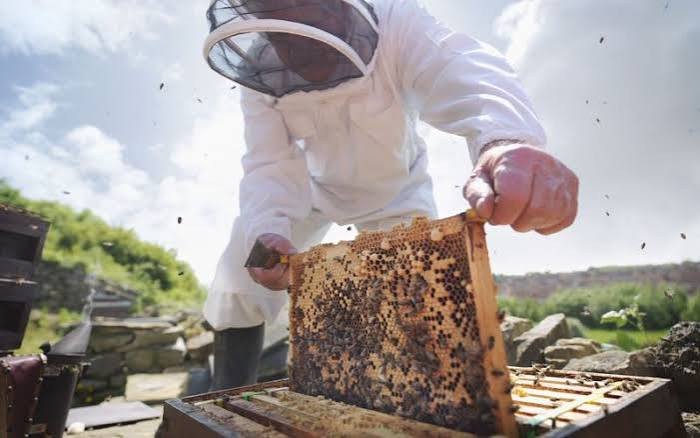
For Givans Odowa, beekeeping is more than a source of honey and income. It is a business opportunity, a tool for enhancing farmers’ livelihoods and, increasingly, a means of conserving the environment.
Odowa, an agronomist by profession, technical trainer and beekeeper, is the founder and chief executive officer of Ambugo Africa, an enterprise that offers training opportunities for beekeeping, production of honey and consultancy services on matters agriculture.
His journey into beekeeping started modestly with just five hives. Through practical experience, farmer training and community engagement, he has steadily expanded his knowledge and turned his passion into an enterprise focused on equipping farmers with modern beekeeping skills.
“I started with five hives, and the journey has grown through practical experience, engagement with the communities and training farmers” he tells CityBiz crew.
His professional development has also been shaped by his involvement in initiatives and projects related with organisations including Pamoja and GIZ’s Agrijobs4 Youths programme for Transformation.
Through Ambugo Africa, Odowa who is currently based in Nyakach, Kisumu County trains farmers on modern apiary management, covering areas such as site selection, hive management, bee biology, colony inspection, disease and pest control, harvesting of honey, value addition and safety.
Instead of relying solely on classroom instruction, his bee keeping curriculum combines theory with practical, field-based demonstrations, enabling farmers to gain skills they can apply directly in their apiaries.
“Successful beekeeping requires proper training, patience, regular hive inspection and good management,” he says.
The business, however, has not been without challenges. According to Odowa, the major difficulties he has encountered so far include bee absconding, pests, inadequate equipment and gaps in farmers’ technical knowledge.
For him, these challenges have worked to reinforce the significance of training farmers before they invest heavily in beekeeping.
“Beekeeping is not simply regarding putting bees in a hive and waiting for honey to be produced. Farmers have to comprehend the behaviour of bees and learn how to manage colonies in a proper manner,” he explains.
But beyond the commercial prospects, Odowa has developed a strong interest in bee conservation.
He says the motivation behind his beekeeping initiative was partly the growing concern over the impact of excessive pesticide use on bee populations and pollination.
Stay informed. Subscribe to our newsletter
“Bee conservation is central to our work because protecting bees implies protecting pollination, food production, and biodiversity” he says.
This concern is supported by scientific evidence. According to data by The Food and Agriculture Organization (FAO), pollinators contribute to about 35 per cent of global crop production by volume and enhance the yield of 87 of 115 major food crops.
FAO also identifies habitat loss, use of pesticides, intensive agriculture, pests, climate change and diseases as being among the major threats facing pollinators.
In Kenya, farmers and conservation stakeholders have similarly raised concerns regarding the implications of pesticides as well as herbicides on bees.
In 2025, a report by the Kenya News Agency indicated that farmers in Nandi and other parts of the country were urged to embrace farming practices that reduce reliance on agrochemicals, which are harmful to bees.
In this regard, Odowa encourages farmers to plant flowering plants, adopt modern and environmentally friendly farming practices and protect bee habitats.
His approach seeks to connect beekeeping with broader agricultural production. Healthy bee populations improve pollination, which subsequently contributes to better crop yields while creating an additional source of income for farmers through honey and other hive products.
Ambugo Africa reaches farmers through community networks, agricultural events, referrals, and social media platforms, including LinkedIn, Facebook and Tiktok.
Odowa believes young people should look beyond the conventional perception of agriculture as subsistence farming and explore its commercial potential.
“Young people and farmers ought to view agriculture as a business, not simply a way of life. Beekeeping can not only create income but also help in conserving the environment. They should start small, seek appropriate training, engage in consistent knowledge acquisition and manage their bees in a responsible manner.”
For Odowa, the future of beekeeping lies in striking a balance between enterprise, profit seeking and conservation. By helping farmers earn from bee products while protecting pollinators and their habitats, he anticipates to build an agricultural model in which livelihoods and environmental sustainability reinforce each other.
His vision is based on the conception that building a thriving ecosystem where sustainable agriculture, community livelihoods, and conservation grow together.
Subscribe to our newsletter and stay updated on the latest developments and special offers!


 Prefer the Standard on Google







 join
join