×

The Standard e-Paper
Home To Bold Columnists
 The Standard Group Plc is a
multi-media organization with investments in media platforms spanning newspaper
print operations, television, radio broadcasting, digital and online services. The
Standard Group is recognized as a leading multi-media house in Kenya with a key
influence in matters of national and international interest.
The Standard Group Plc is a
multi-media organization with investments in media platforms spanning newspaper
print operations, television, radio broadcasting, digital and online services. The
Standard Group is recognized as a leading multi-media house in Kenya with a key
influence in matters of national and international interest.

Audio By Vocalize
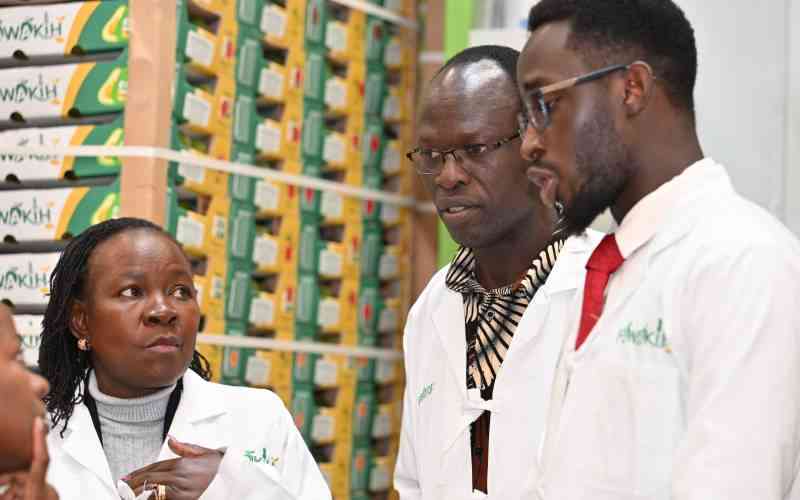
When Hassan Nandwa, 27, shipped his first consignment of Kenyan mangoes to Egypt in 2019, he thought he had cracked the export market.
Instead, he lost up to Sh4 million. The shipment was delayed, rejected over phytosanitary concerns, then later flagged for fungal contamination after weeks at the port.
By the time the fruit was cleared, the business had already absorbed a devastating financial blow.
Most entrepreneurs would have walked away, but Nandwa did not. Today, his company, Fawakih Import and Export Ltd, exports avocados and fresh produce to markets including Egypt, Libya, Saudi Arabia, Iraq, the United Arab Emirates, Spain, and the Netherlands. Yet despite growing demand abroad, he says his biggest challenge is no longer finding buyers. It is finding workers with the right skills.
“When I receive CVs, the first thing I look at is experience,” he said during a meeting between exporters and officials from the State Department for Technical and Vocational Education and Training (TVET).
“You may have a degree, but if I have to train you from scratch, I will most likely hire someone with a certificate who already knows how the job is done.”
His frustration echoes a complaint heard across Kenya’s private sector. Employers struggle to recruit job-ready graduates, while thousands of young people leave colleges every year unable to secure employment because they lack practical experience.
The State Department for TVET now believes it has found a way to bridge that gap.
Rather than sending students into industry for short attachments, Principal Secretary Dr Esther Muoria wants industry brought into the institutions themselves.
The proposal would see exporters partner directly with TVET colleges to co-develop occupational standards, shape curricula, supervise practical training and mentor students throughout their learning journey. Instead of graduating with certificates alone, students would leave college having spent months embedded in real production systems, learning the technical skills, discipline and workplace culture employers expect.
“We want them to graduate already aligned to the market’s needs,” Dr Muoria said. “They should also be able to start their own businesses immediately after graduating. It doesn’t make sense that young people complain there are no jobs, yet employers are complaining there are no adequately skilled job seekers. This is a disconnect we must work together to fix.”
The approach builds on Kenya’s Competency-Based Education and Training (CBET) framework, which shifts the focus from classroom theory to occupational competence developed with employers. Through Sector Skills Advisory Committees, the industry has already helped develop more than 400 Competency-Based National Occupational Standards that guide TVET curricula.
The government is also scaling up Dual TVET, a model that allows trainees to split their time between college and the workplace.
More than 12,000 trainees have already gone through the programme through partnerships involving about 3,700 companies, signalling growing industry participation in technical training.
But the model being proposed to exporters goes a step further.
Stay informed. Subscribe to our newsletter
Instead of treating industry as a destination after training, the government wants companies to become co-owners of the training process itself.
Exporters would identify the competencies they need, help write occupational standards, establish production units inside TVET institutions and assess trainees based on demonstrated skills rather than written examinations.
For the horticulture industry, that could mean assigning individual colleges to specialise in value chains such as avocados, mangoes, French beans, flowers or snow peas, with companies providing expertise while students gain commercial experience before graduation.
The model could also address the productivity challenge facing Kenya’s exporters.
During the discussions, exporters cited high freight costs, multiple county levies, regulatory hurdles and persistent shortages of technically skilled workers as barriers to competitiveness.
According to Priscilla King’ang’i, founder of Kenya Fresh Produce Exporters Limited, companies often recruit based on experience rather than qualifications because many graduates require months of additional training before becoming productive. She terms it an expensive and time-consuming venture.
“If students leave college already knowing how to work in our systems, everyone benefits,” she said. “We are in business. We are not trainers.”
Muoria was candid that government must accept responsibility for producing graduates who are ready for work. She argued that if employers are forced to retrain recruits despite years of public investment in technical education, then the training system has fallen short.
Drawing an analogy to parenting, she said the values and attitudes young people carry into the workplace are shaped long before they seek employment.
“The child you release is the child you have raised,” she said, adding that TVET institutions must similarly take responsibility for the graduates they send into industry.
“We want our students ‘in industry for industry’ training, so that by the time they graduate, they have the knowledge, the attitude and the culture of that industry.
Beyond technical competence, she argued, students need to absorb workplace values such as discipline, cleanliness, teamwork and accountability while still in training. “We are not talking about attachment,” she said. “We are talking about industry training.”
Fresh Produce Consortium of Kenya Chief Executive Okisegere Ojepat welcomed the partnership, saying rebuilding trust between government and industry is critical to the success of the initiative.
He noted that many exporters remain wary of engaging with government due to past experiences, making the consortium’s role as an intermediary essential.
“The breakfast meeting is really about trust,” he said.
Subscribe to our newsletter and stay updated on the latest developments and special offers!

 Prefer the Standard on Google








 join
join