×

The Standard e-Paper
Smart Minds Choose Us
 The Standard Group Plc is a
multi-media organization with investments in media platforms spanning newspaper
print operations, television, radio broadcasting, digital and online services. The
Standard Group is recognized as a leading multi-media house in Kenya with a key
influence in matters of national and international interest.

Audio By Vocalize
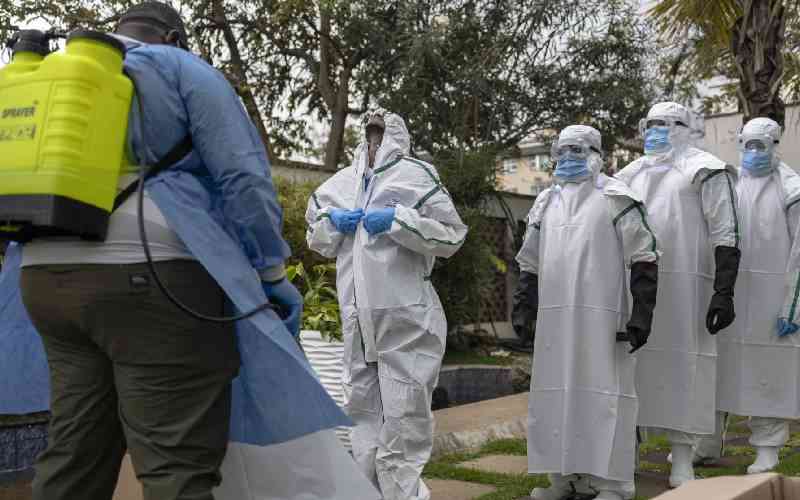
The Ebola outbreak in the Democratic Republic of Congo has surpassed 11,000 cases, with more than 5,300 deaths recorded across affected countries as health authorities struggle to contain one of the fastest-growing epidemics in history.
The latest figures from the United States Centers for Disease Control and Prevention (CDC) show that 11,021 confirmed cases and 5,358 deaths had been reported across affected countries as of November 8.
The DRC accounts for the overwhelming majority of the infections, with 10,990 confirmed cases and 5,354 deaths, according to the CDC.
The outbreak, caused by the Bundibugyo strain of Ebola virus, has spread across eight provinces in the DRC, with Ituri and North Kivu bearing the heaviest burden.
The European Centre for Disease Prevention and Control (ECDC) reported that 70 additional cases and 31 deaths were recorded in the DRC between November 7 and 8, highlighting the continued pace of transmission.
Ituri remains the worst-hit province, with 7,654 cases and 3,613 deaths, while North Kivu has recorded 2,720 cases and 1,488 deaths.
The outbreak has affected 67 of the country's 178 health zones, with community transmission continuing in several areas.
Africa Centres for Disease Control and Prevention Director-General Dr Jean Kaseya has warned that insecurity, population movement and weaknesses in health systems are complicating efforts to stop the spread.
In an interview with the Kenya News Agency, Kaseya said the outbreak had reached approximately 10,000 confirmed cases and 5,000 deaths, making it the most geographically extended Ebola outbreak.
He identified inadequate human resources, limited access to vaccines and medicines, insufficient funding and weak community involvement as some of the major obstacles facing the response.
Kaseya also warned that countries could not protect themselves by isolating from their neighbours, calling instead for transparency and coordinated cross-border action.
“We need African countries to know that you will not be safe if you isolate yourself. And we need to be open, we need to be transparent, but we need also to take the right action,” he said.
The World Health Organisation has also raised concerns about the number of deaths occurring outside treatment facilities, particularly among children, pointing to delays in detecting infections and accessing medical care.
In its November 6 update, WHO reported that 335 of the 512 deaths recorded since October 21 had occurred in communities, compared with 177 in treatment centres.
Stay informed. Subscribe to our newsletter
The agency also reported that only 86 per cent of contacts were being followed up daily, below the 95 per cent target required for effective outbreak surveillance.
WHO Director-General Dr Tedros Adhanom Ghebreyesus has called for a stronger response, warning that the outbreak is outpacing efforts to contain it in some areas.
“Containing and ultimately stopping this outbreak will come from communities,” Kaseya said in an earlier joint statement with WHO, stressing the importance of trusted information, early reporting of symptoms and prompt access to care.
The outbreak has also raised concerns over the protection of frontline health workers, with insecurity and attacks on response teams further complicating efforts to reach affected communities.
The Bundibugyo strain presents an additional challenge because there is no licensed vaccine specifically approved against it.
However, WHO has recommended the inclusion of two additional vaccine candidates, Oxford's ChAdOx1 and Moderna's mRNA-1469, in the ongoing TUMAINI clinical trial in the DRC, subject to national regulatory approvals.
The trial is expected to provide evidence on the safety and effectiveness of potential vaccines against the strain.
The current outbreak was declared in May 2026 and has become the largest Ebola outbreak ever recorded in the DRC. It is now the second-largest Ebola outbreak on record, behind the 2014-2016 West Africa epidemic, which killed more than 11,000 people.




Subscribe to our newsletter and stay updated on the latest developments and special offers!