×

The Standard e-Paper
Stay Informed, Even Offline
 The Standard Group Plc is a
multi-media organization with investments in media platforms spanning newspaper
print operations, television, radio broadcasting, digital and online services. The
Standard Group is recognized as a leading multi-media house in Kenya with a key
influence in matters of national and international interest.
The Standard Group Plc is a
multi-media organization with investments in media platforms spanning newspaper
print operations, television, radio broadcasting, digital and online services. The
Standard Group is recognized as a leading multi-media house in Kenya with a key
influence in matters of national and international interest.
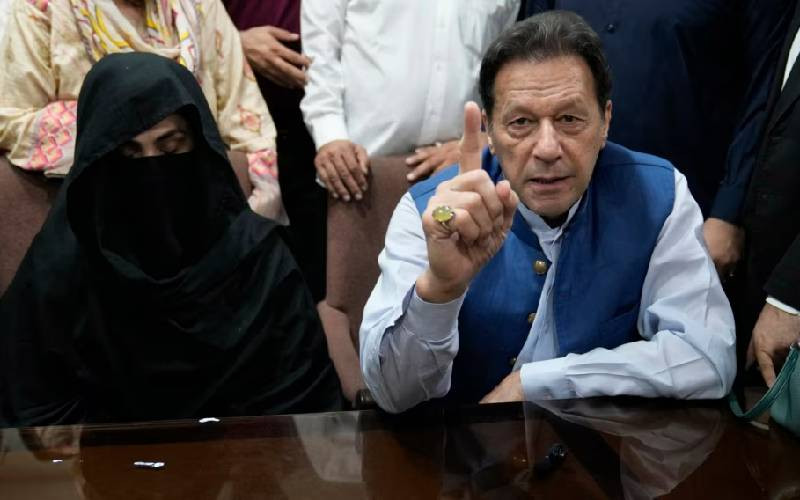
A top U.S diplomat for South and Central Asia has for the first time publicly addressed allegations of conspiring to oust Pakistan's then-Prime Minister Imran Khan in 2022.
Testifying before the House Foreign Relations Committee on Thursday, U.S. Assistant Secretary of State for South and Central Asia Donald Lu rejected the charge that he or his government played a role in fomenting Khan's ouster.
"These allegations, this conspiracy theory, is a lie, it is a complete falsehood," Lu said responding to a question by committee Chairman Representative Joe Wilson, a Republican from the U.S. state of South Carolina.
Cypher conspiracy
In April 2022, Khan was expelled from power in a parliamentary vote of no-confidence.
Khan has since alleged that a secret diplomatic cable, or cypher, sent by then-Pakistani ambassador to the U.S. Asad Majeed Khan, proves the United States conspired with Pakistan's military and opposition leaders to remove him from office. The cable described a March 7, 2022, meeting with Lu in Washington.
Last August, an American news outlet, The Intercept, published what it said was the text of the cipher.
According to Ambassador Khan's purported cable, the State Department officials at the meeting encouraged Khan to tell Pakistan's powerful military that Islamabad could expect warmer relations if Khan were removed from office because of his neutrality on the Russian invasion of Ukraine. The Pakistani prime minister was in Moscow for talks with Russian President Vladimir Putin on the day the invasion began and failed to condemn it.
"I think if the no-confidence vote against the Prime Minister succeeds, all will be forgiven in Washington because the Russia visit is being looked at as a decision by the Prime Minister. ... Otherwise, I think it will be tough going ahead," the document quoted Lu as telling the Pakistani ambassador.
While the State Department has consistently rejected the allegation of conspiring in Khan's ouster, the department's spokesperson Mathew Miller conceded last year that the Biden administration was unhappy with Khan's overtures to Russia.
"We expressed concern privately to the government of Pakistan as we expressed concerns publicly about the visit of then-Prime Minister Khan to Moscow on the very day of Russia's invasion of Ukraine. We made that concern quite clear," Miller said at a regular press conference while responding to a question about The Intercept's reporting.
The Pakistani military and Khan's opponents also have rejected his allegations.
The former Pakistani prime minister is currently serving a 10-year prison term for revealing the contents of the secret cable, a charge he rejects as politically motivated.
Lu called the reporting of the diplomatic cable in Pakistani media inaccurate.
"At no point does it [the cypher] accuse the United States' government or me personally of taking steps against Imran Khan," he told the committee.
Lu pointed out that Pakistan's now-former ambassador Khan had also testified to his government that there was no U.S. conspiracy to remove the prime minister from office.
In March 2022, Pakistan's National Security Committee headed by Khan issued a demarche to the U.S ambassador over his country's "interference" in Pakistan's politics.
After Khan's ouster, however, another NSC committee headed by then-Prime Minister Shehbaz Sharif concluded that the diplomatic cable did not indicate any U.S. conspiracy.
"We respect the sovereignty of Pakistan. We respect the principle that Pakistani people should be the only ones choosing their own leaders through a democratic process," Lu told Wednesday's hearing.

Subscribe to our newsletter and stay updated on the latest developments and special offers!








 join
join