×

The Standard e-Paper
Stay Informed, Even Offline
 The Standard Group Plc is a
multi-media organization with investments in media platforms spanning newspaper
print operations, television, radio broadcasting, digital and online services. The
Standard Group is recognized as a leading multi-media house in Kenya with a key
influence in matters of national and international interest.

Audio By Vocalize
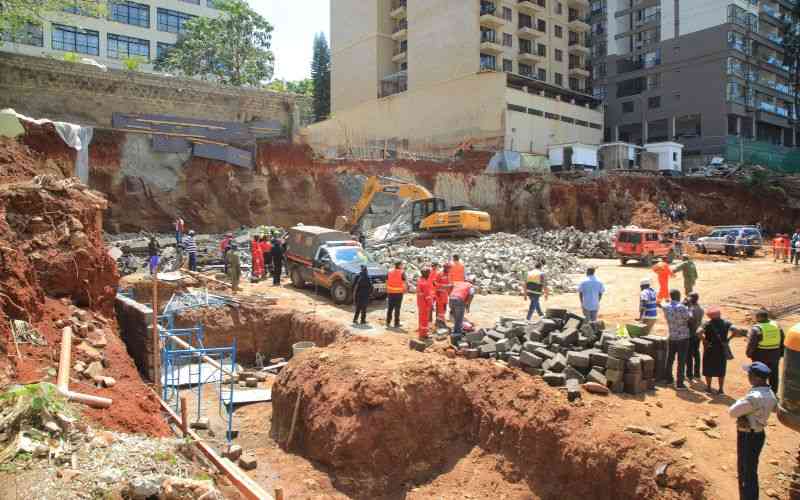
At least 72 buildings have collapsed over the last three years, resulting in dozens of lives lost. How and why does this keep happening? The evidence is scant on the actual drivers of building collapses. However, whatever information is available suggests four main drivers.
First, the speed of construction appears to be a factor. A lot of things can go wrong when building tall buildings with complicated designs. Which is why rushing such projects appear correlated with collapse – possibly because it might be accompanied with the cutting of corners to meet strict deadlines.
Another factor seems to be the use of substandard materials. Cutting corners on cement, steel reinforcements, and other materials has led to structural weaknesses that have possibly led to building collapses.
The other reasons have to do with policy and regulations. In the cases covered in detail in the media, they have been more likely to have involved builders either not getting all the right permits, or a complete lack of inspection or regulatory enforcement by the responsible authorities.
More broadly, it has been clear that as a country we lack the concept of a national building code – that is, regulatory minimums that ought to guide how we do housing developments and other physical infrastructure.
Building collapses are a classic example of the folly of believing that self-interest always pushes people in the direction of doing the right thing.
You would think that the risk of collapse, which comes at huge financial costs for builders, would force them to ensure that the right thing is done. Here, two possible points of failure come to mind.
It is possible that some builders engage in magical thinking, assuming that they can cut corners without any consequences. It is also possible that builders end up being the victims of the contractors they hire.
Relatedly, the same contractors may be victims of merchants of building materials who trade in substandard products. Addressing these problems requires stricter enforcement at the site of construction, in addition to the wider construction value chain.
Builders should be directly accountable to permitting agencies. Professional bodies should have stricter regulation of contractors, quantity surveyors, and engineers. Merchants of building materials should be required to keep track of all the material they buy and sell, and be subjected to unannounced inspections. The same goes for construction sites.
Of course, all these would not guarantee that no building ever collapses. Accidents do happen. However, they would serve to structure the construction industry in a manner that raises safety standards for all involved.
Finally, it is important that the efforts to boost safety and quality need not come with onerous costs. One of the challenges we have as a country is that we always imagine regulation as necessarily having to be punitive.
We think in terms of fines, and not incentives. What we need in the construction sector are not fines, but an overall ecosystem that creates incentives for everyone to be better at their job, and to prioritise safety.
The writer is a professor at Georgetown University
Stay informed. Subscribe to our newsletter
Subscribe to our newsletter and stay updated on the latest developments and special offers!

 Prefer the Standard on Google