×

The Standard e-Paper
Kenya’s Boldest Voice
 The Standard Group Plc is a
multi-media organization with investments in media platforms spanning newspaper
print operations, television, radio broadcasting, digital and online services. The
Standard Group is recognized as a leading multi-media house in Kenya with a key
influence in matters of national and international interest.
The Standard Group Plc is a
multi-media organization with investments in media platforms spanning newspaper
print operations, television, radio broadcasting, digital and online services. The
Standard Group is recognized as a leading multi-media house in Kenya with a key
influence in matters of national and international interest.
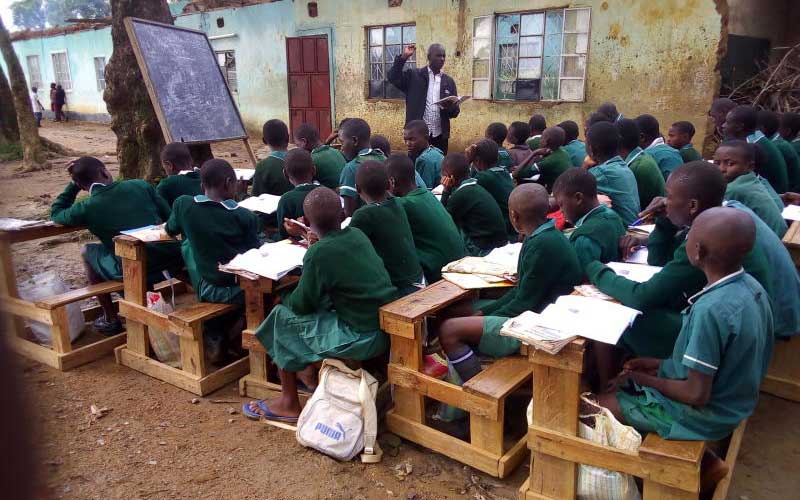
Many of my peers and I, who have escaped the debilitating poverty cycle, are products of public school education. Consequently, many of us consistently track how public schools, particularly those in the lower ranks of the school system, perform because we know, and are living examples of how these experiences impact the distribution of life opportunities. But for a working and facilitative system, many of us would be wallowing in dusty villages, some as clients of Stanley Kamau’s Ahadi Foundation. We worked hard yes, but the system was structured such that our efforts were rewarded. That is increasingly not so for many students particularly those in poor rural areas and the urban vitongojis.
Accordingly, as happens every year, as students who had received their KCPE results in the middle of December trooped to the numerous high schools to commence that portion of their journey of life, I was engrossed with the statistics of the KCPE and KCSE exams, trying to read beyond the “top 100 schools” and “best performing students” to understanding implications of these results.
Subscribe to our newsletter and stay updated on the latest developments and special offers!










 join
join