By John Oyuke
The Government has launched a multi-million shilling project to address youth unemployment while improving rural and urban infrastructure.

The Japanese Government will fund the Youth Employment for Sustainable Development Project, expected to equip 2,500 youth with road maintenance skills, within the first nine months at a cost of $1.6 million (Sh134.4 million).
The project, to be initially implemented in Nairobi, Rift Valley, and North Eastern regions would empower youth with skills to rehabilitate and maintain roads by use of cheaper but effective techniques known as “Cobblestone Paving” and “Do-nou”. Japanese Ambassador to Kenya Toshihisa Takata said creating employment for young people would reduce incidences of crime among the youth.
“Although youth unemployment is a big challenge, there are opportunities to address it through innovation,” he said during a ceremony to officially launch the project in Nairobi and Eldoret.
“We must discover new technologies and develop a productive working population to move the country forward faster,” he said, adding that low cost technologies had been used in other countries and have vast potential in improving urban and rural infrastructure while engaging the youth productively.
Kenya Institute for Highways and Building Technology, Directorate of Industrial Training under ministry of Labour and Youth Polytechnics under Ministry of Youth Affairs will jointly implement the pilot project.
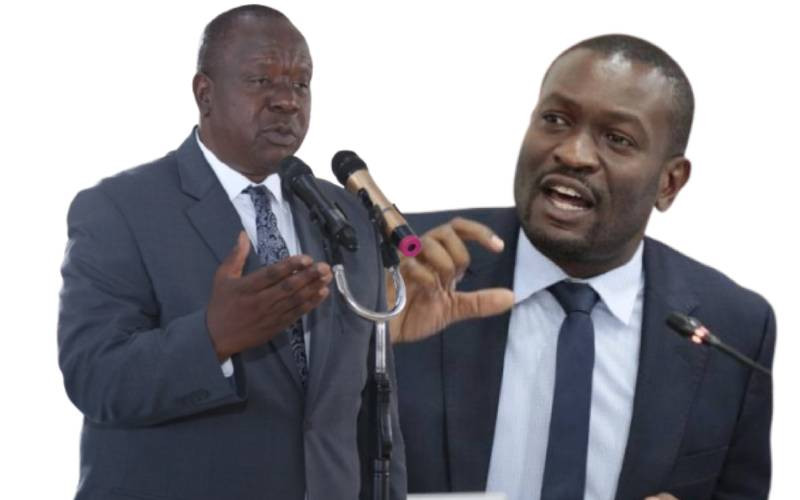
Roads Minister Franklin Bett (Pictured) said after training, youth with viable Micro and Small Enterprises would be contracted to pave and maintain certain roads and walkways through the Kenya Rural Roads Authority, the Kenya Urban Roads Authority, local authorities and private companies.
“The youth will also be engaged in construction of rural markets and storage facilities,” he observed at the Kenya Institute of Highway and Building Technology Campus, Ngong Town.
The International Labour Organisation Country Director, Alexio Musindo said Kenya has over 11 million youth aged between 15 and 30, representing 32 per cent of the total population.