×
App Icon
The Standard e-Paper
Read Offline Anywhere
★★★★ - on Play Store
Download Now

Civil societies say civic space shrunk in 2025

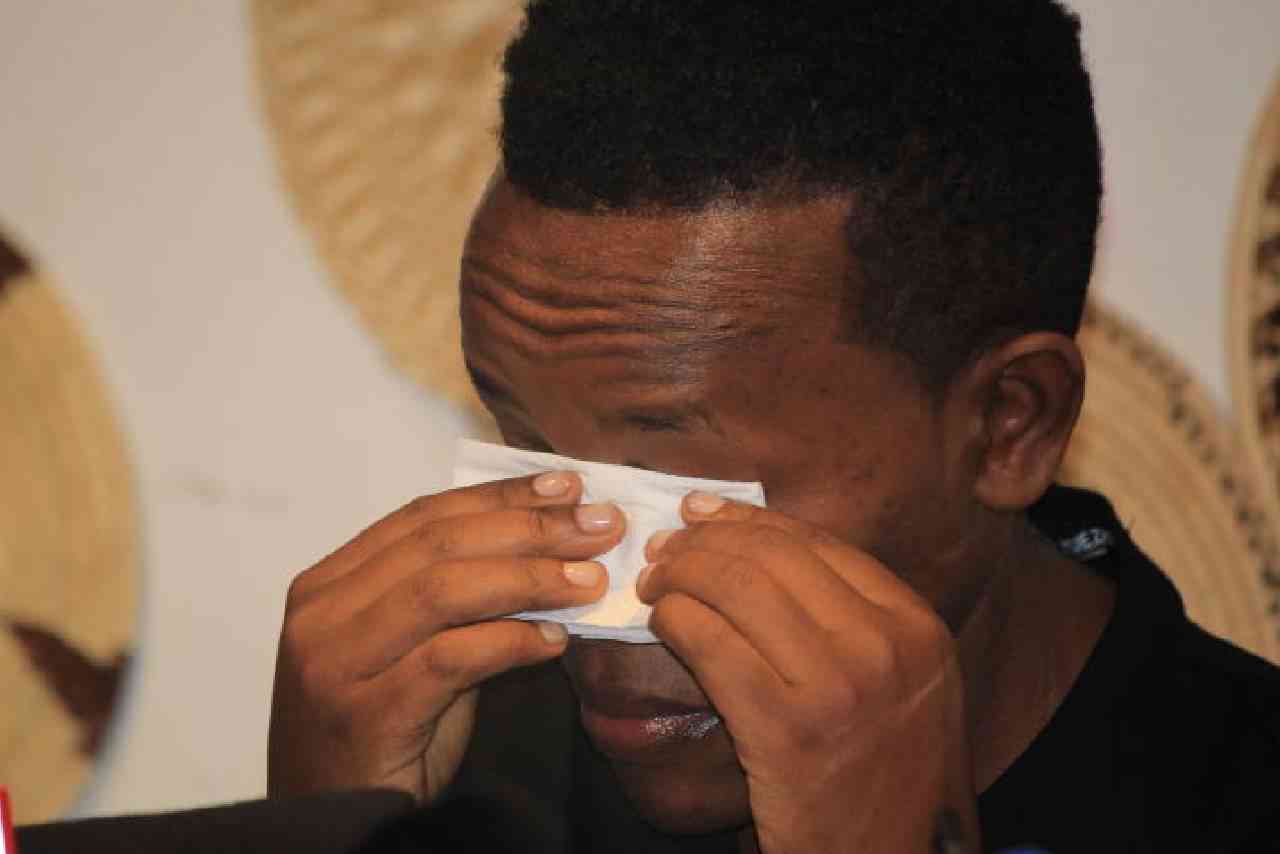
Activists Boniface Mwangi and Agather Atuhaire Narrating their harrowing experiences in the hands of Tanzanian Authorities last Month.. [Benard Orwongo, Standard] 

Civil society groups have raised alarm over what they describe as a worsening suppression of civic freedoms in Kenya, warning that shrinking civic space is threatening the democratic rights of citizens.

According to the Independent Medico-Legal Unit (IMLU), 97 cases of extrajudicial killings have been reported this year, alongside 18 deaths in police custody.

Civil society groups further warn that Kenya is no longer a safe haven, citing cases where foreign civil rights activists have allegedly been abducted or killed while in the country.

Their concerns follow the arrest of a number of activists, including Boniface Mwangi, by officers from the Directorate of Criminal Investigations (DCI).


Mwangi was arrested on July 19 at his residence in Lukenya, Machakos County. Officers reportedly raided his home and office, where he was allegedly found in possession of a firearm without a licence and a tear gas canister.

Mwangi was arraigned at the Kahawa Law Courts and charged with unlawful possession of ammunition, terrorism, and money-laundering-related offences. He was later released on a Sh1 million bond after the State dropped the terrorism charge.

Civil society organisations say Mwangi’s case exemplifies how civic space continues to shrink, with the State increasingly using what they term trumped-up charges against human rights defenders (HRDs).

A report released last month titled Trends in Civic Space by the Defenders Coalition indicates a steady contraction of civic space in Kenya.

“The 2010 Constitution has been praised as one of the most progressive globally; however, trends and experiences over the last couple of years point to an onslaught on civic space, where the State has, both overtly and subtly, constrained civic and democratic freedoms through punitive and prohibitive governance frameworks,” the report states.

It adds that the clampdown targets individuals, public benefit organisations (PBOs), faith-based organisations (FBOs), media houses, trade unions, constitutional commissions, and other independent state and non-state actors.

The lead researcher, Prof Ferdinand Okwaro, said the shrinking civic space correlates with increased protest activity and declining public trust in institutions.

Okwaro noted that the State has increasingly relied on the securitisation of governance, including digital surveillance, to suppress dissent. He added that the independence of the judiciary has been undermined through repeated disregard of court rulings by the Executive, normalising impunity and weakening the rule of law.

Through the research, he said, it was established that HRDs continue to face threats from state security agencies, including police and intelligence officers, as well as from politicians and allegedly sponsored militia groups.

Happy Olal, the national convener of the Social Justice Centres Working Group and a Nairobi-based HRD, said defenders continue to face death threats, arrests, abductions, killings, and abuse of the criminal justice system.

Olal, who has previously been arrested, faced attempted abduction and was charged in court, said his activism had seen him branded a rebel by the State.

“We no longer call it a shrinking space; it is now a closing space, as per the latest report,” he said, explaining that shrinking implies reduced rights, while closing means all avenues for civic engagement are blocked.

He said the trend is evident in the use of punitive laws against protesters, despite the Constitution guaranteeing the right to assemble and demonstrate.

“This year, the government has attempted to make protests unlawful, which is unconstitutional,” Olal said, adding that while governance has grown more authoritarian, Kenyans have become more resilient.

He recalled that on June 25, he was rescued by Gen Z protesters who shielded him from a forceful abduction during demonstrations.

In Nakuru, Youth Bila Noma co-founder Maimuna Munyi said vocal HRDs were increasingly being profiled and targeted for questioning governance issues.

“As we call for accountability, we are branded and arrested for doing our work,” she said.

Munyi cited the killing of HRD Richard Otieno, who was shot dead a few metres from his home in Molo. “The case is in court, and we hope justice will be served. It is unfortunate to lose one of our own,” she said.

She added that two women HRDs were arrested during the Saba Saba demonstrations in what she described as deliberate intimidation.

Defenders Coalition executive director Kamau Ngugi said human rights organisations are concerned that the government is failing to uphold constitutional and international obligations, particularly regarding the protection of HRDs.

“We are worried that policies and laws are increasingly being enacted that take away various freedoms, including the right to exercise rights online,” Ngugi said.

He added that in the physical space, demonstrations are often suppressed as an unofficial policy to silence dissent, while existing laws are manipulated to target HRDs.

“This year, we have seen unimaginable terrorism charges preferred against protesters. These are serious charges that affect an individual’s life, even when they are not held in court,” he said.

Ngugi explained that prolonged court cases stigmatise defenders and deny them opportunities. He urged the government to uphold the rule of law and recognise human rights as universal standards under the United Nations declarations.

“The government should implement national laws and policies that protect HRDs from trumped-up charges, intimidation, arbitrary arrest, and enforced disappearances,” he said, while calling on other institutions mandated to protect human rights to remain steadfast despite threats of defunding.

Former Chief Justice David Maraga also criticised the charging of youths and HRDs with terrorism-related offences.

“These charges are meant to torment defenders, knowing they will not stand in court. The Terrorism Act does not apply to what they are accused of,” Maraga said.

He emphasised the importance of solidarity among HRDs in strengthening Kenyans’ capacity to resist tyranny, noting that the country has one of the best constitutions globally.

“The human rights defenders’ infrastructure has become an indispensable insurance policy that underwrites our democracy,” he said.

In 2024 alone, Gen Z-led protests reportedly left at least 63 people dead, 601 injured, 1,765 arbitrarily arrested, and 82 forcibly disappeared.