×

The Standard e-Paper
Home To Bold Columnists
 The Standard Group Plc is a
multi-media organization with investments in media platforms spanning newspaper
print operations, television, radio broadcasting, digital and online services. The
Standard Group is recognized as a leading multi-media house in Kenya with a key
influence in matters of national and international interest.

Audio By Vocalize
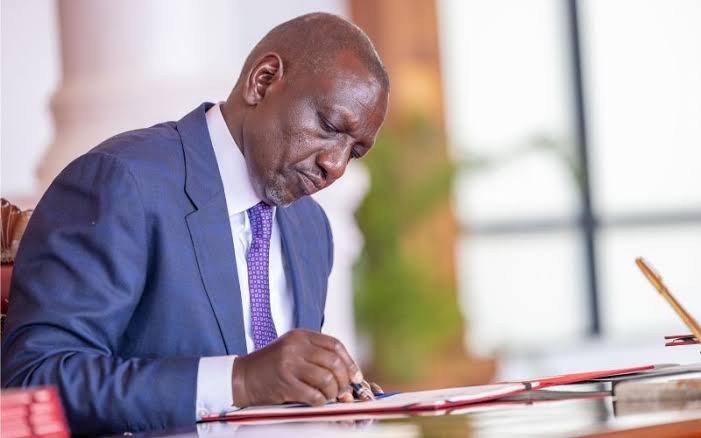
Calls are growing for President William Ruto to reject the Elections (Amendment) (No. 2) Bill, 2024, in its current form, with critics warning that removing the mandatory livestreaming of election results could undermine transparency ahead of the 2027 General Election.
Taifa Mpya, a civic youth organisation, has called on the President to decline to assent to the Bill and refer it back to Parliament under Article 115 of the Constitution, with a reservation seeking the restoration of mandatory livestreaming of results from polling stations.
The organisation's chairman, Mavin Mabonga, on Friday questioned the timing of the changes, warning that the move could weaken one of the safeguards that allows Kenyans to follow election results as they are announced.
“Less than ten months before the General Election of 10 August 2027, Kenyans are losing a guarantee they have relied on in every election since the 2016 reforms,” Mabonga said.
He urged Members of Parliament to restore an express legal requirement compelling the Independent Electoral and Boundaries Commission (IEBC) to livestream results from polling stations, arguing that any concerns over the wording of the law should be addressed without removing the safeguard altogether.
Mabonga also called on the IEBC to commit publicly to livestreaming polling station results in 2027 and publish every Form 34A on a public portal in real time.
He urged the media, civil society organisations, faith leaders and development partners to support efforts to protect open and verifiable elections, saying the issue went beyond political interests to the public's confidence in the electoral process.
The call comes a day after the National Assembly passed the Bill, which seeks to remove the express legal requirement for the IEBC to establish a mechanism for livestreaming results as they are announced at polling stations.
The Bill, which was passed by the Senate in December 2024, seeks to repeal and replace Section 39 of the Elections Act, which governs the transmission, determination and declaration of election results.
Under the proposed changes, the IEBC would still be required to electronically transmit presidential election results within two hours of their declaration and publish polling station result forms on its public online portal for verification. Results declared at polling stations would also remain final.
However, critics argue that electronic transmission and publication of result forms are not a substitute for allowing the public to watch results being announced in real time.
“Supporters of the Bill say results declared at the polling station remain final, and that presidential results will still be transmitted electronically. We do not dispute that. But transmission to tallying centres is not the same as transparency to the public,” Mabonga said.
He argued that livestreaming was introduced following lessons from the 2007 General Election and the violence that followed the disputed results, saying public access to results at polling stations helps strengthen confidence in the final outcome.
Stay informed. Subscribe to our newsletter
Mabonga further cited Articles 81 and 86 of the Constitution, which require elections to be free, fair and transparent, and the electoral system to be accurate, verifiable, secure, accountable and transparent. He also cited Article 35, which guarantees access to information, and Article 34, which protects media freedom.
The organisation acknowledged the IEBC's position that the proposed changes do not necessarily prevent it from livestreaming results voluntarily, but said a public commitment was not enough without a clear legal requirement.
“We welcome that commitment. But a commitment is not a law. Kenyans deserve a guarantee written into statute, not one that can be quietly withdrawn,” he said.
The debate has also moved to the courts, with lawyer John Njomo filing a case challenging Parliament's move to remove the mandatory livestreaming provision.
Njomo argues that the change could encourage electoral malpractice by limiting public scrutiny of results.
The controversy has attracted wider attention, with critics arguing that scrapping mandatory livestreaming could weaken public oversight of vote counting and erode confidence in the credibility of the 2027 elections.
Mabonga warned that if the Bill is assented to in its current form, the organisation would mobilise Kenyans to exercise their constitutional right to peaceful, unarmed assembly and petitioning under Article 37 to demand restoration of the safeguard.
“An election belongs to the people, not to officials. When the count is open, the loser can accept defeat and the winner can govern with legitimacy. When it is hidden, every result is suspect and peace itself is at risk,” he said.
Subscribe to our newsletter and stay updated on the latest developments and special offers!


 Prefer the Standard on Google