×

The Standard e-Paper
Kenya’s Boldest Voice
 The Standard Group Plc is a
multi-media organization with investments in media platforms spanning newspaper
print operations, television, radio broadcasting, digital and online services. The
Standard Group is recognized as a leading multi-media house in Kenya with a key
influence in matters of national and international interest.
The Standard Group Plc is a
multi-media organization with investments in media platforms spanning newspaper
print operations, television, radio broadcasting, digital and online services. The
Standard Group is recognized as a leading multi-media house in Kenya with a key
influence in matters of national and international interest.

Audio By Vocalize
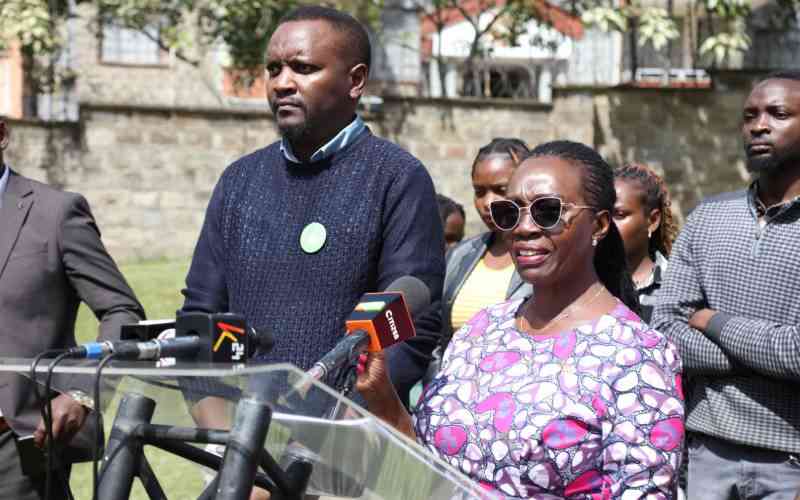
People's Liberation Party (PLP) leader Martha Karua addressing on the finance bill 2027 on June 8, 2026. [Wilberforce Okwiri,Standard]
People’s Liberation Party leader Martha Karua has accused the government of overtaxing citizens while failing to address corruption, wasteful spending, and poor service delivery.
Speaking while unveiling what she calls a “Rescue Budget,” presenting it as a people-centered alternative to the Kenya Kwanza administration’s economic policies, Karua argued that Kenya’s economic challenges are not the result of insufficient revenue but rather poor leadership, fiscal indiscipline, and misplaced priorities.
“Kenya does not have a revenue problem. Kenya has sufficient resources to educate her children, provide healthcare, support farmers, build infrastructure and create opportunities for businesses. What Kenya lacks is disciplined, ethical and people-centered leadership,” Karua said.
Her remarks come amid growing public concern over the rising cost of living, increased taxation, and mounting pressure on households struggling with high food, fuel, healthcare, education, and housing costs.
The former Justice minister linked the current economic frustrations to the widespread youth-led Gen Z protests that erupted in 2024 and continued to influence political discourse through 2025 and beyond.
“Their demands are not unreasonable. They are demanding accountability. They are demanding dignity. They are demanding opportunity. And above all, they are demanding leadership,” she said.
A key pillar of Karua’s proposal is the argument that government waste and corruption have become major obstacles to economic progress. Citing findings from the Auditor-General, she claimed more than Sh304 billion remains tied up in stalled projects across the country.
“This is not evidence of insufficient revenue. It is evidence of poor stewardship,” she said.
Karua proposed significant increases in funding for education and healthcare, arguing that both sectors have suffered from chronic underinvestment.
She pledged to restore adequate capitation for schools, improve public learning institutions, expand access to affordable healthcare, and strengthen public hospitals.
Among her most notable proposals is reducing the national health insurance contribution to Sh500 per family while improving efficiency and eliminating corruption within the healthcare system.
“Healthcare must be accessible, affordable and humane,” Karua said.
Karua also pledged to allocate Sh285 billion toward food security and agricultural support programs, including fertilizer subsidies, irrigation projects, extension services, climate-smart farming, and value addition initiatives.
“The farmer must once again become central to Kenya’s economic transformation,” she stated.
Stay informed. Subscribe to our newsletter
On public finance management, Karua proposed reducing non-essential government expenditure by at least 60 percent, auditing stalled projects, strengthening anti-corruption institutions, and holding public officers personally accountable for unauthorized spending.
She also criticized excessive domestic borrowing, saying it denies businesses access to affordable credit and slows economic growth.
For businesses, Karua promised to audit and settle legitimate pending government bills estimated at Sh525.44 billion. She further proposed predictable taxation, support for local industries, expansion of opportunities for small and medium enterprises, and a two-year tax holiday for youth-led start-ups.
In a direct challenge to the government’s policies, Karua vowed to abolish the Housing Levy, describing it as an unnecessary burden on workers.
“The levy has become an additional burden on workers without delivering commensurate benefits to the majority of contributors,” she said.
Karua argued that Kenyans face a clear choice between what she termed a future of “fair taxation, fiscal discipline and opportunity” and one characterized by “more taxes, more borrowing, more waste and more hardship.”
Drawing comparisons with the economic growth experienced during the administration of former President Mwai Kibaki, Karua maintained that Kenya’s challenges are not inevitable.
“The suffering facing Kenyans today is not destiny. It is the consequence of poor policy choices and failed leadership. And what leadership has created, better leadership can correct,” she said.
Subscribe to our newsletter and stay updated on the latest developments and special offers!


 Prefer the Standard on Google




 join
join