×

The Standard e-Paper
Smart Minds Choose Us
 The Standard Group Plc is a
multi-media organization with investments in media platforms spanning newspaper
print operations, television, radio broadcasting, digital and online services. The
Standard Group is recognized as a leading multi-media house in Kenya with a key
influence in matters of national and international interest.
The Standard Group Plc is a
multi-media organization with investments in media platforms spanning newspaper
print operations, television, radio broadcasting, digital and online services. The
Standard Group is recognized as a leading multi-media house in Kenya with a key
influence in matters of national and international interest.

Audio By Vocalize
Since the beginning of the year, the global aviation industry has been repeatedly buffeted by industrial action. In Germany and Portugal, localised strikes by ground staff generated ripple effects across domestic and connecting European networks. France has experienced periodic disruption from walkouts by flight crew and other aviation workers, compounded by short-notice strike notices that have made operations harder to plan. In Italy, industrial action involving air-traffic controllers, ground and security staff, as well as employees of individual airlines, has disrupted major hubs including Rome Fiumicino.
Closer to home, about two weeks ago, aviation workers represented by the Kenya Aviation Workers Union (KAWU) embarked on a go-slow. The action affected Jomo Kenyatta International Airport, the country’s principal aviation hub, as well as other local airfields, resulting in delays and cancellations across the regional network.
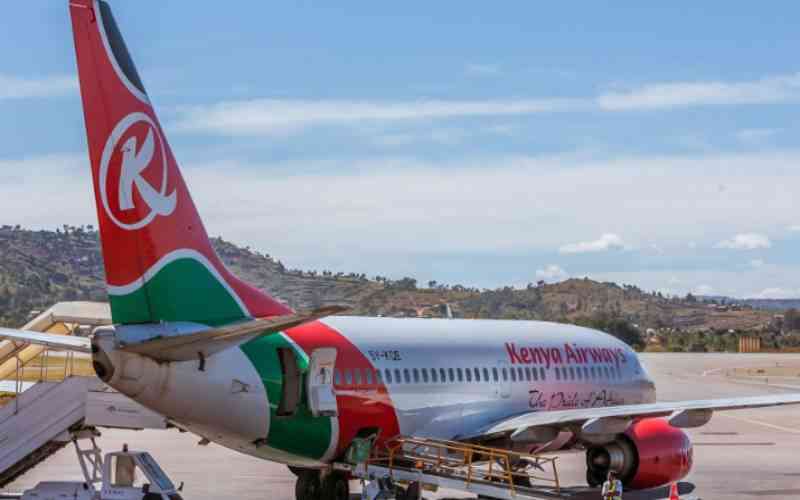
The full economic cost of the disruption has yet to be established. But Kenya Airways (KQ), the national carrier, and its subsidiary, Jambojet, have publicly estimated their combined losses at nearly Ksh1 billion in just three days. What makes the episode particularly striking, however, is what did not happen: Unlike in many of the international disputes described above, none of KQ’s employees took part in the industrial action. Neither its pilots, cabin crew nor its ground staff had a grievance that they sought to resolve through the go-slow.
That outcome was no accident, still less, a matter of good fortune. It was the product of something less dramatic but considerably more valuable: Sustained investment in industrial relations. Management and employee representatives have devoted considerable time and effort to building a working relationship in which grievances can be addressed before they harden into disputes, and in which both sides have a stake in keeping the airline operating.
KQ has made significant progress in stabilising labour relations, strengthening operational resilience and modernising the regulatory framework governing aviation. Protracted negotiations and policy reforms have helped foster greater industrial peace, improve compliance and create a more flexible workforce.
Negotiations for the current Collective Bargaining Agreement with one of the unions began in 2017 but stalled in 2019 with the Covid-19 pandemic further delaying progress. Talks resumed in 2023, reflecting a shared determination to build working relations and reduce industrial conflict following a period of strikes. The eventual agreement, signed after years of difficulty, represents a notable achievement.
The negotiations also exposed how little Kenya’s immigration and aviation regulations had evolved. The revised framework marks a significant departure, bringing national rules closer to international practice, including standards associated with the International Civil Aviation Organisation and the European Union Aviation Safety Agency. The updated regulations have since been published by the Kenya Civil Aviation Authority, with approximately a year allowed for implementation.
KQ also continues to invest heavily in training pilots, engineers and other cadres of its employees, whose expertise is recognised internationally. Kenyan aviation professionals remain in demand globally. Yet staff attrition at KQ is below 3 per cent compared with a global average of 9 per cent. The deeper retention strategy is therefore straightforward: Create an environment in which skilled professionals choose to build their careers in Kenya.
These lessons extend beyond KQ. In an industry where disruption can cascade rapidly from a single airport to an entire network, good labour relations are not merely a human-resource virtue. They are an operational asset and, ultimately, a form of risk management.
Captain Paul Njoroge
Ag. Chief Operating Officer
Kenya Airways PLC
Subscribe to our newsletter and stay updated on the latest developments and special offers!


 Prefer the Standard on Google









 join
join