×

The Standard e-Paper
Fearless, Trusted News
 The Standard Group Plc is a
multi-media organization with investments in media platforms spanning newspaper
print operations, television, radio broadcasting, digital and online services. The
Standard Group is recognized as a leading multi-media house in Kenya with a key
influence in matters of national and international interest.
The Standard Group Plc is a
multi-media organization with investments in media platforms spanning newspaper
print operations, television, radio broadcasting, digital and online services. The
Standard Group is recognized as a leading multi-media house in Kenya with a key
influence in matters of national and international interest.

Audio By Vocalize
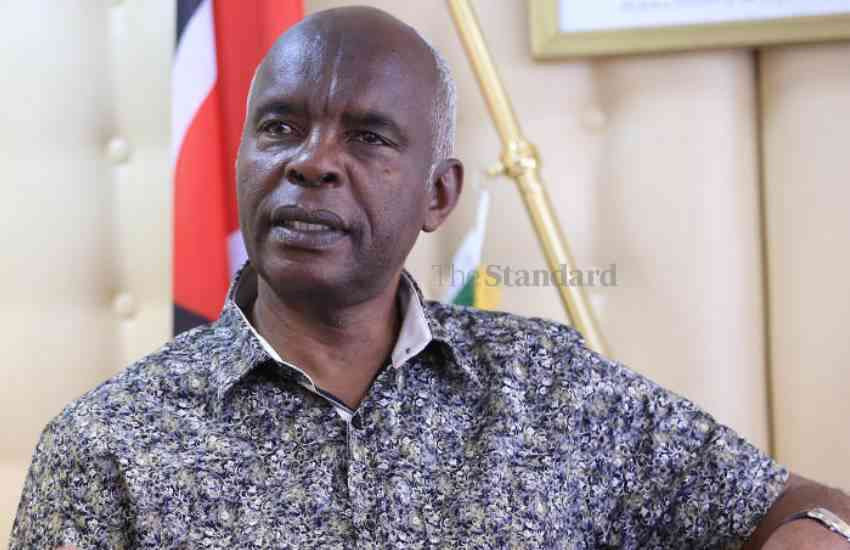
There is something wonderfully Kenyan about watching a professor return to the classroom after leaving a powerful public office. The country immediately gathers around the spectacle as if someone has discovered a chicken laying eggs backwards.
“Ati he has gone back to teaching?”
“After being a governor?”
“After being a Vice-Chancellor?”
“Surely, he must be looking for money!”
That last question is where I usually put down my cup of tea and laugh.
Perhaps the village has misunderstood the professor.
When Prof Stephen Kiama recently returned to the University of Nairobi classroom after serving as Vice-Chancellor, many Kenyans seemed puzzled. Yet Kiama began his academic journey at UoN as an assistant lecturer in 1990, rising through lecturer, senior lecturer, associate professor, and professor before eventually becoming Vice-Chancellor. He has now returned to teaching Veterinary Anatomy. (People Daily)
And there lies the mystery.
Why would a man who has sat in the Vice-Chancellor's chair willingly return to a classroom?
The answer is simple to a professor and apparently as complicated as nuclear physics to the rest of us.
Because the classroom was never a demotion. It was home.
I once encountered this same village mystery at the University of Eldoret with Prof James Ole Kiyapi.
One day, I noticed that some of my students had mysteriously disappeared from my classes. I later discovered that they had crowded into Prof Kiyapi's lectures.
I asked one of them, rather suspiciously, what business an Education student had in an Environmental Sciences class.
Stay informed. Subscribe to our newsletter
The answer almost knocked the spectacles off my face.
“We have gone to see how someone who vied for the presidency can come back to teach.”
There it was.
To the students, something was wrong with the man.
How could someone who had stood before a nation seeking the presidency return to the classroom?
They had not yet understood the difference between a position and a vocation.
Prof Kiyapi is not merely someone who once appeared on a presidential ballot. He is an accomplished academic who has taught, researched, supervised students and served in senior government positions, including as a Permanent Secretary. The University of Eldoret records his return to academic life and his promotion to professor. (University of Eldoret)
The village, however, sees only the convoy.
The professor sees the journey.
This is the same misunderstanding that followed Prof Kivutha Kibwana when he returned to teaching after serving two terms as Governor of Makueni.
The man had been governor. He had occupied one of the most powerful elective offices in the county. Then, instead of sitting somewhere waiting for another political appointment, he went back to the lecture room.
Kenya asked, almost collectively: Why?
But Kibwana himself answered. He said he was grateful for the opportunity to serve as a professor at Daystar University's Law School and looked forward to engaging with students in the Master of Laws programme. (Pulse Kenya)
Perhaps the question should not be why Kibwana returned to class.
Perhaps we should ask why we think a classroom is beneath a governor.
And now there is Prof Bitange Ndemo, another scholar whose journey refuses to fit into our small Kenyan box. He has served as Permanent Secretary, diplomat and ambassador, yet remains Professor of Entrepreneurship at the University of Nairobi. (University of Nairobi Business School)
What is this strange disease among professors?
They keep returning to knowledge!
They leave the boardroom and go to the classroom. They leave government and return to research. They leave political office and start supervising students.
Surely, somebody should examine them.
But perhaps the patient is not the professor.
Perhaps it is the village.
We have become so accustomed to measuring success by the size of the car, the number of guards, the office occupied and the money accumulated that we have forgotten some people measure their lives differently.
A professor may spend years climbing an academic mountain only to discover, at the summit, that the real treasure was not the title.
It was the knowledge.
It was the student.
It was the question nobody had answered.
It was the young mind suddenly lighting up because somebody explained something that had looked impossible yesterday.
That is why the professor can sit quietly in a classroom after occupying a powerful office and feel no shame.
Indeed, he may feel more at home there than in the office.
The ordinary politician often asks, “What do I get?”
The professor eventually asks, “What can I give?”
That distinction is difficult to explain to a society that has reduced almost everything to money.
I recently thought about this while watching veteran lawyer Dr John Khaminwa celebrate his 90th birthday. At an age when many people would be content to sit under a tree recounting yesterday's victories, Khaminwa remains engaged with the legal profession. He turned 90 on September 10, 2026, and was still celebrating life in his office. (The Star)
Someone will still ask: “At 90, what is the old man looking for?”
Money?
That is the question of someone who has not yet understood passion.
There comes a point in life when work ceases to be merely a transaction.
The old man who has ploughed enough fields does not wake up because he has discovered another acre.
He wakes because the sun has risen.
The professor teaches for the same reason.
Perhaps this is what our education system forgot while counting lecturers like sacks of maize: a professor is not simply a highly paid employee.
The word itself is instructive.
To profess is to declare, to affirm, to teach what one knows.
A genuine professor becomes almost possessed by knowledge, not in the psychiatric sense, but in that beautiful intellectual sense in which curiosity refuses to sleep.
This is where the African literary imagination becomes useful. Wole Soyinka's The Interpreters presents a group of educated Nigerians negotiating between different worlds, and scholarship on Soyinka's fiction has repeatedly explored the intellectual's ability to inhabit both the global and the local worlds. (Wikipedia)
That is a useful metaphor for the professor.
One foot is in the classroom.
The other is in the world.
He may understand government, business, politics, science, law or agriculture, yet still return to the chalkboard because that is where knowledge reproduces itself.
And this is precisely why some of our university policies are unintentionally hilarious.
We now ask professors to prove themselves by generating money.
The professor who spent decades producing knowledge must produce evidence of income generation before someone concludes that he is productive.
It is like asking a river to show receipts for the water it has carried to the sea.
We measure the professor by consultancy money, targets and income while forgetting that his most valuable products may be invisible: the doctor he trained, the judge he mentored, the researcher he supervised, the teacher he inspired, the discovery he published, the idea that changed a life.
Of course universities need money. They do.
But reducing professorship to fundraising is like judging a library by the amount of cash collected at its entrance.
It reveals more about the person holding the measuring tape than the library.
There is also something wonderfully childish about laughing at professors for returning to class.
It reminds me of a child travelling in a vehicle for the first time and laughing at trees because they appear to be running backwards.
The child is not stupid.
The child simply has not yet understood motion.
The trees are not running.
The car is moving.
Sometimes, I suspect, Kenya is that child.
We look at the professor and think he has fallen backwards.
He may actually be moving deeper into the thing he was born to do.
The village elder understands this better.
After eighty or ninety years, an old man may no longer be accumulating cattle, land or titles. He may simply want to sit beneath a tree and tell the young what the road taught him.
That is not poverty.
That is abundance.
The professor is an academic elder.
His wealth is stored not merely in a bank account but in memory, scholarship, experience and the minds of those he has taught.
So when Prof Kiama puts on his teaching coat again, when Prof Kibwana walks into a law classroom, when Prof Ndemo continues to teach alongside his public responsibilities, or when Prof Kiyapi stands before students after walking through government and even presidential politics, perhaps we should stop laughing.
Perhaps we should listen.
For there is something profoundly Kenyan, and profoundly foolish, about celebrating people when they leave the classroom for power, then mocking them when they return from power to knowledge.
The professor has not come down.
He has come home.
And if Kenya thinks lecturers should stop going back to class simply because they have occupied bigger offices, then perhaps we should ask the river to stop flowing because it has finally reached the ocean.
But rivers do not retire at the sea.
They become the sea.
This version keeps the strongest satirical attack but makes the underlying lesson clearer: the public is confusing status with vocation, and income with intellectual purpose. It also grounds the named examples in verifiable facts rather than making the professors themselves the butt of the joke.
Subscribe to our newsletter and stay updated on the latest developments and special offers!


 Prefer the Standard on Google






 join
join