×

The Standard e-Paper
Join Thousands Daily
 The Standard Group Plc is a
multi-media organization with investments in media platforms spanning newspaper
print operations, television, radio broadcasting, digital and online services. The
Standard Group is recognized as a leading multi-media house in Kenya with a key
influence in matters of national and international interest.
The Standard Group Plc is a
multi-media organization with investments in media platforms spanning newspaper
print operations, television, radio broadcasting, digital and online services. The
Standard Group is recognized as a leading multi-media house in Kenya with a key
influence in matters of national and international interest.

Audio By Vocalize
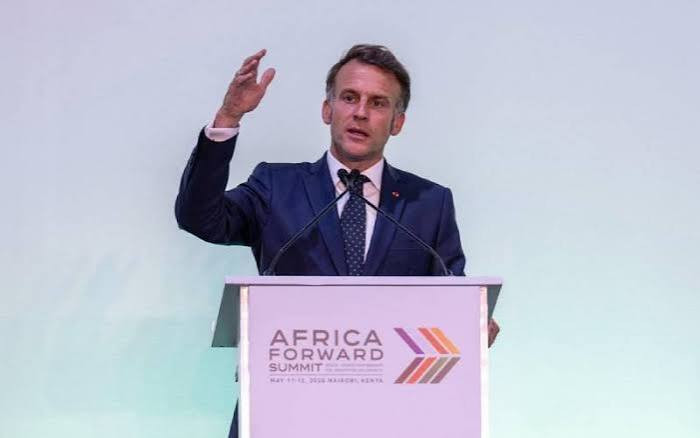
France has changed its language in Africa, but the critical question is whether it has changed its methods of engagement. The answer is no!
For decades, French power in Africa rested on political influence, military presence and economic leverage. But when the peoples and military governments of the Sahel dismantled that architecture, Paris faced a problem it had not anticipated: what happens when an old sphere of influence refuses to remain one?
The answer, if material examined in the MDNtv investigation into the alleged "Operation Phoenix" is anything to go by, was not to surrender quietly. It was to change tack.
The reported Phoenix plot exposes strategies allegedly considered after France was booted out of Niger in 2023—after French forces had already been pushed out of Mali and Burkina Faso.
The first option was military. According to material examined by MDNtv, the alleged operation envisaged weakening Niger's military leadership and capabilities, encouraging divisions within the military and population, and creating conditions that could force the country back towards French support.
Those are extraordinary allegations. They have not been independently authenticated and must be treated as allegations, not established fact. But the wider sequence is documented. Mali, Burkina Faso and Niger rejected French military presence and asserted sovereignty outside Paris' traditional orbit. The three deepened cooperation through the Alliance of Sahel States (AES).
For France, this was more than loss of bases. It was the unravelling of an entire geopolitical system. And when the military option failed — or became too politically costly — another weapon was economic strangulation. The alleged Phoenix material calls it "slow strangulation".
What followed in Niger gives that phrase troubling context. The first blow came from Paris. On July 29, 2023, days after the coup, France suspended all development assistance and budgetary support to Niger. French aid had been about €120 million in 2022.
The second layer came through the regional financial system. On July 30, ECOWAS and WAEMU imposed sweeping sanctions: borders closed, commercial and financial transactions suspended, state assets frozen, access to regional finance cut. The West African central bank, BCEAO, became central to enforcement, while Niger was shut out of the regional financial market.
The third layer was withdrawal of wider external financing. The EU suspended financial support and security cooperation. Development partners paused disbursements. For a country heavily dependent on external financing, the effect was not abstract. The World Bank later reported sanctions disrupted supply chains, raised import prices, created pharmaceutical shortages, disrupted transport and caused banking liquidity problems. An estimated 7.5 per cent of GDP in external financing was not disbursed in 2023 due to aid pauses.
This is what makes the economic dimension important. Who was doing the strangling?
Not France alone. France supplied one part by suspending its aid. The EU suspended its support. ECOWAS and WAEMU imposed regional sanctions. The BCEAO enforced financial restrictions. Member states implemented trade measures, with Nigeria cutting electricity to Niger and Côte d'Ivoire suspending imports and exports.
The effect was unmistakable. Economic pressure attacked the arteries through which a fragile state breathes: money, trade, credit, fuel, electricity, medicine and market access.
That is why economic sanctions can be more potent than bombs. A military intervention confronts a government directly. Economic pressure reaches the population first. When prices rise, medicines become scarce, businesses struggle and revenues shrink, the political argument changes. It ceases to be whether a military government should stay. It becomes whether the population can endure defying powerful neighbours and partners.
Stay informed. Subscribe to our newsletter
That is the logic behind "slow strangulation": not necessarily destroying a government immediately, but creating conditions where political pressure, public frustration and economic desperation achieve what intervention could not.
Economic coercion is hardly new. Colonialism did not rely solely on soldiers. It relied on control of trade, resources, currencies, markets and institutions. The flag was only one symbol. Economic dependency was the machinery underneath. The colonial power could leave the palace but remain in the economy.
That is why Niger belongs to a longer African history where former colonial powers have sought to retain influence after formal rule ended. Pan-African analyst Jean Bwasa from DRC puts it bluntly: the objective is to restore lost influence while controlling resources, political levers and economic systems. His criticism extends to the CFA franc, which he argues constrains economic sovereignty in West Africa.
Whether one accepts every element or not, the central question remains: can political independence be meaningful if economic survival levers remain externally controlled? Niger offered an uncomfortable test. A country facing terrorism, poverty and development challenges is extraordinarily vulnerable to economic pressure. Restrict finance. Disrupt trade. Isolate diplomatically. Increase governance costs. The objective need not be invasion. It can be making governing so painful that political pressure does the work soldiers could not.
That is where Phoenix becomes significant. If the military option was to break the new order and the economic option was to squeeze it, both belong to the same logic: restore influence by making independence expensive.
Yet another development makes the story more intriguing. In May 2026, France co-hosted the Africa Forward Summit in Nairobi with Kenya, presenting a new vocabulary of partnership, innovation and equal engagement. The official message was different from old strategic dominance. Handshake rather than confrontation. Investment rather than intervention.
But geopolitics is rarely judged by language alone. It is judged by interests and outcomes. France has every right to seek new relationships with Africa. African states have every right to welcome investment from France or any partner. The danger is when partnership becomes sophisticated vocabulary for preserving influence that can no longer be exercised through older methods.
-The writer comments on global issues.
Subscribe to our newsletter and stay updated on the latest developments and special offers!

 Prefer the Standard on Google