×

The Standard e-Paper
Stay Informed, Even Offline
 The Standard Group Plc is a
multi-media organization with investments in media platforms spanning newspaper
print operations, television, radio broadcasting, digital and online services. The
Standard Group is recognized as a leading multi-media house in Kenya with a key
influence in matters of national and international interest.
The Standard Group Plc is a
multi-media organization with investments in media platforms spanning newspaper
print operations, television, radio broadcasting, digital and online services. The
Standard Group is recognized as a leading multi-media house in Kenya with a key
influence in matters of national and international interest.

Audio By Vocalize
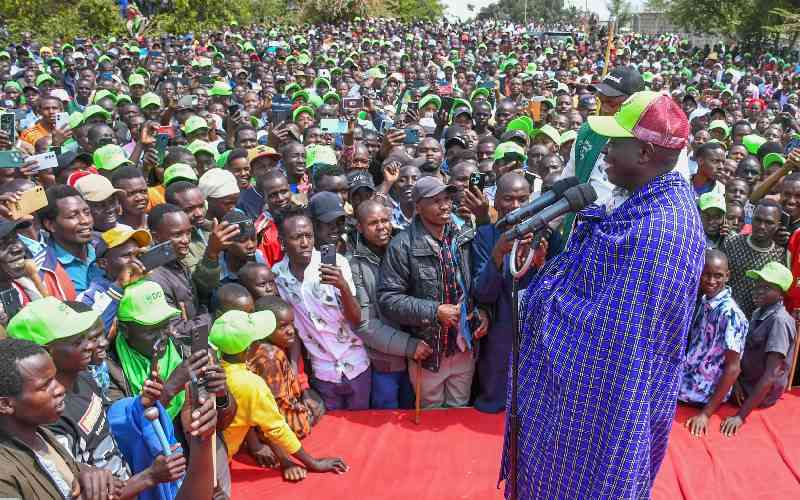
Former Deputy President and DCP leader Rigathi Gachagua addresses a rally at Mogondo, Emurua Dikirr, Narok County. [Kipsang Joseph, Standard]
As political tensions begin to ease, it is time for all political actors, whether from Team A, B or C, to reflect on a worrying trend that threatens the future of our society: The politicisation and exploitation of children.
This responsibility does not lie with politicians alone. Parents, guardians, relatives, teachers, religious leaders and the wider community all have a duty to protect children from being dragged into political battles before they are mature enough to understand and make independent choices.
We have seen children being taken to political rallies and gatherings, given political poems, songs and slogans designed to praise one side and condemn another. Some are used to attract crowds or create emotional appeal, while others are exposed to political confrontations and violence. In the digital space, children are sometimes encouraged to share partisan messages, insults and narratives they may not fully understand.
There is nothing wrong with teaching children about government, democracy, leadership, citizenship and their rights. In fact, civic education is essential. Children should understand how government works, why elections matter, the importance of the Constitution and their responsibility as future citizens.
But there is a clear line between educating a child about politics and recruiting a child into adult political battles.
A child may understand a political message, but that does not mean they possess the maturity to critically examine it, recognise manipulation or understand the consequences of hatred and division.
When children repeatedly hear adults describing political opponents as enemies, traitors or people who deserve contempt, they can begin to believe that disagreement is something to fight over. When they watch adults celebrate political confrontation, they may grow up believing that aggression is part of leadership.
What we normalise in children today may become the culture of our society tomorrow. We must therefore ask ourselves; what kind of citizens are we preparing?
Do we want a generation capable of listening to different opinions, debating respectfully and resolving disagreements peacefully? Or do we want young people who inherit the anger, divisions and political hatred of previous generations?
Schools have an important role to play. They should be safe spaces where children learn to question, reason, debate and respect different views. Civic education must promote critical thinking, not political indoctrination.
A student should be able to learn about Parliament, elections and national affairs without being told which political side they must support.
Parents and guardians must also examine the political environment they create at home. Children listen. They observe. They absorb the language and attitudes of adults around them. Political disagreements should never be turned into family hatred or passed down to children as an inheritance.
Political leaders, too, must lead by example. Children should never be used as campaign decorations, crowd-pulling tools, political messengers or instruments for attacking opponents. A child's innocence must never become a political strategy.
This is not a call to keep children ignorant of society. It is a call to give them the freedom to learn without manipulation.
Stay informed. Subscribe to our newsletter
Let children be children. Let them learn. Let them question. Let them grow. Let them develop their own civic understanding before adults hand them political identities.
Our children should inherit a democracy, not our political battles.
Mr Barasa is a Pontifical Missionary Childhood Animator at Queen of Apostles Catholic Parish Ruaraka and Saint Michael's chaplaincy parish Moi University
Subscribe to our newsletter and stay updated on the latest developments and special offers!


 Prefer the Standard on Google





 join
join