×

The Standard e-Paper
Smart Minds Choose Us
 The Standard Group Plc is a
multi-media organization with investments in media platforms spanning newspaper
print operations, television, radio broadcasting, digital and online services. The
Standard Group is recognized as a leading multi-media house in Kenya with a key
influence in matters of national and international interest.
The Standard Group Plc is a
multi-media organization with investments in media platforms spanning newspaper
print operations, television, radio broadcasting, digital and online services. The
Standard Group is recognized as a leading multi-media house in Kenya with a key
influence in matters of national and international interest.

Audio By Vocalize
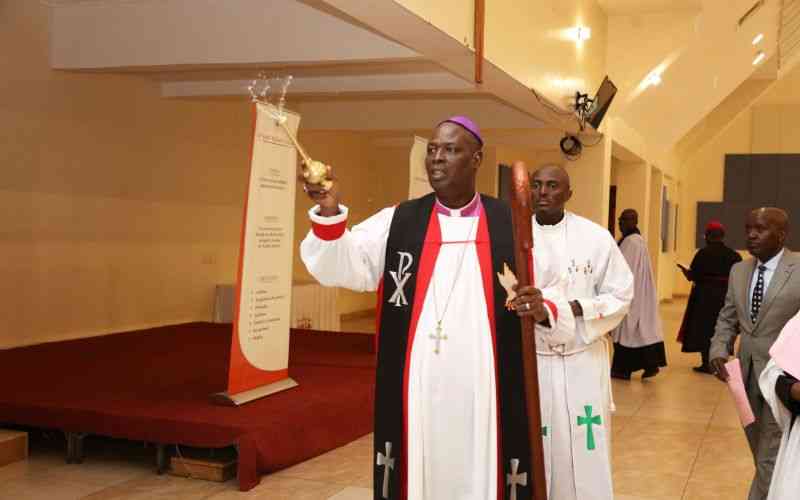
Dear Pastor, what if what you do every Sunday for the next 51 Sundays could help make or break this country?
The church was pivotal in installing the "Hustler Government," which has since evolved into the "Broad-Based Government." The church was not consulted about that evolution.
Politicians may not have needed the church when making that broad base. But they cannot avoid the church in the coming phase. We are now in an election year.
Every Sunday, thousands of pastors stand before millions of Kenyans, shaping how they see themselves and the world around them. The question is not whether the church will influence the country this year. It will. The question is what it will do with that influence.
Scripture knows the countdown. Nineveh had a window to repent. Jesus spoke of recognising the time of visitation. A countdown is not about the passage of time; it is about the urgency of obedience. These 51 Sundays are not a countdown to an election. They are a countdown to a moment of national consequence.
Consciences can be awakened. Voters can be taught to discern. Corrupt practices can be confronted. Tribal prejudices can be challenged. At the end, every pastor should stand before God and say, "I did my part. I used the time You gave me." That is not panic — it is stewardship. Not political hysteria — spiritual urgency.
Three places will make these Sundays decisive.
What you preach
Your sermon either equips people to understand good governance, or leaves them vulnerable to whatever leadership politicians choose to sell them. Let no sermon end without speaking against corruption specifically — not in generalities.
Name it: manipulation of public resources, bribery, falsified documents, contracts to friends, votes bought with public money. And teach this: corruption is not less corrupt because "our person" is doing it. We have built a morality that changes with who benefits — a thief on one side, "strategic" on the other. The church must recover moral consistency.
Teach discernment. What has this candidate actually done? How do they treat those who disagree with them? Teach people not to confuse charisma with character, popularity with competence, or religious language with righteousness. The church should produce discerning voters, not merely praying ones. The pulpit is not a rally. But it cannot be a place where politics is ignored while political decisions shape the lives entrusted to your care. The prophets did not ask whether their sermons were convenient. They asked whether they were true.
What you say to the power seekers
What do you say to a politician before you pray for their ambition? Do you simply welcome, praise, and pray for their victory — or do you speak truth to power? The pulpit will be in high demand. Politicians will come with outriders, envelopes and rehearsed smiles seeking legitimacy. The question is not whether they will come, but whether the church will be ready. Welcome them — but do not be impressed by the convoy. Receive the guest; refuse the performance. Pray genuinely, for a clean heart and the courage to serve rather than plunder — but "give him victory" can quietly become a campaign endorsement wearing liturgical clothing.
The prophetic tradition gives us the model: Nathan confronted David. Micaiah refused to flatter Ahab. Samuel forced Saul to face his disobedience. Refusal, confrontation, specificity — these are the tools. Have real questions ready. What happened to the promised road? The unfinished dispensary? The bursary funds? Engage politicians as informed citizens; consider opening the church hall for structured public accountability.
And let every politician who enters the sanctuary understand: this is a love zone. No tribal incitement, no dehumanising of opponents, no violence disguised as passion. The church should be one of the safest places in Kenya to disagree. And be ready to mute the ones who cross the line. This is your space, Pastor — you are in charge. You do not need to argue with a politician who veers into incitement mid-microphone. You simply take the microphone back. Be in charge of the worship service. Let the politician come expecting a pastor, and meet a community champion instead.
Stay informed. Subscribe to our newsletter
What you do with the money power brings
This is the hardest pivot. Money can build a sanctuary. It can also silence a pulpit. It rarely arrives as a bribe — it arrives as a building fund. But a pulpit that has taken a man's money struggles to question his character the following week. Some want a politician's announced money rejected outright. This has its merits. But what if the church stood in as community champion instead? Then the posture becomes direction, not refusal.
Have your projects list ready before the offering plate nears a politician's hand — drainage unblocked, school fees for needy children, food for the hungry, a bridge across the dangerous stream. Draw up your list, pastor. Let not a penny fall into the church treasury. Let the church systems get money for the community. But direction is not a substitute for discernment. Some money should never be redirected — it should be refused. It is not the destination that is dirty but the origin. If it is looted, if it is public money wearing private clothes, no borehole built with it will run clean.
Do not sell your altar, Pastor. Your pulpit is worth more than a political photograph. Your prophetic voice is worth more than political access. Your moral authority is worth more than proximity to power. Prophecy is not only a committee activity. Sometimes it is one pastor telling a congregation their favourite candidate is wrong, telling the poor their vote has value, telling the powerful that God is not impressed by power. The prophet does not wait for permission.
To your crusades, add integrity campaigns. To your keshas, add torchlighting on what is evil. To your Bible studies, add public ethics. Let the church become a school of citizenship. And do not hide behind metaphor when plain language is required — if it is corruption, call it corruption; if it is tribalism, call it tribalism. The trumpet must give a clear sound. Evil is strong; righteousness must be intelligent. We need prayer, but also discernment. Faith, but also facts.
Let the pulpit not echo the podium. The podium speaks to crowds; the pulpit speaks to consciences. The podium makes promises; the pulpit asks whether they are truthful, just, and possible. Pray — vigorously — for the fall of corruption, for peaceful elections, for citizens who will not sell their votes. But pray and teach. Pray and discern. Pray and organise moral resistance to evil. That is prophetic prayer. Use the altar to redeem the country. Tell politicians public office is not personal property. Tell voters their vote is not merchandise. Tell the young that walking away is not wisdom.
Pastors, you have 51 Sundays — of courage and vision, of pulpit power, of prophetic prayer. The countdown has begun. When the final Sunday arrives, may every pastor stand before God and say: The country needed a voice. We did not remain silent.
Subscribe to our newsletter and stay updated on the latest developments and special offers!

 Prefer the Standard on Google






 join
join