×

The Standard e-Paper
Stay Informed, Even Offline
 The Standard Group Plc is a
multi-media organization with investments in media platforms spanning newspaper
print operations, television, radio broadcasting, digital and online services. The
Standard Group is recognized as a leading multi-media house in Kenya with a key
influence in matters of national and international interest.
The Standard Group Plc is a
multi-media organization with investments in media platforms spanning newspaper
print operations, television, radio broadcasting, digital and online services. The
Standard Group is recognized as a leading multi-media house in Kenya with a key
influence in matters of national and international interest.

Audio By Vocalize

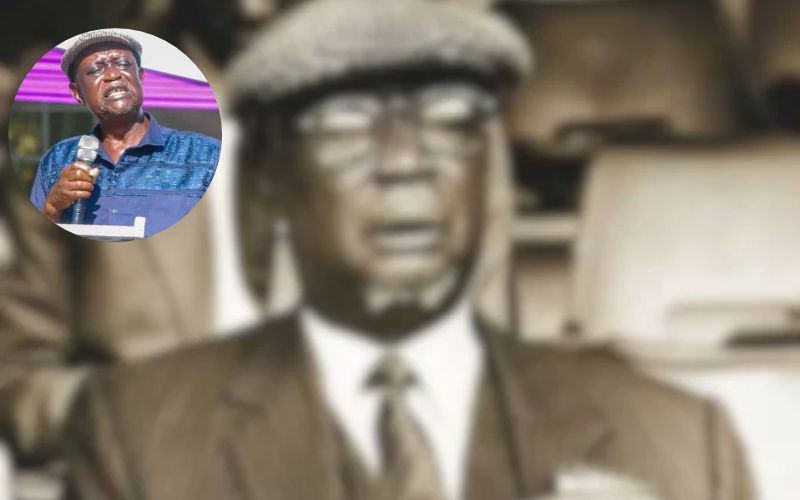
The Constitution envisioned independent commissions and offices as more than any other state offices; they were meant to bite and bite in the favour of the people. They were designed to serve as guardians of constitutionalism, accountability, and restraint against the excesses of executive power. Constitutional scholar Prof. Ben Sihanya has often described them as the “Fourth Arm of Government” institutions expected to stand between political power and the public interest. However, the recent events have renewed an uncomfortable question. Are these bodies genuinely independent or are they increasingly operating under the invisible, and sometimes visible, influence of the presidency?
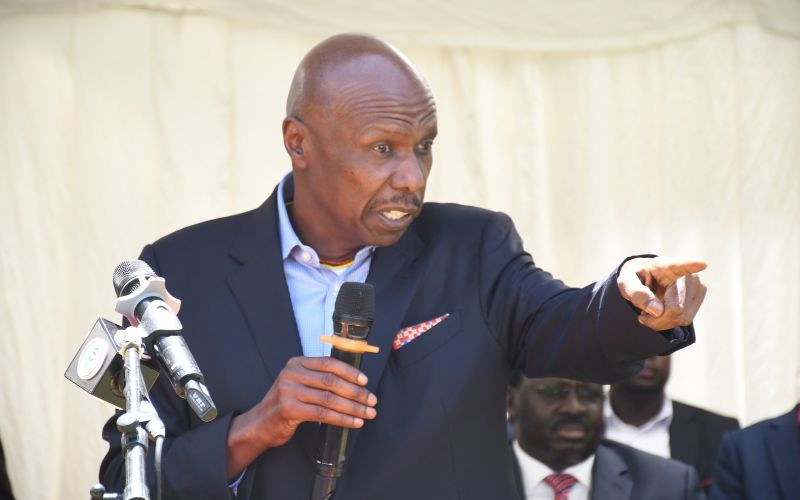
The controversy surrounding the response of the National Cohesion and Integration Commission (NCIC )'s response to the remarks of the Cabinet Secretary Aden Duale, referring to a community as “fisi,” loosely translated to ‘hyena,’ has brought this concern into sharp focus. In a politically charged environment, the Commission's reaction attracted scrutiny from citizens who expected an institution established to guard against ethnic incitement to act firmly, consistently and without fear or favour. Whether one agrees with the Commission's position or not, the public debate revealed a deeper anxiety. Kenyans increasingly judge independent institutions not only by what they do but also by whom they appear willing to confront. That perception matters. Independence as a principle should be at the umbilical cord of these offices, and certainly it should exude life in terms of functionality. It is a public trust. Once citizens begin to suspect that constitutional offices weigh political convenience before legal principle, confidence in those institutions begins to erode. A commission may remain legally independent, yet lose the moral authority that gives its decisions legitimacy. The NCIC on their public statement dated the 24th of July and the presser they held, appeared confused, indifferent, and non-committal to its role. On one hand, they condemn the utterances; on the other hand, they state the utterances would be unfortunate if it is true they were ever made, and more baffling is that the commission suggested it cannot act on its own motion; one has to move them. Of course, this is particularly misleading. One can only imagine what would become of our society if it were that a commission funded by taxpayers cannot act on its own motion to regulate the verbal recklessness we see every day, especially ethnic profiling and tribalism, a curse that our politicians spew as well as instill in the citizenry.
On the other side, the recent appointment of Dr. Duncan Ojwang as Chairperson of the Independent Policing Oversight Authority has similarly generated public discussion. Every appointment to a constitutional office inevitably attracts scrutiny, particularly where the appointee is perceived, fairly or unfairly, to have enjoyed close political proximity to the governing establishment. Such perceptions do not automatically disqualify an individual from serving with integrity. Nevertheless, they raise legitimate constitutional questions about the appearance of impartiality. Institutions such as IPOA derive their credibility from public confidence that they can investigate state agencies without political influence. Where appointments are viewed through partisan lenses, that confidence becomes harder to sustain, knowing how the said appointee used to hop from one media house to another praising the regime. The prosecution of Trans Nzoia Governor George Natembeya by the Office of the Director of Public Prosecutions has also entered this wider conversation. The legal process should always be respected as every accused person is entitled to due process. The same was eventually quashed by the High Court. The timing of the arrest coincided with the political turmoil of the moment for this regime in Western Kenya in relation to his notorious ‘Tawe Movement.’
These developments, together with many more, illustrate a recurring constitutional misfortune. Chapter Fifteen of the Constitution established commissions and independent offices precisely because our history demonstrated the dangers of concentrated executive power. The framers recognised that democracy requires institutions capable of checking government without intimidation or favour. They therefore insulated these offices through constitutional guarantees of independence, security of tenure, and defined mandates. This alone cannot eliminate political influence. The presidency retains significant influence through appointments, budgetary priorities, administrative relationships and the broader political environment. Even where no direct instructions are given, officials may anticipate executive preferences or exercise caution to avoid conflict with those who control future appointments or institutional resources. Such subtle influence is often more powerful than explicit interference because it leaves little evidence while producing similar outcomes. Rather than asking whether particular office holders are compromised, Kenya should examine whether the institutional design itself sufficiently protects independence. Budgetary autonomy could be strengthened to reduce financial dependence on the Executive. Public participation in appointments could also be expanded to reinforce legitimacy. Equally important is cultivating a constitutional culture where office holders understand that loyalty belongs first to the Constitution rather than to the administration that appointed them. It is a solemn commitment to the rule of law, equality before the law and faithful service to all Kenyans regardless of political affiliation. Our democratic future will depend less on the personalities occupying constitutional offices and more on the resilience of the institutions themselves. Presidents will come and go. Political parties will rise and fall. Constitutional commissions, however, are intended to endure beyond electoral cycles. Their legitimacy rests on public confidence that they cannot be captured by transient political interests. The characterisation of these institutions as the Fourth Arm of Government by Prof Ben Sihanya remains both persuasive and aspirational. We need to rethink the design of ‘independent commissions and offices’ in relation to presidential power.
Subscribe to our newsletter and stay updated on the latest developments and special offers!

 Prefer the Standard on Google