×

The Standard e-Paper
Home To Bold Columnists
 The Standard Group Plc is a
multi-media organization with investments in media platforms spanning newspaper
print operations, television, radio broadcasting, digital and online services. The
Standard Group is recognized as a leading multi-media house in Kenya with a key
influence in matters of national and international interest.
The Standard Group Plc is a
multi-media organization with investments in media platforms spanning newspaper
print operations, television, radio broadcasting, digital and online services. The
Standard Group is recognized as a leading multi-media house in Kenya with a key
influence in matters of national and international interest.

Audio By Vocalize
Today, one of the key discussions across Africa focuses on value addition. For many years, African countries have been proud producers of some of the world’s finest coffee, cocoa, tea, cotton, and critical minerals. While these products start their journey on African soil, much of the processing, branding, innovation, and long-term economic benefits often happen elsewhere. People are increasingly realising that Africa shouldn’t just be known as a supplier of raw materials. The real opportunity lies in developing stronger industries, systems, and innovations built on what we already have so that more value stays on the continent.
Recently, I have been similarly thinking about sport, seeing how we can build on our strengths and create more lasting impact.
African sport inspires me with its talent, footballers in top leagues, record-breaking runners, and disciplined youth. Yet, many sports systems like science, recovery, biomechanics, and technology develop faster elsewhere. I wonder if Africa’s future in sports should focus on not just nurturing athletes but also on creating ecosystems that promote innovation, opportunities, expertise, and economic growth, helping local talent to thrive.
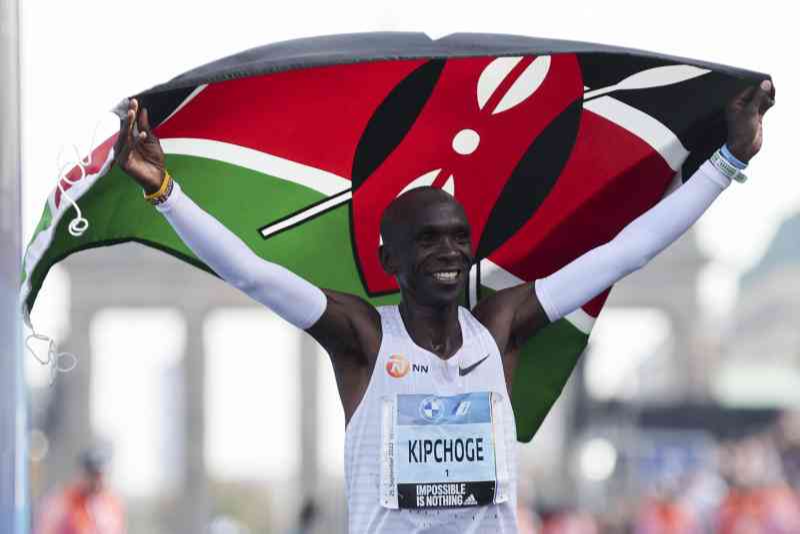
One of the most valuable lessons I learned on the journey to break the two-hour marathon barrier is that failure isn't the end. For years, many believed that running a marathon in under two hours was impossible. Even with steady improvements in world records, it still felt out of reach. In 2017, during our first big attempt in Monza, Italy, the world watched with anticipation, and the expectations were sky-high. I finished in two hours and 25 seconds, just shy of our goal, which many considered a failure. But what truly stayed with me wasn’t the disappointment- it was what happened next.
Nobody left saying it was impossible. Instead, more people united around the challenge. Scientists kept researching movement and fatigue, engineers enhanced shoe technology, nutrition experts improved hydration and recovery, and coaches and analysts analysed pacing and efficiency like never before in marathon running. What appeared to be a simple race actually became a global system of people, ideas, disciplines, and innovations all collaborating toward a common goal.
Then, something extraordinary began to occur. What had taken decades to improve gradually suddenly picked up speed. In Vienna, in 2019, I finally broke through when I ran 1 hour, 59 minutes, and 40 seconds. Then, just a few weeks ago, something truly inspiring happened. Not only one, but two incredible African athletes, Sabastian Sawe and Yomif Kejelcha, also broke the two-hour barrier, proving that what once seemed impossible is gradually becoming reality.
That acceleration was driven by science, technology, innovation, research, teamwork, and a common belief that human potential knows no limits. For me, this journey has taught me a lesson that extends beyond sports: While talent matters, it seldom changes history on its own. True breakthroughs occur when talent is nurtured within robust, supportive systems.
This lesson is crucial for Africa because we already possess the talent across our continent. What we need now are better systems to support that talent. The first focus is on infrastructure and access. Many young Africans have exceptional abilities, yet many train without adequate facilities, safe sports spaces, recovery support, proper equipment, or clear development pathways. Investing in sports infrastructure is not just about cultivating champions; it also creates jobs, boosts tourism, enhances public health, and opens opportunities for youth who might otherwise be overlooked.
The second focus is on science, technology, and innovation. Modern sports increasingly depend on research, recovery science, wearable tech, AI-driven performance systems, nutrition, rehabilitation, and data analysis. Consequently, the future sports economy will belong not only to talent creators but also to those developing the supporting technologies, businesses, media platforms, and systems. Africa has a unique opportunity here. As the youngest continent, with one in four people worldwide expected to be African by 2050, Africa is already seeing young Africans embrace technology, entrepreneurship, and digital innovation. Across the continent, young people are building businesses, creating digital communities, and solving problems in highly creative ways. This dynamic energy can help shape Africa’s sporting future. Beyond athletes, sport can generate opportunities for physiotherapists, sports scientists, nutritionists, engineers, broadcasters, content creators, and entrepreneurs. In essence, sport can be part of a larger economic ecosystem that provides long-term value far beyond just races or matches.
Another important lesson from the sub-two journey is that progress accelerates when people, institutions, and ideas move together around a shared vision.
No athlete breaks barriers alone. Behind every major sporting breakthrough are coaches, scientists, universities, investors, technology, infrastructure, and systems working quietly to support excellence over many years. I believe the same is true for Africa’s sporting future. To build stronger ecosystems, we need deeper collaboration, long-term investment, skills transfer, and partnerships that help talent grow sustainably. Partnerships among governments, universities, investors, tech companies, sporting organisations, and athletes can create stronger pathways for future generations while also building industries around sport. Through the Eliud Kipchoge Foundation, I aim to contribute through mentorship, youth development, education, and initiatives that connect young people with opportunity and help them believe in their potential. Sport is about much more than medals or records; it is about dignity, discipline, hope, and proving that where you come from doesn't define where you can go. Africa’s next sporting chapter will be measured not just by medals but by the systems, industries, opportunities, and innovation we develop around our talent.
Subscribe to our newsletter and stay updated on the latest developments and special offers!


 Prefer the Standard on Google