×
App Icon
The Standard e-Paper
Fearless, Trusted News
★★★★ - on Play Store
Download App

Why President Mohamud's constitutional reforms are key to regional integration

Vocalize Pre-Player Loader

Audio By Vocalize

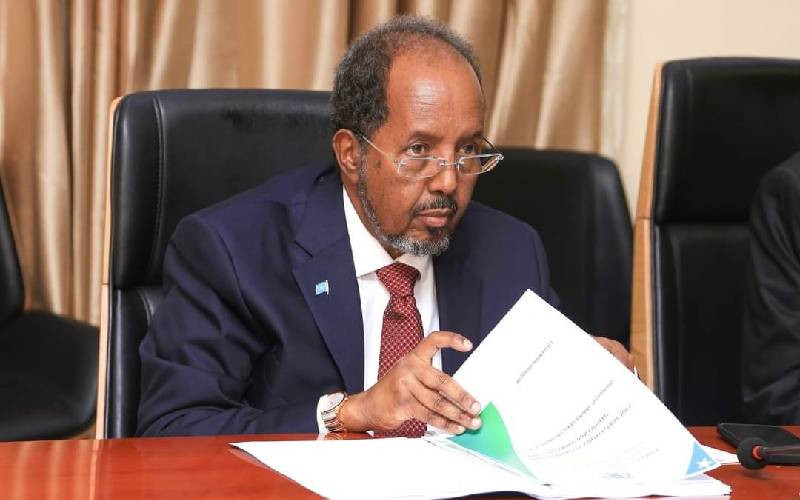
Somalia President Hassan Sheikh Mohamud. [File, Standard]

President Hassan Sheikh Mohamud has once again demonstrated strategic foresight in steering Somalia toward a future that aligns domestic governance with global norms. The passage of the country’s new Constitution is not just a legal milestone; it is a signal of Somalia’s ambition to strengthen institutions, consolidate democracy, and integrate fully with the international community.

Mohamud, the only Somali leader to serve two consecutive five-year terms, has shown a remarkable commitment to ensuring that the constitutional process reflects the aspirations of citizens while positioning Somalia as a credible partner on the global stage. By dedicating resources and personally overseeing consultations across the country, he has made clear that the Constitution is more than a domestic document; it is a roadmap for engagement with the broader world.

At the core of this vision is a framework that aligns Somali governance with internationally recognised democratic principles. The Constitution clearly separates powers among the Executive, Legislature, and Judiciary, establishes accountability mechanisms, and reinforces transparency. The requirement for top leaders, including the President, Prime Minister, the two Speakers of Parliament, and the Chief Justice of the Supreme Court, to declare assets to the Auditor General and abstain from dual citizenship reflects Somalia’s commitment to integrity and credibility, traits valued by international partners.

Civil society voices echo the significance of these reforms. Mohamud Abdalla, a Mogadishu-based civil servant, notes, “This Constitution is a turning point for Somalia. It lays the foundation for an orderly society after decades of instability and sends a strong message that the country is ready to operate in line with global standards of governance.”

The Constitution also positions Somalia for closer integration with regional bodies, such as the East African Community (EAC). Officials across the region have welcomed the development as a sign that Somalia is taking its place as a stable, reliable partner in regional security, trade, and development initiatives. Joseph Okello, a senior EAC official in Nairobi, observed, “Somalia’s progress toward constitutional governance strengthens confidence in the Horn of Africa and offers a model for democratic consolidation in the region.”

Even at the local level, the reforms are expected to enhance international engagement. Mogadishu’s new status as a Capital Region, with an elected local council, a Capital Council, and a Mayor accountable for administration, demonstrates a decentralisation model that international observers often cite as best practice. Meanwhile, border communities, such as traders in Mandera, Kenya, anticipate that a stronger legal framework will facilitate cross-border trade and cooperation, particularly as Kenya plans to reopen its border with Somalia.

Through these reforms, Mohamud signals that Somalia is committed to building institutions that inspire confidence both domestically and abroad. By codifying democratic norms, enforcing accountability, and clarifying governance structures, the new Constitution provides a platform for Somalia to engage effectively with global partners, attract investment, and participate fully in international diplomacy.

President Mohamud’s leadership shows that constitutional reform is more than an internal exercise; it is a strategic tool for global integration. Somalia’s future, anchored in these reforms, points toward a nation ready to uphold international standards, strengthen regional partnerships, and secure its place on the world stage.

The writer comments on typical issues