×
App Icon
The Standard e-Paper
Kenya's Bold Newspaper
★★★★ - on Play Store
Download Now

Kenya must accelerate food fortification for healthier citizens

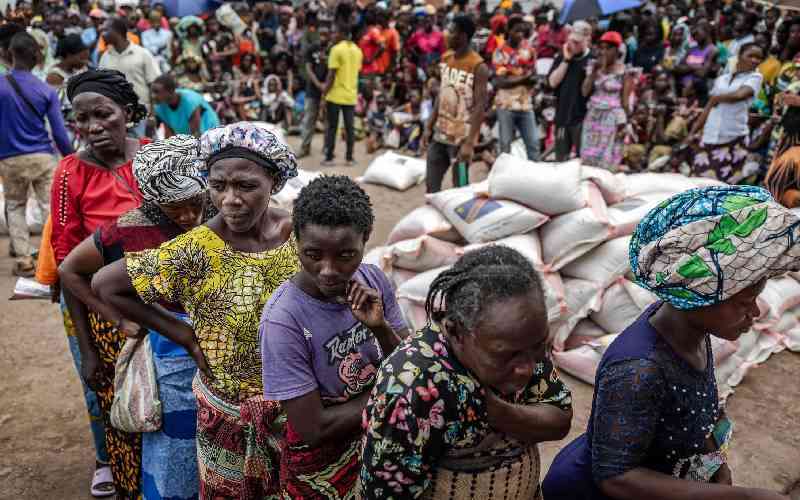
Congolese refugees line up to receive aid during a food distribution operation at the Musenyi refugee site in Giharo, on May 7, 2025. [AFP]

Although it often goes unnoticed, hidden hunger is one of the greatest threats to human development. Hidden hunger is deficiency of essential vitamins and minerals, or micronutrients, in a person’s diet, even if they are consuming ample food to meet their energy needs.

Its consequences include weakened immunity, low energy levels, impaired learning and undermined optimal productivity. Globally, over 50,000 mothers die annually from childbirth complications linked to severe anaemia. Nearly 18 million babies are born with impaired cognitive development due to iodine deficiency.

In Kenya, one in every four women is anaemic, while three-quarters of the population suffers zinc deficiency. These deficiencies are not just harmful to individuals; they rob the country of its potential. Thus, the cost of hidden hunger is massive, not just for the individual but for the nation.

Since its establishment in 2002 at the United Nations General Assembly, the Global Alliance for Improved Nutrition (GAIN) has collaborated with various governments and agencies in the nutrition sector to fortify different types of foods and address hidden hunger. Addressing hidden hunger is not just a health issue, but an economic and development priority.


While dietary diversification, supplementation, and home production of nutritious foods remain important, Large-Scale Food Fortification (LSFF) is uniquely powerful. It is not only cost-effective but also scalable and equitable. By enriching widely consumed staples such as maize and wheat flour, edible oils, and salt with vitamins and minerals like iron, zinc, iodine, and vitamin A, fortification delivers essential nutrients without significantly altering the taste or cost. Through fortification, even the most vulnerable communities that may not have access to diverse diets can access nutritionally rich foods. 

Kenya has been at the forefront of food fortification, a task in which it has found a partner in GAIN. Salt iodisation, for example, was made mandatory in Kenya in 1978, decades before many other African nations took similar steps. In 2012, Kenya amended the Food, Drugs, and Cosmetics Act (CAP 254), making fortification of maize flour, wheat flour, edible oils, and fats compulsory. Today, more than 80 per cent of wheat flour, 87 per cent of vegetable oils, and essentially all salt consumed in the country are fortified.

To reduce pressure on maize and wheat, rice, another staple, is also being fortified. In collaboration with PATH, GAIN developed a toolkit to support farmers and millers in fortifying rice production and ensuring quality nutrition. Progress in food fortification has been achieved through strategic collaborations. Established in 2005, the Kenya National Food Fortification Alliance (KNFFA) has united government, industry, and civil society to harmonise standards, certify suppliers, and train millers. Consumers can now identify fortified products through the Alama ya Kuboresha Afya logo. The economic gain is remarkable - every Sh100 invested in nutrition generates Sh2,200 in returns through reduced healthcare costs, higher productivity, and improved learning outcomes. However, only 37 per cent of maize flour is fortified; public awareness is limited, and enforcement of regulations, particularly at the county level, is inconsistent. This diminishes the gains being made. Without stronger demand creation for the fortified food products and tighter compliance, fortification risks stalling just when it should be scaling.

The Catalysing Strengthened Policy Action for Healthy Diets and Resilience (CASCADE) project, implemented by CARE Kenya and GAIN, offers a blueprint for how fortification can move from policy to practice and connect policy to people. In Nairobi County, its advocacy directly supported the enactment of the Food Safety and Fortification Bill, 2024, and the food safety policy, 2024, which promote multi-sectoral coordination involving all relevant sectors, advocating for increased resources for food quality surveillance and traceability mechanisms informed by county-led minimum residue findings, with the support of GAIN through the Vegetable for All project.

The approach by CASCADE has been holistic - from strengthening capacity of county food safety focal persons and private sectors on national food quality policies and standards to establishing linkages and sustainable private sector-led networks through the Scaling Up Nutrition Business Network and private sector alliances.          

While fortification is often viewed as a national recommended intervention to address micronutrient deficiency, it is at the county level where enforcement, consumption, and awareness truly happen. Over the years, CASCADE has demonstrated that when county governments, private sector players, and communities align, fortified foods can be accessible and sustainable.

The private sector plays a central role in making food fortification a reality. The millers, processors, and manufacturers integrate fortification into their production systems and ensure fortified products reach consumers at scale. Beyond simply meeting regulatory requirements, they drive innovation, expand distribution networks, and influence consumer choices through initiatives such as branding and awareness campaigns.

Yet, to unlock their full potential, more deliberate efforts are needed. Such efforts include offering incentives to reduce production costs, strengthening technical support for small and medium enterprises, and fostering stronger public-private partnerships that position fortification not as a compliance issue but as a sustainable business strategy that delivers both profit and public health benefits.

Economic shocks pose another threat. Rising fuel costs, currency fluctuations, and disruptions in global supply chains can make fortification inputs like premix expensive or scarce. CASCADE has responded by decentralising production, supporting small and medium millers to fortify closer to local markets, while promoting public–private partnerships that integrate fortified foods into school meals and relief programmes.

By encouraging millers to maintain strategic reserves of premix, linking processors to affordable credit, and exploring digital monitoring tools, CASCADE has demonstrated how fortification systems can be resilient.

CASCADE’s experience demonstrates that with the right combination of political will, industry performance, and consumer awareness, fortification can transition from policy documents to household kitchens.