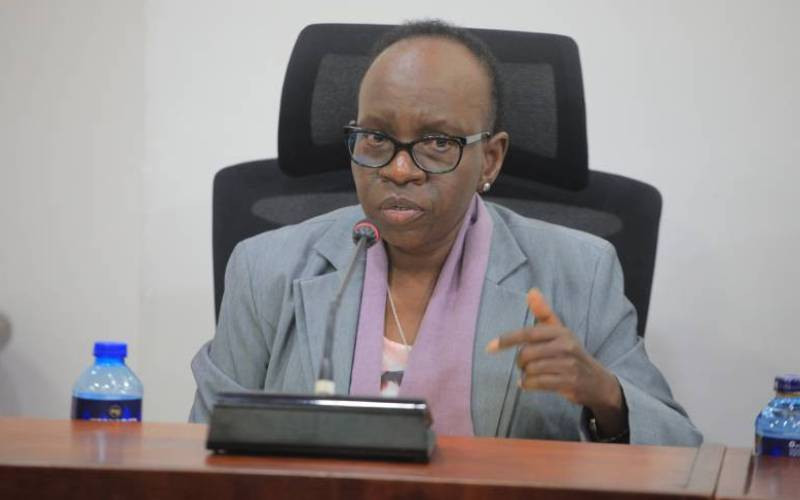
Across societies, the idea of womanhood is never neutral or abstract. It is socially constructed, morally guided, and culturally affirmed. In traditional African worldviews, womanhood is not an isolated biological or individual category. Rather, it is a relational identity—a role shaped by family ties, kinship, work, childbearing, raising children, moral responsibilities, and communal belonging. Dignity and agency arise within these social and moral networks, not apart from them. This relational understanding shapes African perspectives on the recent appointment of the Most Revd Cherry Vann as Archbishop of the Church in Wales.
As the first woman and first openly gay person to hold the office, her appointment has been celebrated by some and contested by others. She reported that delivering her first Christmas message drew varied reactions. Some members chose to leave the Church, citing her appointment as a departure from Anglican orthodoxy due to her openly gay identity and her position as the first woman gay Archbishop committed to LGBTQ+ inclusion. Beyond the symbolism lies a deeper ethical question: How should institutions claiming moral authority handle the tension between evolving cultural norms and inherited moral frameworks? From an African decolonial standpoint, this is not merely a British matter but one with global implications.
Institutions retain credibility only when integrity takes precedence over popularity. Ethical consistency requires decisions guided by standards applied universally, not by convenience or social pressure. When leadership decisions are driven primarily by prevailing sentiment, authority weakens—not only locally, but across the global Anglican Communion, which relies on historic churches for coherence and moral clarity. The implications are especially acute in Africa where Anglicanism is deeply embedded in communal life. Concerns raised by African Christians do not stem from hostility, but from the conviction that leadership is inseparable from moral teaching and communal responsibility. In African moral philosophy, authority is relational and accountable; leaders are custodians of shared values, not symbols of individual self-expression.
As an African ordained minister, theologian, and cultural analyst, I maintain that faith and moral conviction must never be held hostage to personalities. Institutions endure because they rest on foundations that transcend individuals and generations. When communities abandon their convictions in deference to leaders, moral authority is replaced by personal influence. Conversely, when leaders reshape inherited moral frameworks to align with contemporary trends, ideology displaces ethical continuity. African spirituality offers a corrective: Rights exist, but they are exercised within the framework of communal responsibility. Personal preference is tempered by concern for social cohesion. Authority is exercised communally, morally, and with memory. An elder, priest, or chief may falter, yet the moral order survives because it is larger than any one individual. Leadership exists to preserve continuity, not to reinvent meaning with every cultural shift.
African Christians are cautioned against confusion or despair over developments in Western churches. Western struggles do not invalidate faith, nor erase the moral witness sustained across Africa. Communities must remain grounded in disciplined reflection, ethical formation, and moral consistency, resisting both fear and uncritical imitation. Unity, however, must not be mistaken for agreement at any cost. African societies preserve unity through dialogue, patience, and respect for moral boundaries. Disagreement is permitted; truth is not suspended to preserve harmony. Pursuing unity by redefining moral frameworks rather than deepening accountability leads to fragility and hollow cohesion.
Decolonial theology demands consistency in global discourse. African church leaders note that Western Anglicanism has shown flexibility in re-examining sexuality and gender, often aligning with contemporary social movements. This flexibility underpinned the appointment of Vann. Yet African theological and cultural inquiries—such as those concerning polygamy, a morally regulated and covenantal institution in many African societies—have historically been dismissed. This tension became evident at the 1998 Lambeth Conference, when debates over homosexual clergy widened an existing divide between the global South and Western members of the communion.
African Anglican primates, bishops, clergy, and laity emphasised that their aim was not to bend Scripture to accommodate cultural pressures. Rather, they sought to guide culture to respect and submit to Scripture without compromising its authority over morality and ethics. While the Scripture explicitly requires bishops, priests, and deacons to be the husband of one wife, it does not categorically prohibit polygamy as a marital institution, nor limit God’s remedial purpose for polygamous believers. Yet millions of African Christians in polygamous marriages have felt marginalised—particularly regarding baptism, Holy Communion, and Christian burial rites—through Eurocentric interpretations equating cultural difference with moral deficiency.
Such selective flexibility exposes an unresolved imbalance in global Anglican discourse. African anthropology reminds the Church that communal identity matters. Names, rituals, and practices carry moral weight when they convey ethical awareness and maintain social harmony. Nothing of lasting significance exists solely for individual preference; the community’s well-being takes precedence. Leadership, therefore, requires moral consistency rather than symbolic milestones. Representation without ethical clarity risks becoming spectacle rather than substance.
Even philosophically, moral disorder is rarely the root problem. It is often a symptom of a deeper breakdown in shared moral authority. Moral issues usually reflect a weakening of the values and principles that shape a community’s character and social conduct. When people ignore tradition and prioritise personal preference over communal norms, the system begins to unravel. This is evident in the Anglican Communion where the gap between growing churches in the Global South and declining churches in the West has widened—a divide intensified by the appointment of Vann, following the elevation of Dame Sarah Mullally as Archbishop of Canterbury, the first woman to hold that office.
The appointments of Mullally and Vann underscore the tension between changing cultural norms and longstanding moral frameworks. Their public support for same-sex blessings and broader LGBTQ+ inclusion has sparked controversy, often producing more heat than clarity. Many conservative Anglicans, particularly in East Africa, view these positions as departures from traditional or sound biblical teaching. The debate has tangible consequences. Several African provinces and conservative groups have formally questioned Mullally’s authority, expressing concerns about her ability to maintain Church unity and reflecting unease over shifts in shared moral guidance across the Communion.
The Church in Wales also faces challenges beyond doctrine. Safeguarding failures and abuses of power highlight the need for ethical renewal grounded not in redefining boundaries alone, but in accountability, humility, and restoring trust. As African wisdom reminds us, a polluted shrine is not purified by altering rituals, but by cleansing the ground on which it stands—a principle that underscores the importance of moral coherence, communal responsibility, and institutional integrity.
The gradual fading of language emphasising moral discipline and costly commitment signals a wider decline in seriousness. Yet communities of believers, particularly in Africa, must not abandon core convictions because of leaders, nor trade discernment for comfort or approval. Moral courage remains essential for a credible witness, especially since the majority of the Anglican Communion’s believers are in Africa. African provinces—Nigeria (18–20+ million), Uganda (about 13 million), Kenya (5–6 million), and South Sudan (5+ million)—far outnumber those in the UK and Western provinces. By contrast, the UK reports around 25 million members, but active weekly participation is only 1–2 million.
This demographic reality means moral direction increasingly rests in African hands. Africa has the authority to counsel the Church in Wales and Canterbury to prioritise communal responsibility over personal preference, to allow enduring moral wisdom to question cultural trends, and to anchor unity in integrity rather than mere symbolism. As Chinua Achebe observed, “The world is like a mask dancing; if you want to see it well, you do not stand in one place.” What unfolds in the West should serve as a mirror—prompting renewed commitment to truthfulness, ethical consistency, and responsible leadership—so institutions claiming moral authority can remain a steady light in turbulent times and a credible presence in an increasingly disillusioned world.
The Revd Nyama is a priest of Anglican Church of Kenya
Stay informed. Subscribe to our newsletter